


- Speed: 0.6 - 10 mph
- Incline: 0 - 15%
- Presets: 12 workouts
- Belt: 17" wide x 47.2" long
- Weight Limit: 300 lbs





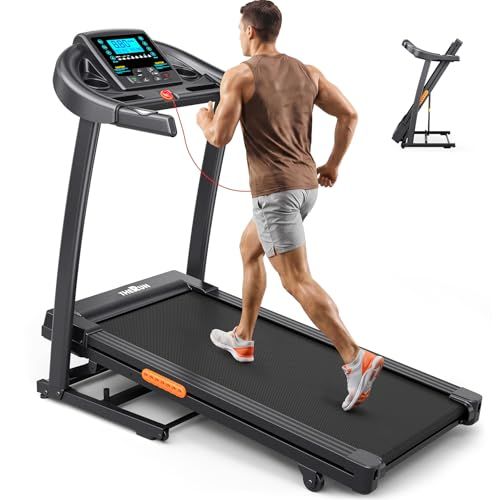
THERUN Incline Treadmill
Overview and Real-World Experience

The THERUN Incline Treadmill is designed for people who want the convenience of indoor walking or running while still getting the training variety that incline provides. In practice, an incline-capable treadmill tends to feel more “workout-like” than a basic flat deck, because even a modest rise can noticeably increase heart rate and calorie burn at the same speed. The THERUN’s appeal is that it aims to balance home-friendly practicality with features that keep sessions engaging, especially for users who alternate between steady walks, light jogs, and short bursts of faster running.
What most users notice first is how much incline changes the character of a workout. Walking at a comfortable pace on a flat treadmill can be pleasant but sometimes too easy to move the needle for cardio fitness. Add incline and it becomes a more purposeful climb, which can be helpful for people who prefer walking to running, or anyone trying to reduce impact while still challenging the cardiovascular system. A treadmill that includes incline also tends to support interval training better, since you can vary intensity without relying solely on speed changes.
In day-to-day use, the most important “feel” factors are stability, belt comfort, and how smoothly the treadmill responds to adjustments. A sturdy frame reduces side-to-side wobble and makes harder efforts feel more confident. Belt cushioning matters for comfort over longer sessions, especially if you’re coming back from a break, training frequently, or you have sensitive knees or hips. Adjustment responsiveness matters because a treadmill that lags when you change speed or incline can interrupt interval workouts and make pacing less predictable. Noise also becomes part of the real-world experience in a home environment; if you plan to exercise early in the morning or in an apartment, a quieter motor and steady belt motion can be the difference between “consistent routine” and “used occasionally.”
For users who value motivation, built-in workout modes and display feedback can make a difference. Seeing time, speed, distance, estimated calories, and incline (if displayed) provides structure and helps track progress. Even without advanced app ecosystems, having clear metrics and quick adjustments supports consistency. The THERUN Incline Treadmill fits best for people who want a reliable, repeatable training option at home and who see incline as a core feature rather than a nice-to-have.
Factors to Consider Before Buying and What Matters Most
Before purchasing the THERUN Incline Treadmill, it helps to decide how you’ll actually use it, because the “best” treadmill depends less on marketing features and more on matching your habits and space. The most important factors are the motor and speed suitability for your body size and training style, incline range and adjustment style, deck size and cushioning, stability and weight capacity, and whether the treadmill’s footprint works in your home. Secondary considerations include noise, display readability, portability, warranty coverage, and how easy it is to maintain and keep clean.
Motor performance and speed capability are the top priorities for anyone who plans to run regularly, especially at moderate-to-fast paces. A treadmill can look similar to another on paper, but feel very different if the motor struggles under load. If you’re primarily walking, motor demands are lower and your focus can shift toward incline, comfort, and compactness. If you’re a heavier user or you like longer sessions, stable power delivery becomes even more important because it influences belt consistency and overall durability.
Incline is the defining feature here, so it should be evaluated with intention. Consider whether the incline is manual or automatic, and how often you’ll adjust it mid-workout. If you want hill intervals, automatic incline changes are far more convenient and keep you in rhythm. If your approach is simple, like choosing one incline level and walking for 30 minutes, a simpler incline system may still meet your needs. Also consider the maximum incline you realistically use; a treadmill that offers incline is only as valuable as the range you’ll actually train with, and you should aim for settings that challenge you without forcing awkward form.
Deck size and belt width matter most if you run, have a long stride, or want to feel less “boxed in.” Walkers can often be comfortable on shorter decks, but runners generally appreciate extra length for safer foot placement, especially as fatigue sets in. Cushioning is equally important because it affects joint comfort and training frequency. Some users prefer a slightly firmer feel for better stability and push-off, while others want more shock absorption. If you already enjoy outdoor running, you might prefer a treadmill that doesn’t feel overly soft, whereas someone easing into fitness may value gentler impact.
Stability and weight capacity are crucial for confidence and long-term reliability. A treadmill that flexes or shifts can make workouts feel less safe, especially during incline walking or faster running. It’s also worth considering handle placement and console height, because ergonomics influence comfort and posture. If multiple people in the household will use the treadmill, choose a model that accommodates the tallest and heaviest user comfortably, since that’s where stress on the machine is highest.
Space and storage are often the deciding factors for home buyers. Measure not only the footprint but also the clearance behind and to the sides for safe use. If you plan to move the treadmill between rooms, check whether it has transport wheels and whether one person can reposition it without strain. Consider ceiling height if your treadmill will be used on an upper floor or in a basement; incline plus a taller runner can bring head clearance into play.
Finally, think about ownership beyond day one. Warranty length and coverage can signal how confident the manufacturer is in the frame and motor. Maintenance requirements like belt lubrication and belt alignment are normal, but the easier the access and the clearer the instructions, the more likely you’ll keep it running smoothly. In terms of “most important,” prioritize the fundamentals that affect every workout: stability, motor suitability for your intended training, incline usability, and deck comfort. Everything else is secondary if those core elements aren’t right.
Common Questions
Is incline really worth it if I mostly walk?
Yes, incline can be one of the best features for walkers because it increases intensity without requiring running. It can help raise heart rate, make workouts feel more purposeful, and provide variety that keeps a walking routine from becoming stale.
Will an incline treadmill be harder on my knees?
Not necessarily. Some people find incline walking reduces impact compared with running faster on a flat deck. However, steep incline can change your mechanics and may aggravate issues if your posture collapses or you hold the rails too much. Starting with a modest incline and focusing on upright form usually helps.
How do I choose the right deck size?
If you plan to run, a longer deck makes it easier to maintain a natural stride and feel safe when fatigue sets in. If you’ll mainly walk, you can often prioritize compactness, as long as the belt feels comfortable and you don’t find yourself crowding the front of the treadmill.
What should I look for in terms of noise?
Noise is influenced by the motor, belt, and how solidly the treadmill sits on the floor. If you live in an apartment or share walls, consider using a treadmill mat to reduce vibration and choose a location where sound is less likely to disturb others.
Do I need special shoes for treadmill incline workouts?
Supportive walking or running shoes are usually enough. Incline work can put more demand on calves and Achilles, so shoes with stable support and a comfortable fit matter. If you’re prone to calf tightness, gradually increase incline and include a warm-up and cooldown.
Overall, the THERUN Incline Treadmill makes the strongest case for buyers who want a home treadmill that feels more versatile than a basic flat model. If you prioritize the essentials of stability, comfortable deck feel, and incline that you’ll genuinely use, it can become a consistent part of a routine rather than a piece of equipment that gathers dust.