

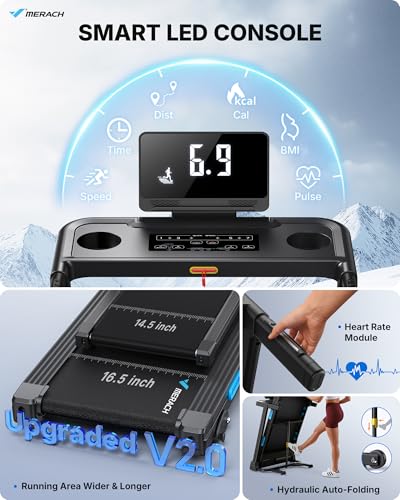
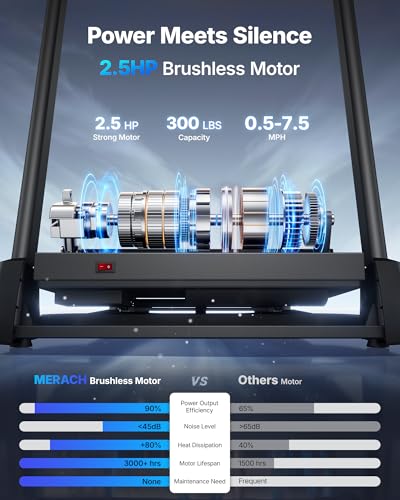


- Speed: 0.5 - 7.5 mph
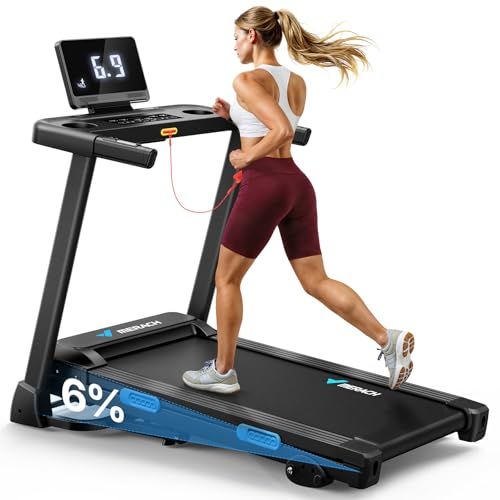
- Incline: 3 manual positions
- Presets: 12 workouts + optional app
- Belt: 16.5" wide x 42.5" long
- Weight Limit: 300 lbs





MERACH Incline Treadmill
Overview and Real-World Performance

The MERACH Incline Treadmill is positioned for people who want the convenience of at-home cardio without committing to a full commercial-sized machine. Its headline feature is incline capability, which can make walking workouts feel meaningfully harder without requiring you to run. In day-to-day use, that matters because incline training increases the challenge on the glutes and calves and can raise your heart rate at the same speed, helping you get more from shorter sessions. For users who prefer brisk walking, light jogging, or interval-style workouts, the incline function is often the difference between a treadmill that eventually feels “too easy” and one that continues to provide progression.
In terms of workout feel, a good treadmill should provide consistent speed changes, stable footing, and a deck that doesn’t feel harsh underfoot. The MERACH Incline Treadmill generally caters to home users who value a balanced mix of comfort and practicality. When you’re walking for 30 to 60 minutes, small details become big ones: whether the belt tracks smoothly, whether the platform feels secure at higher effort levels, and whether the controls are easy to adjust without breaking your stride. If you plan to do guided workouts, the overall experience also hinges on how straightforward it is to start a session, tweak incline or speed mid-workout, and cool down without fiddling through awkward menus.
Noise and vibration are also part of “real-world performance,” especially in apartments or shared homes. Any treadmill will make some sound, but the combination of motor noise, footfall, and floor transfer determines whether you’ll feel comfortable using it early in the morning or while others are working nearby. Placing it on a treadmill mat and ensuring it’s level can dramatically reduce perceived noise and protect your flooring. If your space is limited, another practical factor is how easy it is to move or store, since a treadmill that’s annoying to relocate tends to become a permanent obstacle rather than a convenient tool.
Key Purchase Factors and What Matters Most
Before buying the MERACH Incline Treadmill, the first factor to consider is how you actually intend to use it. If your plan is primarily incline walking, recovery sessions, or moderate jogging, you’ll likely prioritize stability, incline range, and comfortable belt space over top-end speed. If you expect frequent running, especially longer runs, you should pay closer attention to motor capability, deck cushioning, and whether the belt length and width will feel natural at your stride. In other words, your dominant workout style should guide the “must-have” features, not the other way around.
Space and storage are typically the most important practical constraints for home users. Measure where the treadmill will live, including clearance behind and to the sides for safe stepping on and off. Also consider ceiling height if you’re tall and plan to use incline; incline can raise your body position and reduce headroom. If you’re buying for a bedroom corner, office, or living room, ease of moving the treadmill can determine whether it gets used consistently. Many buyers underestimate this and only realize later that a treadmill that’s hard to reposition becomes an obstacle that’s mentally easy to avoid.
Next, focus on user fit and comfort. Belt dimensions and deck feel influence whether your gait feels cramped or confident. Taller users and runners typically need more belt length; walkers can often work with less, but still benefit from adequate width. Cushioning is subjective, yet it has a tangible impact on joints and fatigue over time. If you have knee or hip sensitivity, cushioning and stability move up the priority list. Also consider handrail placement and console readability; these details matter for beginners, older users, and anyone who wants quick, safe adjustments mid-session.
Incline is a major decision point. If the MERACH Incline Treadmill’s incline feature is the reason you’re shopping, consider whether you want small incremental changes for steady-state training or more aggressive incline for short, intense efforts. Incline can be a training multiplier for walkers, but it also increases load on calves and Achilles tendons, so a treadmill that allows you to progress gradually is often the best long-term choice. For many households, the most important performance features are reliable incline adjustments and consistent belt speed, because those two determine workout quality more than flashy extras.
Technology and subscription ecosystems come next. Some users love app connectivity, training plans, and metrics tracking; others just want a start button and a clear speed display. Think about whether you’ll actually use guided workouts, heart-rate tracking, or device integration. If you already rely on a smartwatch or fitness platform, compatibility can be more valuable than a built-in library you might ignore. At the same time, don’t overlook the basics: a stable phone or tablet placement, intuitive controls, and a display that’s easy to read while moving can matter more than advanced features that look good on a product page.
Finally, consider reliability, warranty coverage, and service logistics. Home treadmills are mechanical devices with wear parts, and a strong warranty and accessible support can be the difference between a minor inconvenience and a long downtime. Look for clarity around what is covered for the motor, frame, and parts, and understand the practical steps for service if something goes wrong. Also factor in maximum user weight and general build quality indicators; staying comfortably within recommended limits tends to improve both safety and longevity.
Common Questions
Is incline walking on the MERACH Incline Treadmill effective if I don’t run? Yes. Incline walking can significantly increase workout intensity without the impact of running. It’s particularly useful for improving cardiovascular fitness, building lower-body strength, and supporting weight management when paired with consistent use and appropriate nutrition.
How do I know if the treadmill will fit my stride? Consider your height and whether you plan to run or mostly walk. Walkers can often use a shorter deck comfortably, but runners typically need more belt length for a natural stride. If you’re near the upper end of typical height ranges or have a long stride, prioritizing belt space and stability is important.
Will it be too loud for an apartment? It depends on your pace, your flooring, and the building. Walking at moderate speeds is usually easier to manage than running. Using a treadmill mat, keeping the machine level, and placing it away from shared walls can reduce noise and vibration transfer.
What maintenance should I expect? Routine care usually includes keeping the belt and deck clean, checking belt alignment, and lubricating the belt if the manufacturer recommends it. A small amount of regular maintenance helps the treadmill run smoother, reduces noise, and can extend the lifespan of the motor and belt.
Is app connectivity essential to get value from the treadmill? No. App features can improve motivation and structure, but the core value comes from consistent, comfortable workouts. If you enjoy guided programs and tracking, connectivity can be a major plus; if you prefer simplicity, strong basics like stable speed and incline matter more.
Conclusion: The MERACH Incline Treadmill is most appealing for home users who want an accessible treadmill experience with the added challenge and variety of incline training. The smartest purchase decision comes from matching it to your space, your preferred workout intensity, and your comfort needs. If you prioritize fit, stability, and practical usability over flashy extras, you’ll be more likely to choose a treadmill you’ll actually use and keep using.