













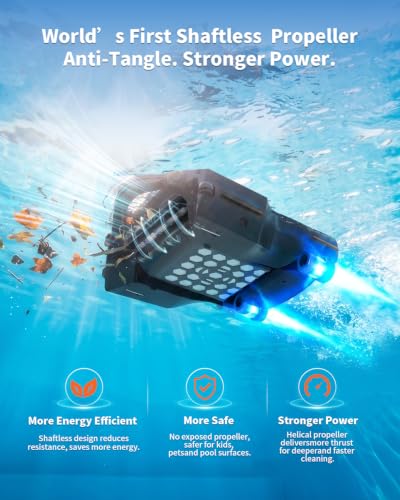
We also considered 10 others:


Our Top Choice
Compare Features


The order above is not editorial opinion, and it is not paid placement. It comes from what shoppers across our network actually do - which solar pool skimmers they compare, and which they ultimately buy. We re-rank as new data comes in, so the long-term favorites have to keep earning their spot against new entrants. The full method, including how we make money.
Solar Pool Skimmers Buyer's Guide
Solar pool skimmers are best when they intercept leaves, bugs, pollen, and petals before they sink—but that only works if the unit can navigate your pool shape, survive constant water and sun exposure, and keep running through cloudy stretches. The sharpest buying concerns are durability of the drive/charging system, basket and mesh design for your debris type, and whether solar-plus-battery runtime is realistic for your shade pattern and swim schedule.
Build
You want a pool skimmer robot that feels solid enough to handle sun exposure, pool chemicals, repeated bumps into walls, and regular removal from the water without cracking or loosening over time. Look for sturdy housing, well-fitted seams, durable baskets or trays, and parts that can be cleaned or replaced easily; watch out for flimsy plastics, weak hinges, or components that feel brittle under normal use.
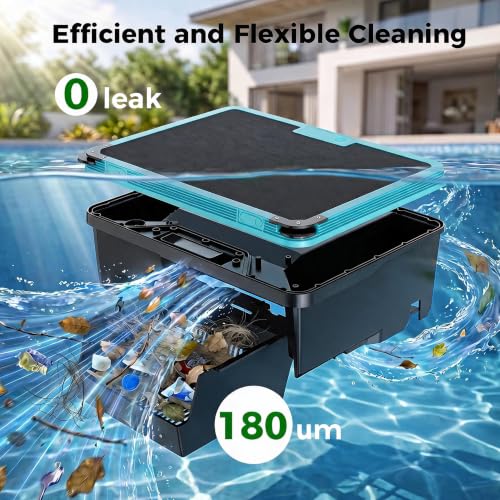
Prioritize a skimmer with a sealed, pool-rated body, protected motors, sturdy paddle wheels or propellers, UV-resistant plastics, and a debris basket that locks securely without flexing; avoid units with flimsy lids, exposed charging contacts, or small baskets if your pool sits under trees. For this niche, build quality is not just about feel—it determines whether the skimmer keeps moving after repeated sun exposure, chemical exposure, wall bumps, and basket-emptying cycles. Also check that the intake opening and basket are suited to your debris: fine mesh helps with pollen and hair, while a larger basket matters for leaves, pine needles, seed pods, and storm debris. Owner feedback supports this split: many report excellent everyday pickup of leaves, pine needles, bugs, pollen, hair, and small floating debris with less manual skimming, and they like large baskets and fine mesh for reducing emptying frequency. But durability is a real watch-out, with some units reportedly failing quickly, even after only a few uses or shortly after charging.
Cleaning
You want a skimmer robot that consistently clears floating leaves, pollen, grass clippings, and bugs before they sink and create more work for your pool cleaner or filter. Look for strong surface coverage, reliable debris capture, and a basket or tray that can handle the kind of debris your pool gets most often. Watch out for robots that miss corners, struggle in wind, or clog quickly if you have heavy leaf drop.
Choose based on the debris that actually floats in your pool and how quickly it sinks: a good solar skimmer should catch leaves, bugs, pollen, petals, hair, and fine surface film before they waterlog and drop to the floor. Look for a wide mouth, anti-clog intake path, fine-enough basket mesh, quiet continuous movement, and navigation that can escape corners, steps, ladders, tanning ledges, return jets, and floating hoses. Avoid assuming a surface skimmer replaces a full pool cleaner—it mainly prevents surface debris from becoming floor debris, so pools with heavy bottom dirt still need brushing, vacuuming, or a separate floor/wall cleaner. Owner sentiment strongly backs the cleaning benefit: buyers consistently praise hands-off surface cleaning, especially in tree-heavy pools, and say these units collect leaves, bugs, pollen, petals, and tiny floating particles before swimmers notice them. They also describe daily use as simple—turn it on, place it in the pool, and empty the basket when needed.
Battery
Battery life determines whether your pool skimmer robot can cover the surface long enough to collect leaves, pollen, and debris before needing a recharge. Look for a runtime that matches your pool size and debris load, and consider how often you’re willing to dock, plug in, or otherwise recharge it. Be wary of models whose claimed battery life may drop with heavier debris, frequent starts and stops, or aging batteries.
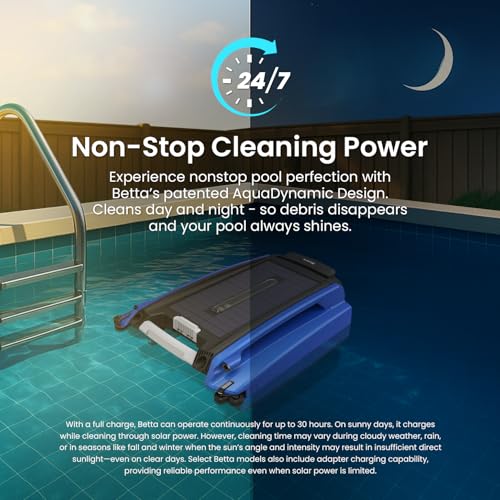
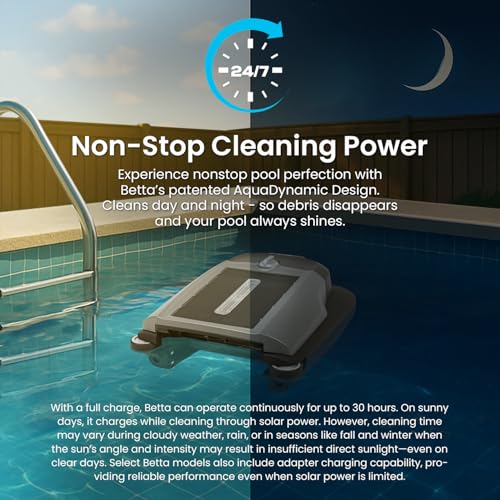
Match the battery system to your pool’s sun exposure, not just the advertised runtime: check whether the skimmer can run overnight, recover after cloudy days, and keep working in partial shade from trees, fences, screened enclosures, or the house. A solar-only unit may struggle in shaded pools, so look for a solar-plus-battery design with enough reserve capacity, low-power return or standby behavior, and a backup plug-in charging option if your climate has long cloudy periods. Also consider whether the solar panel stays above water and clear of leaves, because a shaded or debris-covered panel can quietly turn an automatic skimmer into a dead object in the pool. Owner reports are encouraging here: many describe solar charging and battery life as strong enough for day-and-night operation, long stretches without plug-in charging, and even constant use with some shade. Several also praise seamless solar charging and smart behavior when power runs low.
Value
You want a pool skimmer robot that feels worth what you paid because the real value comes from reliable debris removal, durable construction, and less time spent cleaning—not just a low upfront cost. Look for a model whose performance matches your pool size, debris load, and maintenance expectations, and watch out for cheap-feeling designs or limited capability that may save money initially but leave you doing more work by hand.
Judge value by how much manual surface skimming, basket emptying, and downstream vacuuming it can realistically prevent in your specific pool, not by the fact that it is solar-powered. It is most worthwhile for pools that collect daily floating debris from trees, insects, pollen, petals, or windblown yard mess; it is less compelling if your pool is mostly covered, screened, or only gets occasional debris. Factor in replacement wear items, warranty coverage, return policy, battery longevity, and whether the unit’s navigation works with your pool features, because an unreliable skimmer loses value quickly even if it cleans well when new. Owner sentiment generally supports the investment case: many buyers say hands-off operation, large baskets, all-day cleaning, and reduced manual skimming make the upgrade feel worthwhile. At the same time, some view these skimmers as a premium purchase, so the best value comes when the unit meaningfully reduces routine pool maintenance rather than simply adding another gadget to manage.
1,000,000+ shoppers use Buyer's Guide every week to find the best products and services online.

Helping millions of users make smarter purchases online.


