








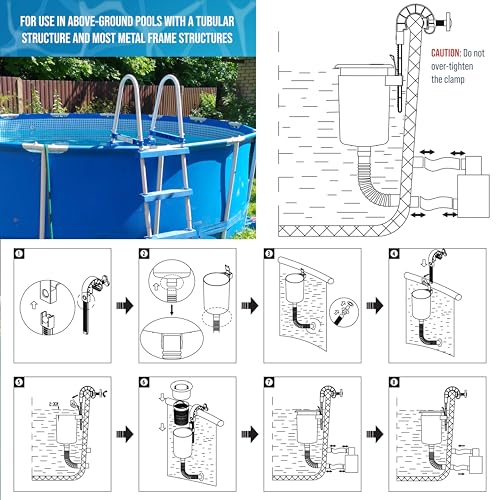
We also considered 10 others:


Our Top Choice
Compare Features


The order above is not editorial opinion, and it is not paid placement. It comes from what shoppers across our network actually do - which automatic pool skimmers they compare, and which they ultimately buy. We re-rank as new data comes in, so the long-term favorites have to keep earning their spot against new entrants. The full method, including how we make money.
Automatic Pool Skimmers Buyer's Guide
Automatic pool skimmers are most worthwhile when your main battle is floating debris—leaves, bugs, pollen, petals, hair—before it sinks and becomes a floor or filter problem. The sharpest buying concerns are whether the unit can survive constant sun, chlorinated or salt water, and collisions at the waterline, and whether its battery or solar system can keep up with your pool’s real shade and debris load.
Build
You want a pool skimmer robot that feels solid enough to handle sun exposure, pool chemicals, repeated bumps into walls, and regular removal from the water without cracking or loosening over time. Look for sturdy housing, well-fitted seams, durable baskets or trays, and parts that can be cleaned or replaced easily; watch out for flimsy plastics, weak hinges, or components that feel brittle under normal use.
Prioritize a skimmer built for continuous outdoor immersion: UV-resistant housing, corrosion-resistant hardware, protected propellers, sturdy bumpers, a secure debris basket, and a fine mesh insert that will not warp or tear when packed with wet leaves. Check that the unit will not get trapped under ladders, steps, overhanging coping, pool cleaners, return jets, or floating hoses, and be cautious of designs with exposed charging contacts, flimsy latches, or weak drive parts because early failure is a real risk in this category. Owner feedback supports this split: many buyers praise strong surface cleaning, large baskets, fine mesh, easy operation, and reduced manual skimming, but durability is a major watch-out because some units reportedly stopped working after only a few uses or even right after charging.
Cleaning
You want a skimmer robot that consistently clears floating leaves, pollen, grass clippings, and bugs before they sink and create more work for your pool cleaner or filter. Look for strong surface coverage, reliable debris capture, and a basket or tray that can handle the kind of debris your pool gets most often. Watch out for robots that miss corners, struggle in wind, or clog quickly if you have heavy leaf drop.
Match the cleaner to the debris you actually fight: for tree-heavy pools, look for a wide intake and large basket; for pollen, gnats, hair, and fine surface film, look for fine mesh rather than only a coarse leaf basket; for irregular pools, verify it can escape corners and does not just circle in one area. Remember that most automatic skimmers are surface tools, not replacements for brushing, vacuuming, wall cleaning, or floor robots, so buy one to intercept debris before it sinks rather than to clean the entire pool. Owner sentiment strongly supports this use case: buyers repeatedly say automatic skimmers keep the surface clear with little effort, grabbing leaves, bugs, pollen, petals, and tiny floating particles, while easy emptying and quiet automatic operation make them fit naturally into routine care.
Battery
Battery life determines whether your pool skimmer robot can cover the surface long enough to collect leaves, pollen, and debris before needing a recharge. Look for a runtime that matches your pool size and debris load, and consider how often you’re willing to dock, plug in, or otherwise recharge it. Be wary of models whose claimed battery life may drop with heavier debris, frequent starts and stops, or aging batteries.
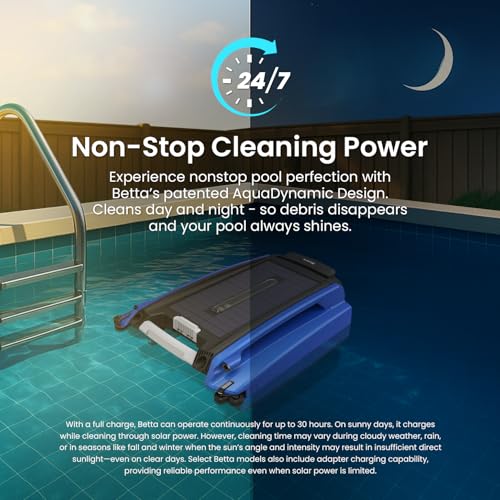
Do not judge battery life by headline runtime alone; judge it against your sun exposure, shade pattern, pool orientation, and whether you expect overnight operation. Solar models are best when the pool gets several hours of direct sun and the solar panel stays unobstructed by debris, screen enclosures, trees, or covers; if your pool is shaded, check for plug-in backup charging, realistic cloudy-day runtime, and clear low-battery behavior so the skimmer does not die in the middle of peak debris fall. Owner feedback is encouraging here: many buyers describe solar charging and battery life as strong enough for day-and-night or long-stretch operation, often with little or no plug-in charging, and long runtime is a big reason these units feel hands-off.
Value
You want a pool skimmer robot that feels worth what you paid because the real value comes from reliable debris removal, durable construction, and less time spent cleaning—not just a low upfront cost. Look for a model whose performance matches your pool size, debris load, and maintenance expectations, and watch out for cheap-feeling designs or limited capability that may save money initially but leave you doing more work by hand.
Value depends less on pool size alone and more on how often floating debris forces you to skim manually or clean the filter basket. A higher-cost unit can make sense for pools near trees, flowering plants, bugs, or heavy pollen, but it is harder to justify for a mostly covered or low-debris pool; also factor in warranty length, replaceable baskets, filters, batteries, propellers, and whether the skimmer reduces but does not eliminate vacuuming and chemical maintenance. Owner sentiment generally supports the investment case: buyers often say the cordless, automatic operation saves meaningful time, reduces manual skimming and some vacuuming, and feels worth the price when the skimmer reliably keeps the surface clean.
1,000,000+ shoppers use Buyer's Guide every week to find the best products and services online.

Helping millions of users make smarter purchases online.


