


















We also considered 10 others:


Our Top Choice
Why These Features Matter:
A small freezer is rarely a “fun” purchase. It’s the appliance equivalent of buying extra socks: practical, quietly life-improving, and somehow still capable of being annoying in very specific ways. The right one makes weeknight cooking calmer (fewer emergency grocery runs, more “oh right, we have dumplings”). The wrong one becomes a humming white cube you resent every time you stub a toe on it.
This guide isn’t about brand worship. It’s about the details that show up at 11 p.m. when the kitchen’s dark, the floor’s sticky, and someone is trying to wedge a family-size pizza into a space clearly designed for optimism.
1) Size Isn’t Just Capacity — It’s Where It Can Actually Live
Small freezers tend to be purchased for the spaces that are already overbooked: apartments with narrow galley kitchens, basements with laundry chaos, mudrooms full of sports gear, “pantry” closets that are mostly paper towels. The most important measurement isn’t cubic feet; it’s the footprint and door swing.
- Footprint and door clearance: Some units need surprising breathing room to fully open; in a tight kitchen, that can mean the door hits the trash can every single time.
- Height matters: Counter-height units are great until someone stacks cereal boxes on top and the freezer becomes a secondary shelf you now have to clear to access food.
- Weight and move-ability: A “small” freezer can still feel like dragging a boulder across vinyl. Casters or easy-glide feet can be the difference between “tucked away neatly” and “it lives there forever now.”
Guidance: If it’s going in a tight spot, prioritize a clean, compact footprint and a door that opens without forcing a room redesign. If it’s going in a garage or basement, height and capacity can matter more than elegance.
2) Upright vs. Chest: The Daily-Life Trade-Off
This is the big fork in the road. Uprights behave like little fridges: easy to see, easy to organize, easy to forget you’re wasting space with bad shelving. Chest freezers are the deep-storage workhorses: efficient, reliable, and occasionally reminiscent of rummaging for a lost mitten in a toy bin.
- Upright strengths: Better visibility, less bending, easier for households where multiple people need to find things without conducting a freezer excavation.
- Chest strengths: Often quieter and more efficient, with better cold retention during a power outage. Also: more forgiving if you tend to freeze bulky items.
Guidance: If the freezer will be opened daily for smoothies, dumplings, kids’ waffles, and the rotating cast of “quick dinners,” an upright’s convenience usually wins. If it’s mostly for bulk meat, seasonal farmer’s-market hauls, and “backup” groceries, chest styles make more sense.
3) Organization: Shelves, Baskets, and the Myth of “Neat Freezing”
The photos in listings love to show perfectly stacked, identical containers. Real life looks like half a bag of peas clipped shut with a clothespin and a mystery foil-wrapped rectangle no one will claim.
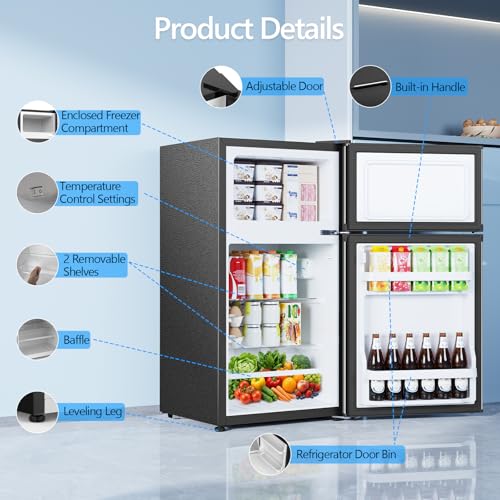
- Adjustable shelves (uprights): Useful, but check how easily they move. Some systems require removing the entire shelf assembly just to accommodate one tall item.
- Pull-out bins: Great until they stick when overfilled (which they will be). A bin that glides smoothly when fully loaded is worth caring about.
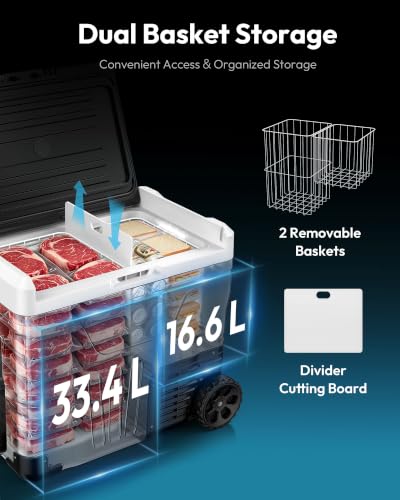
- Baskets (chests): Non-negotiable. Without them, small items migrate to the bottom and turn into frozen archeology.
Guidance: Prioritize a layout that matches how food actually arrives at home: bags, boxes, odd-shaped leftovers. If it forces everything into one “perfect” format, it will lose that battle by week two.
4) Temperature Control That Doesn’t Require a Philosophy Degree
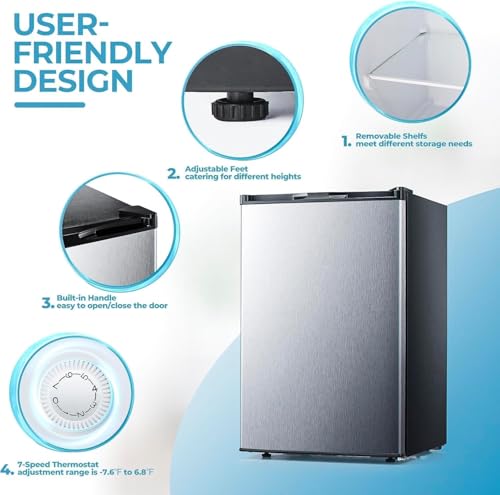
A tiny dial with “1–7” sounds simple, until it’s either frost city or slightly-too-soft ice cream. Clear controls matter because most people aren’t calibrating with a thermometer — they’re reacting to vibes (and freezer burn).
- Readable settings: A basic digital readout is genuinely helpful for set-it-and-forget-it households.
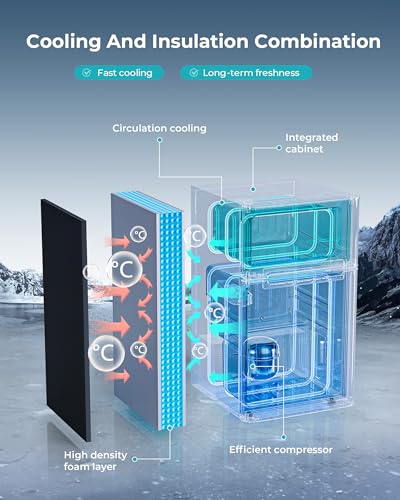
- Consistent temps: The biggest quality-of-life factor is stability. Wild swings lead to icy crystals on bread and weird textures on anything delicate.
- Fast-freeze modes: Nice if you freeze fresh groceries often, not essential if the freezer is mostly holding already-frozen items.
Things to know: If a freezer is going into a garage, pay attention to whether it’s designed for wider ambient temperature ranges. Some units behave strangely when the surrounding air gets too hot or too cold, which is a fun surprise in July and an even worse one in January.
5) Defrosting: The Unavoidable Ritual (and How to Make It Less Miserable)
Marketing likes to pretend frost isn’t a thing anymore. It is. And it shows up right when the freezer is full.
- Manual defrost: Often found in smaller or more budget-friendly models. It can run efficiently, but it demands occasional attention.
- Frost-free options: More convenient, but can be a little noisier, and some people find certain foods dry out faster.
- Drain access (chests): A drain that’s easy to reach is a small mercy. A drain hidden behind something that requires tilting a full freezer is not.
Honest caveat: Manual defrost isn’t tragic — it’s just annoying. Expect at least one afternoon of towels on the floor and a cooler full of food you’re silently judging yourself for owning.
6) Noise and Vibration: The Detail That Ruins “Quiet Luxury” Fast
A small freezer can be a background hum in a basement. Or it can be a low-grade roommate in a studio apartment, clicking on at 2 a.m. like it has opinions.
- Compressor cycling: Most freezers make noise intermittently, not constantly. The issue is how noticeable it is when it kicks on.
- Vibration: If it’s on uneven flooring, the sound can turn into a rattle that travels through cabinets, walls, and patience.
- Placement tricks: A stable, level surface helps. So do simple anti-vibration pads if the floor is particularly unforgiving.
Guidance: If it’s going near living or sleeping space, prioritize models known for quieter operation and consider a slightly larger, better-insulated unit over the tiniest option. Sometimes “small” means “louder than it should be.”
7) Door Details: The Annoyances People Don’t Mention Until They Own It
The door is where daily friction lives — literally.
- Reversible doors: Useful in real kitchens where the “right” side is dictated by a wall, not your dreams.
- Handle design: Recessed handles save space but can feel awkward with wet hands. Big handles are nicer to use but can snag on passing hips in tight hallways.
- Seal strength: A strong gasket keeps things cold, but it can also mean the door takes a decisive tug to open. That’s fine until someone tries one-handed while holding a baby or a bag of groceries.
Things to know: In truly small apartments, a door that sticks out too far can become a daily obstacle course. A little planning here prevents years of minor irritation.
8) The Interior Light (and Other “Nice to Have” Details That Actually Matter)
Some features seem frivolous until you don’t have them.
- Interior lighting: Surprisingly useful, especially in chest freezers. Without it, everything at the bottom becomes a shadowy guessing game.
- Power-on indicator: A small light that confirms it’s running can prevent the slow horror of discovering the plug got bumped loose a week ago.
- Lock: Helpful in garages, shared spaces, or homes with curious kids and a talent for pressing buttons.
Honest caveat: Every extra feature is one more thing that can feel fiddly. The sweet spot is convenience without complexity — buttons that do what they say, lights that are visible, alarms that don’t feel like living with a smoke detector.
9) Aesthetics: Because It Might Be in Your Actual Home
Not every small freezer is destined for a utility room. Some end up in kitchens, dining nooks, or under-counter setups that are absolutely visible to guests holding wine glasses and opinions.
- Finish: White hides scratches but can read “appliance overflow.” Stainless can look sharper but loves fingerprints like it’s a hobby.
- Minimal branding: A quieter front panel tends to blend better, especially in open-plan spaces.
- Form factor: A clean, boxy unit is easier to tuck beside cabinetry; rounded edges can look dated fast.
Guidance: If it will be seen daily, choose something visually calm. It doesn’t need to be fancy; it needs to not visually shout every time you walk into the room.
10) Realistic Expectations: What Small Freezers Do Well (and What They Don’t)
A small freezer excels at making life smoother: extra meals, batch cooking, bulk buys, ice for entertaining, emergency desserts. It’s less good at accommodating chaos unless you build in a little structure.
- What they’re great for: Frozen fruit, bread, dumplings, meat, stock, leftovers in stackable containers, ice cream that doesn’t taste like freezer air.
- What they struggle with: Oversized pizza boxes, tall awkward packaging, and anything that demands perfectly flat stacking (which is most real food).
- Most common regret: Buying too small, then playing Tetris every day. The runner-up: buying slightly bigger than needed and realizing it’s louder or harder to place.
Final guidance: Pick a freezer based on how often it’ll be opened and how tidy your household realistically is. Daily access calls for visibility and easy organization. Deep storage calls for efficiency and baskets. And if the house already runs loud — kids, pets, laundry, life — prioritize the model that fades into the background, because the hum you ignore in a review becomes the hum you live with.
1,000,000+ shoppers use Buyer's Guide every week to find the best products and services online.

Helping millions of users make smarter purchases online.


