













We also considered 10 others:


Our Top Choice
Compare Features


The order above is not editorial opinion, and it is not paid placement. It comes from what shoppers across our network actually do - which screen houses they compare, and which they ultimately buy. We re-rank as new data comes in, so the long-term favorites have to keep earning their spot against new entrants. The full method, including how we make money.
Screen Houses Buyer's Guide
Screen houses sit between an open canopy and a tent: they need enough mesh to stay airy and bug-free, but enough structure, anchoring, and roof coverage to handle sun, wind, and surprise weather. The sharpest buying concerns are whether bugs can sneak through gaps or weak zippers, and whether the large screened walls can stay stable when wind hits them.
Build
You want a gazebo that feels secure and stays that way through regular use, because weak frames, thin materials, or poor connections can lead to wobbling, sagging, rust, or damage in wind and rain. Look for sturdy metal or treated wood construction, reinforced joints, reliable anchoring options, and weather-resistant finishes, and be wary of lightweight frames or flimsy canopies that may not hold up outdoors.
For a screen house, prioritize frame geometry, anchor points, and fabric tension over just “heavy duty” claims: look for reinforced roof hubs/corners, full perimeter guy-out loops, quality stakes/weights, smooth double zippers, and mesh that is taut enough not to sag into seating areas. Avoid models that rely only on tiny corner stakes or have loose roof panels, because screen houses have broad wind-catching walls and can twist or lift quickly if not properly secured. Owner feedback supports this focus: shoppers often report that these shelters feel sturdy and reliable once anchored with included weights, stakes, or added anchors, with solid zippers, substantial shade fabric, and good experiences in normal wind or even stormy conditions.
Protection
Protection determines how comfortable and usable your gazebo is in real outdoor conditions, from blocking harsh sun to keeping light rain and insects from cutting gatherings short. Look for a canopy that provides broad shade and reliable water resistance, along with well-fitting bug screening if mosquitoes or flies are a concern. Watch out for thin fabrics, poor drainage, or gaps around screens, since these can reduce sun protection, leak during wet weather, or let pests in.
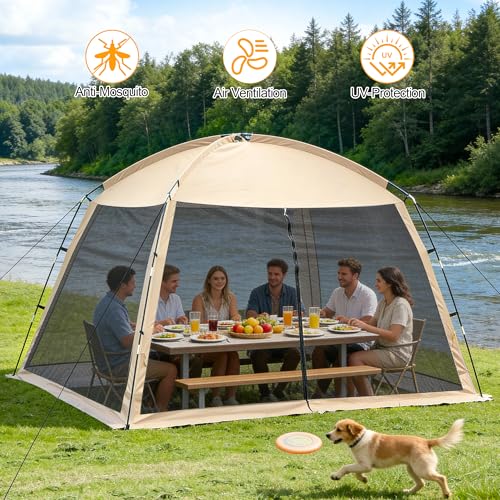
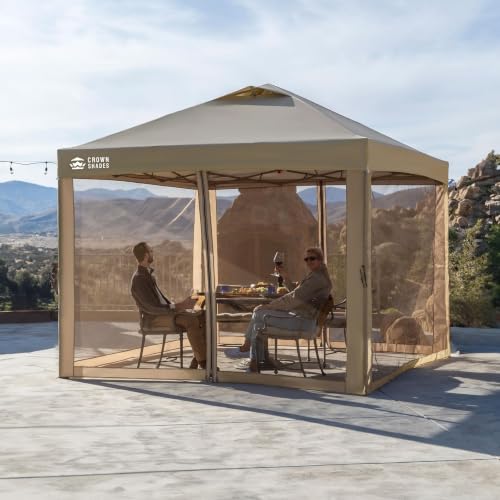
Check the exact protection package: a good screen house should combine dense bug mesh, a roof large enough to shade the usable seating footprint, tight door closures, and minimal ground gaps where mosquitoes can enter. If you camp in rainy or windy areas, do not assume “screen house” means storm shelter; look for overhanging eaves, water-shedding roof pitch, optional side panels or curtains, sealed seams, and enough tie-downs to keep blowing rain from entering through the mesh. Owner sentiment backs the core benefit—buyers consistently value the shaded, airy, bug-free space for meals, work, movie nights, pets, chairs, or even a small tent inside—while also noting that rain protection and side coverage can be more mixed in heavier weather or over time.
Assembly
A gazebo can be large and heavy, so assembly affects how quickly and safely you can start using it. Look for clear instructions, well-labeled hardware, and parts that arrive complete and undamaged; vague diagrams or reports of missing parts can turn an easy setup into a frustrating multi-day job. Consider whether you’ll need extra tools, a level surface, or another person to help before you buy.
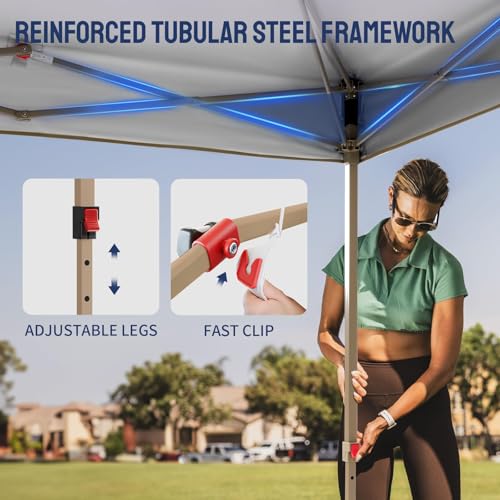
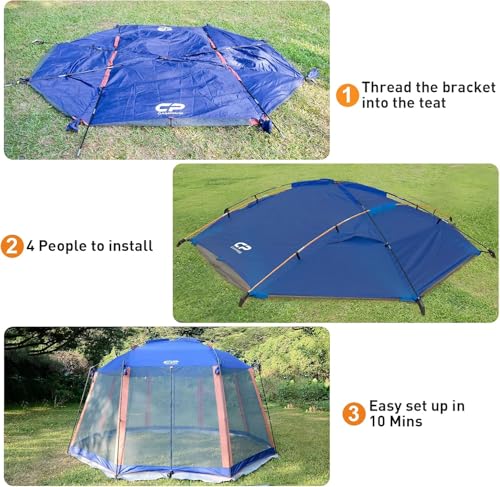
Choose the setup style based on where you will actually use it: pop-up hub tents are best for quick campsite or park use, while framed gazebos can feel more rigid but may require more patience, joint alignment, and a second person. Before buying, verify that the packed frame length fits your vehicle and that the instructions, color-coded poles, hub layout, and screen orientation are clear, because a twisted mesh wall or forced joint can damage zippers, hubs, or poles. Owner feedback is encouraging on ease of setup, with many buyers finding pop-up or quick-frame designs manageable and sometimes possible solo, though experiences are less unanimous when assembly is tedious, conditions are windy, or help is needed.
Usability
A gazebo should make outdoor time easier, not add setup headaches or limit how you use your space. Look for features that match your routine, such as straightforward assembly, accessible entry points, adjustable shade or ventilation, and enough flexibility for dining, relaxing, entertaining, or sheltering from light weather. Watch out for designs that are awkward to open, hard to anchor, cramped inside, or too specialized for your everyday needs.
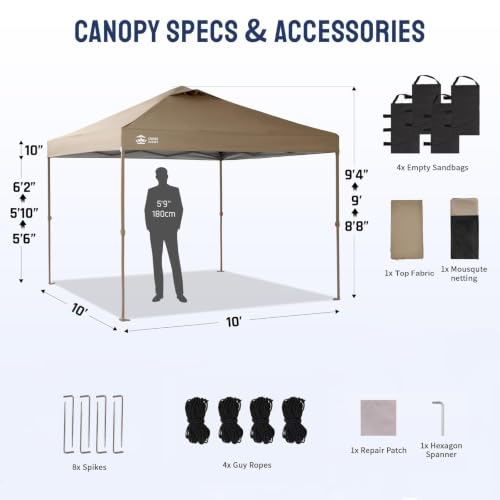
Size the screen house by usable interior space, not just stated footprint: make sure the wall angle, center height, door placement, and roof overhang leave room for a picnic table, camp chairs, coolers, pets, or cooking-adjacent gear without pushing against the mesh. For real-world convenience, check door count and zipper travel, ventilation, packed weight, carry-bag quality, and whether it folds flat or rolls, since a shelter that is awkward to move may stay at home. Owner comments support these priorities, praising lightweight and compact designs that are easy to carry between beach, park, yard, and campsite, while still providing bug protection, airflow, and enough comfort for gatherings or meals.
Value
You want a gazebo that feels worth what you pay for its size, materials, stability, and included features, not just one that looks inexpensive upfront. Look for a strong frame, durable canopy or roof, useful extras like mosquito netting or curtains if you’ll use them, and clear warranty or replacement-part support. Watch out for low-cost options that cut corners on anchoring, weather resistance, or fabric quality, since those can cost more in repairs or early replacement.
Value in this category comes from avoiding the two common replacement costs: flimsy frames that deform in wind and mesh/zippers that fail after a few trips. A better buy usually includes durable canopy fabric, coated metal or well-designed hub construction, reliable closure hardware, a usable storage bag, and enough anchors or weight options for your surfaces—grass, patio, deck, sand, or campground pads. Owner sentiment aligns with this: buyers tend to see strong value when a screen house combines solid construction, easy use, portability, a practical carry bag or wheels, and enough versatility for camping, patios, parties, track meets, shade, light rain, and bug control.
1,000,000+ shoppers use Buyer's Guide every week to find the best products and services online.

Helping millions of users make smarter purchases online.


