





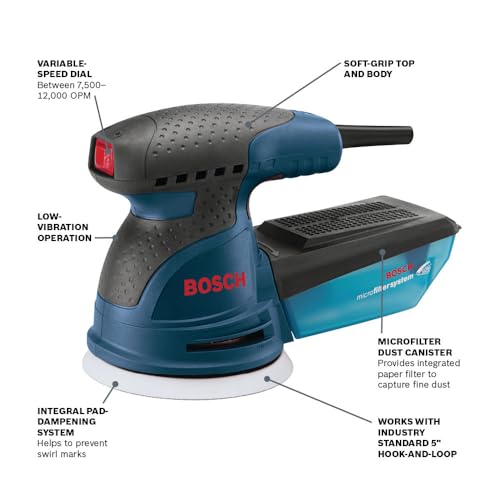
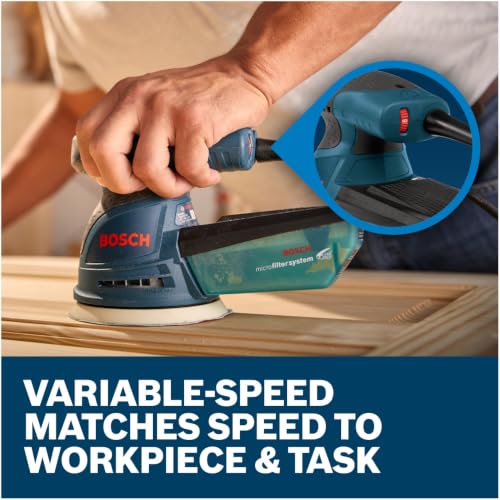


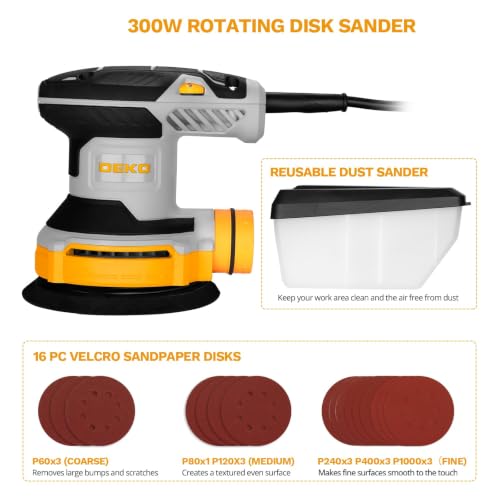

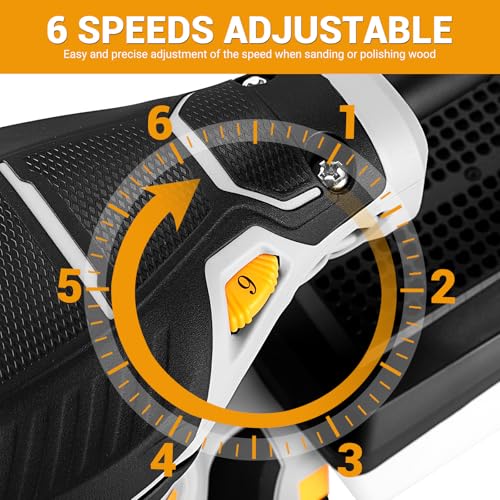
We also considered 10 others:


Our Top Choice
The order above is not editorial opinion, and it is not paid placement. It comes from what shoppers across our network actually do - which sanders they compare, and which they ultimately buy. We re-rank as new data comes in, so the long-term favorites have to keep earning their spot against new entrants. The full method, including how we make money.
Sanders Buyer's Guide
Buying a sander is mostly a tradeoff between fast material removal and controlled finishing: the tool that flattens rough lumber or strips a deck can easily gouge edges, burn wood, or leave swirl marks if used for the wrong task. Careful shoppers should first match the sander style to the work, then check dust control, abrasive compatibility, and handling so the tool stays safe and predictable through a full project.
Job Fit
Sanders overlap, but they are not interchangeable. The wrong format can slow the job, damage the workpiece, or make a simple task harder to control. A good pick is the one whose pad, belt, or table geometry naturally fits the surfaces you actually need to sand.
Choose the sander style around the workpiece, not just the general idea of “sanding.” Belt sanders are best for aggressive stock removal on floors, doors, rough boards, decks, and refinishing, but they demand a steady hand. Random-orbit and sheet/palm sanders are better for flat surface prep and finish sanding. Detail and file sanders are the right call for inside corners, spindles, trim profiles, and awkward spots where a round pad or wide belt cannot reach. Benchtop belt/disc units make repeat shaping safer and more consistent for small parts because the tool stays fixed while you guide the work. Cordless models help when a cord would drag across the surface or limit sanding strokes, but long heavy removal usually favors sustained power. Owner feedback strongly supports this job-matching approach: buyers praised cordless maneuverability, benchtop convenience for hobby and small-shop shaping, detail/file tools for tight areas, and belt sanders for large rough jobs.
Power Control
Power matters because sanding is controlled cutting, and weak tools slow down or force extra pressure. Control matters just as much because excess speed or pressure can overheat finishes, round corners, and remove more material than intended. The best tools let you match aggression to the surface instead of fighting the machine.
For heavy removal, look for a motor that can keep speed under load, not just a high no-load rating. Belt sanders used on floors, doors, paint, rust, or rough lumber need enough torque to cut steadily without stalling; random-orbit sanders need consistent orbit speed so they do not chatter or leave uneven patches. Variable speed is worth prioritizing because coarse stripping, finish prep, veneer, edge work, and heat-sensitive coatings all benefit from different aggression levels. On belt models, tool-free belt changes and reliable tracking are critical failure points: a drifting belt can chew the housing, round an edge, or ruin a workpiece. Pressure indicators or smooth speed ramps can help prevent gouging and burn marks, especially for newer users. Owners repeatedly called out strong power on demanding jobs, fast material removal, useful variable-speed control, and belt tracking that stayed aligned once adjusted.
Finish Quality
A sander’s finish is determined by the motion of the tool and the abrasive path you use. Even a powerful tool can leave scratches, swirls, or uneven sheen if the pad, grit sequence, or abrasive fit is wrong. Good abrasive compatibility also keeps the tool useful after the starter supplies are gone.
Check the sanding pattern and abrasive system before buying. Random-orbit sanders are usually the safer choice when you need a smooth finish with minimal visible swirl, while sheet and detail sanders can be excellent in corners but require careful grit progression to avoid scratch patterns. For aggressive work, start with coarse grits only when you truly need material removal, then step through intermediate grits rather than jumping straight to fine paper. Make sure replacement discs, sheets, or belts are common sizes, easy to source, and align with the dust-hole pattern on the pad; mismatched abrasives reduce dust pickup and can wear unevenly. Hook-and-loop pads should hold firmly but release without tearing, and belt seams should run smoothly. Owner sentiment backs these priorities: shoppers valued smooth results without obvious swirl marks, dependable discs across repeated use, easy pad changes, and abrasive packs that offered a wide grit range.
Dust Control
Sanding creates fine airborne debris that affects visibility, cleanup, abrasive life, and user safety. Better dust control helps the abrasive cut longer and reduces the chance of grinding loose debris back into the surface. It is especially important indoors and when removing old finishes.
Treat dust collection as a core feature, not an accessory. Look for a sealed or well-protected switch, an effective onboard bag or canister, and a dust port that can connect securely to a shop vacuum without a loose adapter stack. For perforated discs or sheets, the hole pattern must line up with the pad; otherwise the tool may sand acceptably but leave far more dust behind. Fine wood dust, filler dust, and old coating residue call for respiratory protection and careful containment, and unknown old paint should be handled with appropriate safety precautions before sanding. On long sessions, poor dust extraction can clog abrasives, reduce cutting speed, scratch the surface with trapped debris, and shorten pad life. Owner comments included appreciation for clean-working sanding, smooth operation, and tools that made real projects easier, which reinforces why dust management should be evaluated alongside raw performance.
Handling
A sander that is awkward to hold encourages excess pressure and poor posture. Comfort and balance directly affect finish quality because the user must keep the pad or belt flat and moving evenly. Good handling also makes longer jobs safer and less fatiguing.
Pick up the handling clues from the design: low vibration, balanced weight, a comfortable grip, a reachable switch, and enough front or auxiliary grip area to guide the tool without bearing down. A lighter detail or palm sander helps with vertical surfaces and overhead work, while a heavier belt sander can feel stable on broad horizontal boards but tiring on edges or stairs. Cordless tools improve maneuverability where a cord would snag, but battery weight can change balance and runtime planning. For longer sessions, look for a trigger lock or paddle that does not strain your hand, quick abrasive swaps, and a cord or dust hose route that stays behind the sanding path. Beginners should favor tools that start smoothly and are easy to keep flat. Owners consistently praised easy handling, comfortable grips, lighter controlled feel, smooth running, and simple pad or belt changes.
Build Value
Sanders live in dust, vibration, and heat, so small build weaknesses often show up quickly. Better construction keeps the pad, belt, or table aligned and reduces frustration during repeated use. Real value comes from dependable performance over the jobs you expect to do, not from feature count alone.
Judge value by the parts that stay accurate after use. On handheld sanders, inspect pad firmness, bearing smoothness, housing rigidity, switch feel, and whether replacement pads or wear parts are available. On belt sanders, the platen should be flat, the rollers should track consistently, and the tension lever should feel secure. On benchtop sanders, the table, fence, and guards should lock squarely, and the base should resist walking. Accessories can improve value when they are consumables you will actually use, such as multiple grits or replacement abrasives, but included extras do not compensate for poor alignment or flimsy construction. Owner sentiment repeatedly described solid build, better-than-expected quality, reliable performance for home-shop and DIY use, and strong value when the tool’s capability matched its intended workload. Higher-cost tools were also appreciated when sturdiness and engineering made them feel dependable.
1,000,000+ shoppers use Buyer's Guide every week to find the best products and services online.

Helping millions of users make smarter purchases online.


