








We also considered 10 others:
.png)


Our Top Choice
Compare Features


The order above is not editorial opinion, and it is not paid placement. It comes from what shoppers across our network actually do - which salt cell replacements they compare, and which they ultimately buy. We re-rank as new data comes in, so the long-term favorites have to keep earning their spot against new entrants. The full method, including how we make money.
Salt Cell Replacements Buyer's Guide
Salt cell replacements are a compatibility-first purchase: the wrong cell can thread into the plumbing yet still fail to communicate, misread salt, or produce too little chlorine. The sharpest tradeoff is saving money versus risking early plate/electronics failure, so shoppers should verify controller match, physical fit, output rating, and warranty before treating any replacement as a simple swap.
Output
You want a replacement salt cell that can produce enough chlorine for your pool size and typical usage, so your water stays sanitized without constant manual adjustment. Check that its rated output and system compatibility match your pool’s needs, and watch for cells that struggle to maintain chlorine levels in hot weather, heavy swim use, or higher-demand conditions.
Match the replacement cell’s chlorine-output rating to both your pool volume and the controller’s configured cell size; a cell that physically fits but is undersized, misidentified by the controller, or unable to read salinity will leave you chasing low chlorine. For this category, prioritize cells specified for your exact generator class, with clear stated output capacity and diagnostic compatibility, because the common failure mode is not subtle—it may show normal installation but produce little or no chlorine. Owner feedback supports this split: many buyers report quick chlorine recovery from very low levels and performance comparable to the original cell, while others report units that would not read salt or generate chlorine at all.
Fit
A salt cell replacement only works properly if it fits both your salt system and the plumbing where the original cell was installed. Check that the replacement matches the required cell type, connector style, unions, orientation, and output capacity, and don’t assume a part is compatible just because it looks similar. A poor fit can lead to installation headaches, error codes, leaks, or chlorine production that doesn’t match your pool’s needs.
Do not buy by pipe diameter alone: confirm the exact cell family, union/thread style, overall body length, cable connector, pin layout, flow direction, and controller compatibility before ordering. Salt cells can look interchangeable while failing because the controller expects a different cell type or the plumbing unions seal differently. Buyers frequently praise replacements that drop cleanly into compatible systems with watertight connections, but that satisfaction depends on choosing a true direct-fit match rather than a merely similar-looking cell.
Use
You want a replacement salt cell that makes daily operation straightforward, with clear controls and status indicators so you can quickly tell whether it is generating chlorine, needs cleaning, or has a flow or salt issue. Look for easy-to-read salt and output readings, intuitive adjustment options, and app or control-panel access that actually adds clarity rather than hiding important alerts. Be cautious with cells known for vague warning lights or inconsistent salt level accuracy, because unclear feedback can lead to unnecessary troubleshooting or poor water balance.
Plan to verify salinity with an independent test method after installation, because the cell’s displayed salt level may not match the actual pool water and can cause false low-salt or high-salt decisions. A clear housing or visible production area is useful in this niche because it lets you confirm gas bubbles, scale, and debris without immediately disassembling the plumbing. Owners like being able to see chlorine production and debris buildup, though some report salt readings that are off even when the pool itself performs acceptably.
Build
Build quality matters because a salt cell lives in a harsh mix of water, salt, electricity, and pressure, so weak housings, poor seals, or thin plating can lead to leaks, error codes, or early failure. Look for solid unions and fittings, corrosion-resistant materials, well-protected electrical connections, and a reputation for durable titanium plates or coatings. Be cautious of replacements that feel flimsy, have vague material details, or lack clear compatibility and installation guidance.
Treat long-term plate and electronics durability as the biggest risk: look for coated titanium plates, reverse-polarity self-cleaning, robust cable strain relief, UV- and pressure-rated housing, clear warranty terms, and responsive support. Avoid replacements with vague lifespan claims or poor return coverage, because early failure can mimic water-chemistry problems and waste days of troubleshooting. Owner sentiment is notably uneven here—some units are described as powerful, smooth-running, and reliable, while others stop working within weeks or months or arrive unable to chlorinate.
Installation
A replacement salt cell should be straightforward to match to your existing plumbing and control system so you can get your pool generating chlorine again without unnecessary downtime. Look for clear compatibility guidance, the right union size and cord connection, and simple instructions for orientation, flow direction, and startup calibration. Watch out for cells that require extra adapters, wiring changes, or controller resets you are not comfortable handling yourself.
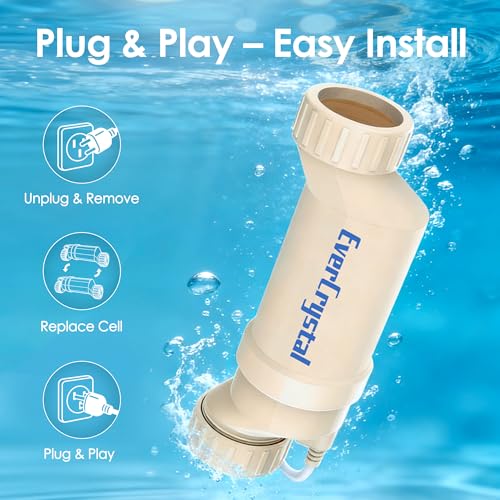
Before installation, check that you have enough straight-pipe clearance, the correct flow direction, clean union O-rings, matching cord reach, and the controller setting required for that cell type; also power down the system before disconnecting the old cell. After the swap, confirm there are no union leaks, reset or verify the controller’s cell selection if needed, and watch the first diagnostic cycle for salt reading and chlorine output. Buyers often describe compatible replacements as fast plug-and-play swaps with immediate system recognition, but that assumes the replacement matches the original plumbing and controller specification.
Value
A salt cell replacement can look affordable upfront, but the real value depends on how long it lasts, how reliably it produces chlorine, and whether it fits your system without extra parts or hassles. Look for a cell that balances purchase cost with expected lifespan, warranty support, and owner reports of consistent performance, and be wary of bargain options that need frequent cleaning, fail early, or create compatibility problems.
Judge value by expected service life and warranty coverage, not just the lower upfront cost versus an original-equipment replacement. A cheaper cell can be a strong buy if it fits correctly, restores output, and lasts multiple seasons, but it becomes poor value if salt readings are unreliable or the cell fails shortly after installation. Owner feedback reflects exactly that tradeoff: many buyers appreciate getting the system running for much less, while others question the savings when durability or diagnostics fail early.
1,000,000+ shoppers use Buyer's Guide every week to find the best products and services online.

Helping millions of users make smarter purchases online.


