











We also considered 10 others:


Our Top Choice
The order above is not editorial opinion, and it is not paid placement. It comes from what shoppers across our network actually do - which rain barrels they compare, and which they ultimately buy. We re-rank as new data comes in, so the long-term favorites have to keep earning their spot against new entrants. The full method, including how we make money.
Rain Barrels Buyer's Guide
A rain barrel has to balance storage volume with safe, clean, trouble-free placement right beside a downspout. The sharpest buying concerns are whether it captures water without inviting debris or mosquitoes, whether overflow is routed away from the foundation, and whether the barrel stays stable and leak-free once full.
Capture Control
Rain barrels are only as useful as the water they can capture cleanly during real storms. The inlet, screen, and overflow design determine whether the barrel saves water or simply creates splash, clogging, and drainage problems around the house.
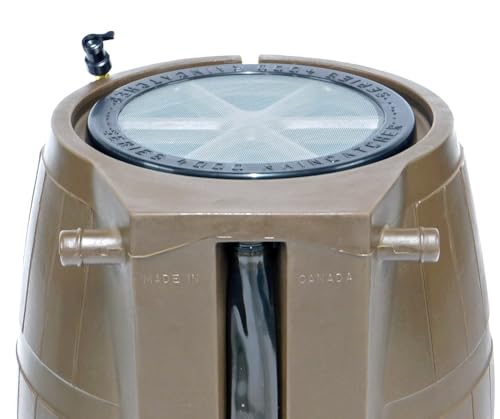
Look for a screened inlet sized for your downspout or diverter, plus a clear overflow path that can be routed to a drain, garden bed, or second barrel. A barrel that fills quickly is useful only if excess water has somewhere safe to go; uncontrolled overflow can soak siding, mulch, or the foundation area. Prefer designs that keep leaves out at the top and allow easy screen cleaning, since clogged screens reduce collection during heavy rain. Owner feedback supports this priority: buyers praised barrels that caught rain efficiently and filled faster than expected, and they called out screened tops as practical for collecting rainwater while keeping larger debris out.
Usable Capacity
Nominal gallons do not always equal convenient gallons. Real capacity depends on fill speed, draw-off height, barrel shape, and whether the container remains supported and stable when holding hundreds of pounds of water.
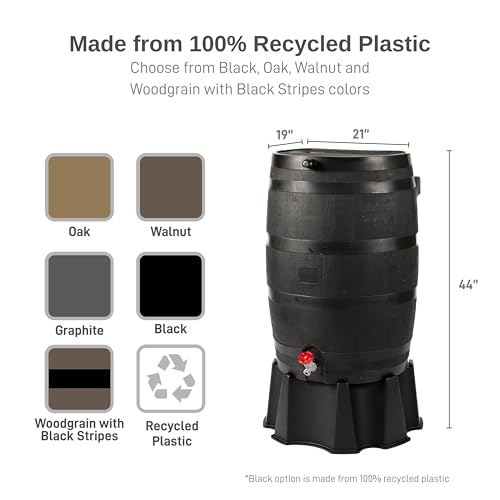
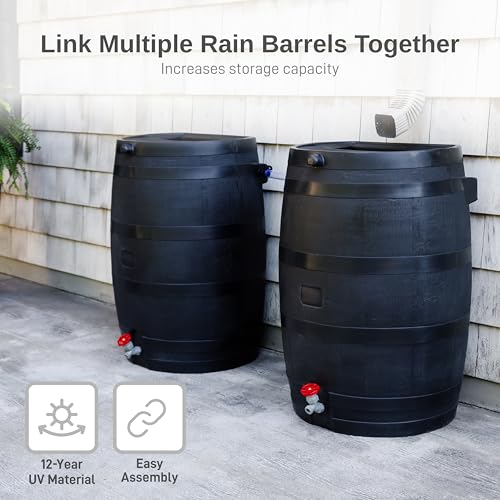
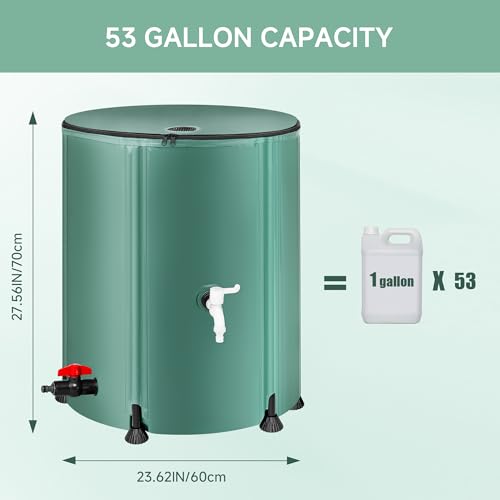
Choose capacity based on roof area, rainfall pattern, and how you plan to use the water, not just the listed gallon number. A larger barrel can fill surprisingly fast from a single downspout, so shoppers who irrigate beds or containers should consider whether they need a second barrel, a linking kit, or a planned overflow line. Also check whether the shape preserves usable volume when full; thin walls, poor support, or uneven placement can cause bowing that reduces practical capacity. Owners in the sentiment set often found useful capacity once filled, with some saying a 60-gallon size filled quickly and made them want another barrel for overflow, while others reported variable usable capacity when barrels warped, bowed, or were modified.
Fittings
Most rain barrel failures show up at connection points rather than in the concept of the barrel itself. Good fittings make the barrel easier to install, easier to drain, and less likely to leak under the pressure of stored water.
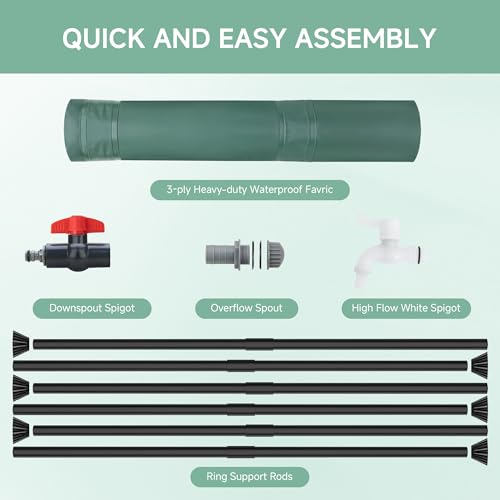
Inspect the spigot, drain, hose threads, gaskets, and included sealing materials before buying. A low spigot is good for draining more of the barrel, but it may need a stand for watering cans; a higher spigot is easier to access but leaves more water behind unless there is a separate drain. Prefer screw-in fittings with replaceable washers or standard hose compatibility, and avoid vague proprietary outlets if you plan to connect hoses, soaker lines, or a second barrel. Owner reports specifically valued useful included parts such as a screened top, screw-in valve, and sealing tape, and also praised quality fittings as part of a dependable outdoor setup.
Build Quality
Rain barrels live outdoors through sun, temperature swings, storms, and the constant stress of stored water. Durable materials and reinforced stress points reduce leaks, deformation, and premature replacement.
Prioritize UV-resistant, thick-walled construction with reinforced flat areas around the spigot, inlet, and stand contact points. A full barrel is extremely heavy, so the body should not flex excessively, bulge at the sides, or depend on a flimsy base to hold its shape. In freeze-prone climates, plan to drain and disconnect the barrel before hard freezes unless it is explicitly built and installed for winter use. Owner sentiment strongly rewards sturdy, well-made barrels and solid stands, but it also flags that durability can vary: some barrels stayed like new while others warped or bowed depending on placement and modifications.
Yard Fit
A rain barrel must fit the exact downspout location, not just the yard in general. Poor placement can make an otherwise good barrel unstable, hard to access, or visually intrusive.
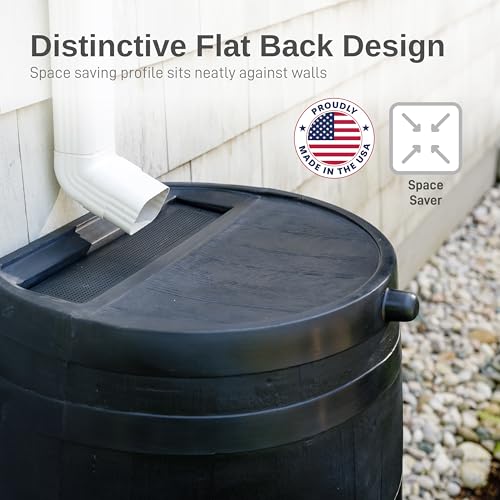
Measure the downspout area before choosing a barrel: width, depth, spigot clearance, wall clearance, lid access, and the path for overflow tubing all matter. Flat-back designs are especially useful where the barrel needs to sit close to siding or a fence, but the base still must be level and fully supported. Avoid placing a barrel on soft soil, sloped pavers, or a narrow stand that can shift when the barrel fills. Owners liked barrels that sat close to a wall and blended into the yard rather than looking bulky, and they also noted that leveling the placement area made assembly with a stand easier.
Setup Effort
Easy setup matters because rain barrels are often installed in tight spaces around downspouts. A design that is simple to assemble, clean, and adjust is more likely to stay in use season after season.
Check what arrives preinstalled versus what you must assemble: spigot, stand, lid, screen, overflow port, plugs, washers, and downspout adapters. More pieces are not automatically bad, but tiny hardware and multi-step stands can turn a simple water-saving project into a slow setup, especially if the site must be leveled first. Also consider maintenance access: you should be able to remove debris, tighten fittings, drain sediment, and winterize without disassembling the whole barrel. Owner sentiment is mixed here: many buyers found setup straightforward, including small modifications or stand installation, while others said the number of screws, nuts, bolts, and parts made assembly slow and patience-testing.
1,000,000+ shoppers use Buyer's Guide every week to find the best products and services online.

Helping millions of users make smarter purchases online.