







We also considered 10 others:


Our Top Choice
The order above is not editorial opinion, and it is not paid placement. It comes from what shoppers across our network actually do - which compost bins they compare, and which they ultimately buy. We re-rank as new data comes in, so the long-term favorites have to keep earning their spot against new entrants. The full method, including how we make money.
Compost Bins Buyer's Guide
Buying a compost bin is a tradeoff between biological performance and everyday containment: the bin has to breathe and mix well enough to break material down, but it also has to control odor, mess, pests, and space. The sharpest choices are indoor versus outdoor use, single versus dual-batch workflow, and whether you need true composting capacity or mainly food-waste reduction.
Space Fit
Compost bins work best when their volume matches both the waste stream and the place they will live. Too small means overflow and interrupted batches; too large can be hard to turn, slow to fill correctly, or awkward on a patio, balcony, or under a sink.
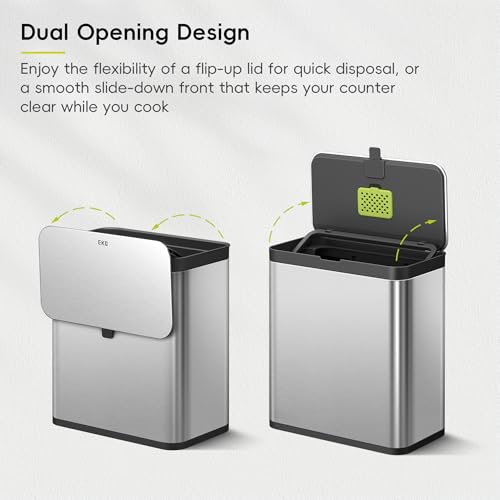
Start by deciding whether you need a kitchen collector, an electric countertop processor, a patio tumbler, or a larger outdoor yard-waste bin. For countertop or under-sink use, look for a compact footprint, a lid that clears cabinets, and enough volume to hold several meal-prep sessions without forcing daily emptying. For outdoor composting, match gallons to your household and garden: small homes often do well with mid-size dual chambers, while heavy leaf, grass, and yard-waste loads need more adjustable capacity; avoid oversized bins if you cannot fill them with a balanced mix of greens and browns. Owner feedback supports this split: shoppers repeatedly liked mid-size outdoor tumblers for patios, balconies, small families, and home gardeners, while kitchen bins were praised when they held plenty without feeling oversized. Larger adjustable outdoor bins were appreciated for yard waste and bigger composting jobs, and lighter builds were valued when the bin still felt manageable to move or refill.
Batch Flow
The bin’s composting method determines how easily scraps become usable material. Tumblers, dual chambers, stationary bins, bags, and electric processors solve different problems, so the best choice depends on whether you prioritize active composting, waste reduction, or simple collection.
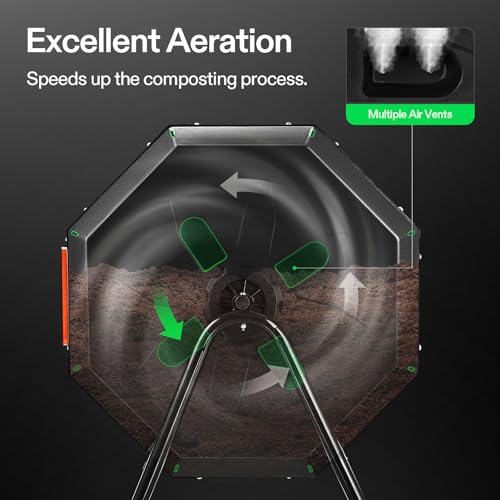
For active outdoor compost, prioritize aeration and batch separation: dual chambers let one side cure while the other keeps receiving fresh scraps, and a tumbler should rotate smoothly enough that you will actually mix it several times a week. Look for internal fins or a shape that lifts and drops material rather than just sliding it around, and remember that warm conditions, moisture balance, and enough dry browns matter as much as the bin. For electric kitchen units, understand that many produce a dry, crumbly reduced material rather than fully finished garden compost; plan to cure or blend that output appropriately before using it around plants. If composting pet waste, keep it in a dedicated system and do not apply it to edible gardens unless the process is specifically designed to manage pathogens. Owner sentiment strongly favored dual-chamber and rotating designs because they made regular composting cleaner and easier, kept different batches going, and handled kitchen scraps plus small-home gardening routines well. Owners of electric-style units also liked that food scraps were reduced into a dry, broken-down output that fit into a gardening routine.
Odor Control
Odor problems usually come from trapped wet scraps, poor carbon balance, or a lid and filter system that cannot contain kitchen waste. A good compost bin should control smells without creating an anaerobic, soggy mess.
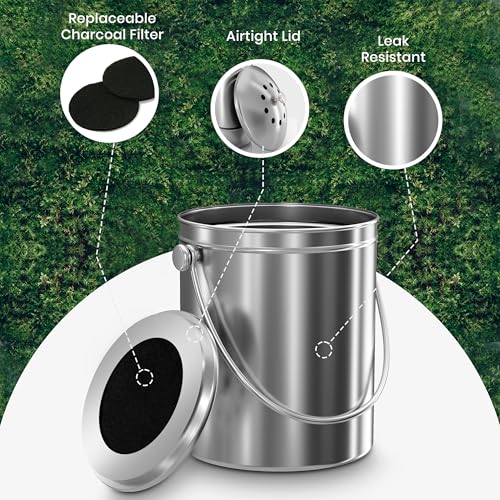
For indoor or under-sink bins, choose a tight-fitting lid, a filter or venting approach suited to food scraps, smooth interior surfaces, and a removable liner or bucket that can be emptied before liquid and residue build up. For outdoor bins, avoid designs that let rain flood the contents or leave large gaps for pests; controlled airflow is good, but exposed scraps attract insects and animals. Electric countertop units should have sealed cycles, accessible filters or odor-control parts, and a noise level you can tolerate if running overnight. Owner feedback makes this a major divider: kitchen bins were especially liked when closed lids kept scraps from smelling up the room, and electric units earned repeated praise for no bad smell during or after cycles. Buyers also noted quiet operation as a strength for countertop or overnight use, which matters when the bin lives in a working kitchen rather than outside.
Build Strength
Compost is heavy, wet, acidic, and often exposed to sun, cold, and repeated turning. Weak panels, flimsy frames, or loose doors can turn a useful bin into a leaky, hard-to-use mess long before the composting process is finished.
For outdoor bins, look for UV-resistant plastic, thick panels, rust-resistant hardware, a stable frame, and latches or sliding doors that stay shut when the drum is partially full. Raised steel bases can help keep tumblers off wet ground, but they must resist wobble when loaded; ground-sitting bins should have enough wall rigidity that they do not bow outward. For kitchen bins, stainless steel or rigid plastic should feel stable, resist staining, and have seams that are easy to wipe clean. Owner sentiment consistently rewarded sturdy construction: buyers described solid, secure bins with heavy-duty material, thick plastic panels, raised bases, and snap-together pieces that felt confident once assembled. Several outdoor tumblers were received as good-quality and well constructed after setup, while kitchen models were liked when they felt sturdy enough to leave out.
Daily Access
A compost bin only works if adding scraps, turning material, emptying finished compost, and cleaning residue are easy enough to do routinely. Small access frustrations compound quickly because composting is a repeated habit, not a one-time task.
Check the access points before buying: doors should be wide enough for a bowl of scraps or a scoop of leaves, stay open when loading, and not dump material unexpectedly when the chamber is rotated. Tumblers need comfortable grab points and smooth rotation under load, not just when empty. Kitchen bins should fit where food prep happens, accept liners if you use them, and have removable buckets or liners for washing; electric processors benefit from removable key parts and a cleaning cycle. Owner feedback backs this up: raised dual-chamber drums, sliding doors, easy turning, and simple grab points made outdoor composting feel cleaner and easier to manage. Kitchen and electric units were praised when loading, button use, cleanup, removable liners, bag-friendly designs, and accessible parts made daily operation straightforward.
Setup Ease
Many outdoor compost bins arrive as panels, rods, fasteners, and frame pieces, so assembly quality affects both first impressions and long-term stability. A bin that is easy to assemble correctly is less likely to wobble, leak, bind, or have doors that misalign.
If you are choosing a panel-style tumbler or outdoor bin, look for clear step-by-step instructions, labeled parts, snap-together or low-fastener construction, and a frame that can be squared up before tightening. Be cautious with designs known to rely on vague diagrams, many similar screws, or hard-to-align panels, because small setup errors can affect rotation and door fit. Also consider whether the assembled bin can be moved empty by one person and whether its weight balance will remain stable outdoors. Owner sentiment shows setup can be a deciding factor: buyers strongly appreciated fast snap-together assembly and straightforward builds that did not feel like complicated screw-heavy projects. The main watch-out was poor instructions with limited explanation, while lightweight-but-sturdy designs were liked when they made lifting, moving, and refilling easier after assembly.
Don't miss the latest sales on Compost Bins and more. Get the best Black Friday deals today!

1,000,000+ shoppers use Buyer's Guide every week to find the best products and services online.

Helping millions of users make smarter purchases online.