










We also considered 10 others:


Our Top Choice
Compare Features


The order above is not editorial opinion, and it is not paid placement. It comes from what shoppers across our network actually do - which pool pumps they compare, and which they ultimately buy. We re-rank as new data comes in, so the long-term favorites have to keep earning their spot against new entrants. The full method, including how we make money.
Pool Pumps Buyer's Guide
Pool pumps are not interchangeable: a winter-cover pump, an above-ground circulation pump, an in-ground replacement pump, and a high-flow drain pump solve different problems and fail in different ways. The sharpest buying concerns are matching flow to your pool, plumbing, filter, and head height without creating priming/cavitation problems, and checking the leak-prone sealing points that can pull air into the system or damage the motor.
Build
You want a pool pump with solid construction because it runs for long stretches in a wet, outdoor environment, and weak housings, poor seals, or cheap fittings can lead to leakage, noise, and early failure. Look for durable materials, a well-sealed motor and strainer lid, corrosion-resistant hardware, and connections that feel secure rather than flimsy. Be cautious of pumps with recurring owner complaints about cracked housings, air leaks, or frequent seal replacements.
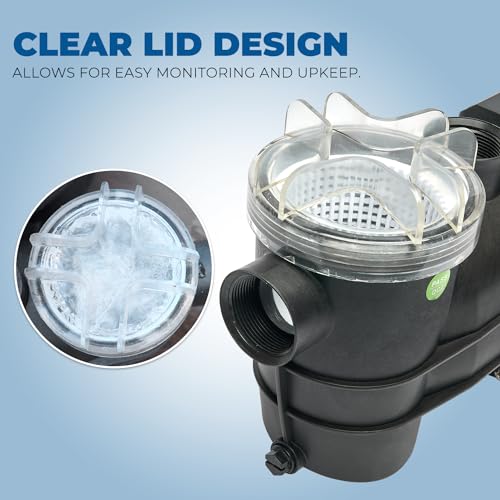
For pool use, prioritize a pump body with serviceable seals, a rigid strainer basket housing, a clear lid that clamps evenly, corrosion-resistant hardware, and wet-location-safe cord or wiring appropriate to how it will be installed. Avoid flimsy basket covers, poorly supported motor-to-housing joints, and designs where the lid O-ring is hard to seat, because even a small suction-side leak can introduce bubbles, lose prime, and reduce filtration. For cover and drain pumps, also look for a stable base that will not tip on a sagging cover and an intake that resists clogging from leaves. Owner feedback supports this focus: many buyers describe solid-feeling pumps that work well immediately, but recurring complaints center on long-term durability, leaks around seals and basket lids, and leakage at the motor-to-housing connection.
Power
You want enough pumping power and water flow to circulate your pool efficiently, support filtration, and remove debris before it settles or clouds the water. Look for a pump matched to your pool size, plumbing, and filter capacity, because too little power can mean weak cleaning performance while too much can waste energy, create noise, or strain equipment.
Choose power by the job, not by the biggest flow number. A circulation pump should be sized to your pool volume, filter rating, pipe diameter, and total dynamic head so it can turn the water over efficiently without overpowering the filter or starving the suction line; some pools may need variable speed or enough head capability to prime reliably. A cover or drain pump should be judged by real-world lift height, hose diameter, debris tolerance, and how low it can remove standing water, not just maximum flow at zero lift. Owner reports back up the importance of correct sizing: many pumps move standing water quickly, clear cloudy water fast, and improve circulation, while some setups only get strong movement or proper priming at higher speed.
Reliability
You want a pool pump that starts consistently, runs without frequent interruptions, and can handle regular filtration demands without tripping, overheating, or needing repeated resets. Look for signs of dependable long-term operation, such as solid owner feedback about startup behavior and durability, and be cautious of pumps with repeated complaints about early failures, leaks, noisy strain under load, or inconsistent performance.
For reliability, look for thermal overload protection, dry-run protection or automatic shutoff where relevant, replaceable shaft seals and lid O-rings, a debris basket that is easy to clean, and a motor rated for the duty cycle you expect. If the pump will run daily through a swim season, favor models with accessible replacement parts and a design that can tolerate minor debris without impeller damage; if it is a cover pump, make sure it can handle intermittent operation during storms without staying dry and overheating. Owner sentiment is consistent with this caution: many pumps run dependably for months or longer and keep pools clear, but reliability is mixed overall, with some units lasting years and others failing much sooner.
Value
You want a pool pump that justifies its cost through dependable performance, energy efficiency, and a lifespan that matches the demands of your pool. Look for a pump with enough capability for your pool size and plumbing without paying for unnecessary power, and watch out for cheaper options that may cost more over time through higher energy use, noise, repairs, or early replacement.
Assess value by total system fit and operating cost, not just upfront savings. A good-value pool pump should match your existing plumbing, voltage, unions, and filter so you are not paying extra for adapters, rewiring, leaks, or repeated troubleshooting; for daily circulation, energy use and variable-speed capability can matter as much as purchase cost. For replacement pumps, confirm that lid gaskets, baskets, impellers, capacitors, and seals are obtainable, because a cheap pump becomes poor value if one failed seal means replacing the whole unit. Owners often feel they get strong value when a pump performs above expectations, replaces a costlier service call, or works well as a replacement, but durability uncertainty is the key reason to look beyond the initial deal.
Installation
A pump that’s easy to install can save you time, extra parts, and a service call, especially if you’re replacing an existing unit. Check that the inlet and outlet size and orientation match your plumbing, the electrical requirements fit your setup, and there’s enough clearance for wiring, unions, and basket access. Also watch for priming needs and whether the pump is designed to drop into your current pad without major pipe cutting or rewiring.
Before buying, verify voltage, plug versus hardwire requirements, breaker and GFCI compatibility, bonding/grounding needs, port size, union spacing, pipe orientation, and whether the pump is self-priming or must sit below water level. For replacement circulation pumps, measure centerline height and inlet/outlet locations so the plumbing does not need to be forced into alignment; for threaded fittings, plan on correct sealant or thread tape without overtightening plastic ports. For cover pumps, check cord length, discharge hose fit, and whether the float or automatic sensor has enough room to operate on your cover. Owner feedback generally supports that installation can be straightforward, especially with included slip-on or compression-style fittings or pre-wired setups, but fitting preparation is a common make-or-break detail.
Noise
You’ll notice a loud pool pump quickly, especially if it runs near patios, bedrooms, neighbors, or common outdoor spaces. Look for pumps described as quiet during normal operation, and pay attention to factors like variable-speed motors, vibration-dampening design, and proper installation, since poor mounting or plumbing can make even a good pump sound louder than expected.
In pool systems, noise is often a symptom as much as a comfort issue, so evaluate whether the pump can run quietly at the flow your pool actually needs. A correctly sized pump on unrestricted plumbing should have a steady motor hum; grinding, rattling, pulsing, or loud suction noise can point to cavitation, air leaks, bad bearings, debris in the impeller, or an oversized pump fighting small plumbing. If the equipment pad is near bedrooms, patios, or neighbors, favor variable-speed operation, rubber isolation, solid mounting, and plumbing layouts that reduce vibration transfer. Owners commonly praise quiet operation compared with older pumps, but noise impressions vary, with some units sounding rough or louder than expected.
Don't miss the latest sales on Pool Pumps and more. Get the best Black Friday deals today!

1,000,000+ shoppers use Buyer's Guide every week to find the best products and services online.

Helping millions of users make smarter purchases online.