





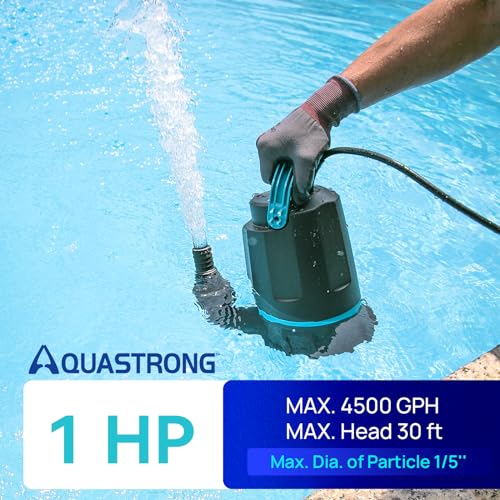

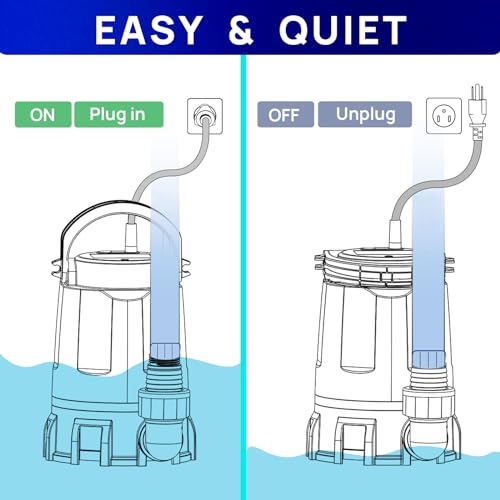


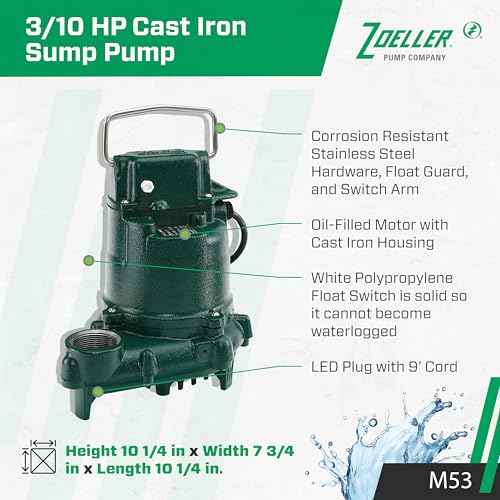


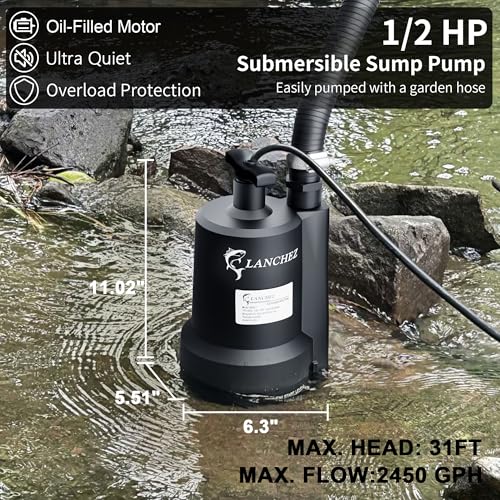


Our Top Choice
Why These Features Matter:
A sump pump is one of those basement objects that only gets attention in two situations: (1) during a real storm, when it’s suddenly the most important appliance in the house, and (2) when it fails, which is usually at 2 a.m. to the soundtrack of a very expensive-looking puddle. A “best sump pump” isn’t about bragging rights. It’s about choosing the version of boring that won’t ruin your weekend.
The tricky part is that sump pumps don’t live in tidy, curated conditions. They sit in damp pits, swallow grit, deal with power blips, and get asked to perform during peak chaos. So the features that matter aren’t the ones that sound impressive on a product box — they’re the ones that make the pump reliable, tolerable to live with, and less likely to turn into a science-fair volcano of noise and vibration.
Notable Strengths to Look For
- A float switch that doesn’t act like it has stage fright. The float is the tiny decision-maker: it tells the pump when to turn on and off. A good one triggers consistently and doesn’t get stuck against the basin wall like a shopping cart with a busted wheel.
- A build that feels like it can survive basement life. Materials matter here because the environment is not kind. Some pumps feel reassuringly substantial; others feel like they were designed for a splashy koi pond, not a muddy flood cycle.
- Manageable noise (or at least predictable noise). A sump pump is never silent, but there’s a big difference between a steady, workmanlike hum and a clanking, rattling thud that echoes through floorboards. If the pit is under a bedroom, noise stops being a footnote and becomes the plot.
- Check-valve compatibility that doesn’t turn into a weekend project. Backflow prevention is not glamorous, but it’s the difference between “pump ran once” and “pump runs every five minutes forever.” The best setups make it easy to add or replace a check valve without turning the discharge line into a frustrating plumbing sculpture.
- A cord length that respects real basements. Many basements do not have an outlet located exactly where a pump would like one. A cord that’s too short leads to extension-cord gymnastics (and nobody wants extra electrical drama in a damp corner).
The Features That Actually Make Daily Life Easier
Most people don’t hang out with their sump pump, but they live with its side effects: the sound, the vibration, the maintenance reminders, and the low-level anxiety of “is it working?” The good features are the ones that reduce the need to think about it.
- Stable base + less wobble. A pump that sits solidly in the basin is less likely to rattle the pipe like a percussion instrument. It also tends to feel less fussy during higher-flow events.
- Clear, sensible access to the intake area. Basins collect debris. The less intimidating it is to check and clean, the more likely it’ll actually happen — ideally before the pump starts making a noise that suggests it’s eating gravel.
- Thermal/overload protection that prevents panic. A pump that can protect itself from overheating is the kind of boring foresight that saves you from discovering failure by stepping into a squishy carpet.
- Thoughtful discharge connection. If attaching the discharge line feels like wrestling a jar lid with wet hands, that’s not a “minor inconvenience.” That’s the start of a future leak.
Float Switches: The Small Part That Causes Most of the Drama
If sump pumps had horoscopes, the float switch would be the moody one. It’s also the part most likely to get jammed, misfire, or cycle too often. In real homes, float behavior can be affected by things nobody thinks about until it’s happening: the basin size, the pump’s position, the angle of the discharge pipe, even a stray wire or zip tie that drifts into the wrong place.
- Tethered floats can be dependable, but they need space to swing. In a narrow basin, they can behave like a door that can’t fully open.
- Vertical floats are neater and often better in tighter pits, but they can be more sensitive to debris and need a clear path to move up and down.
Practical guidance: Match the float style to the space. If the basin is cramped, prioritize a design that won’t constantly snag. If the basin is roomy, the simpler float can be the less finicky choice.
Power Outages: The Moment of Truth
Storms love knocking out power. Basements love taking on water during storms. Put those together and you get the obvious conclusion: if flooding would be a catastrophe, a battery backup (or secondary pump system) isn’t an upgrade, it’s the adult decision.
- Backup systems keep water moving during outages and can cover a primary pump failure.
- Alarm features matter more than people expect. An audible alarm is useful; a notification system is better; either way, knowing there’s a problem beats discovering it with a mop.
Honest caveat: Backup setups take space, add cost, and introduce maintenance (batteries age; chargers fail; alarms get ignored until they’re not). But if the basement holds anything you’d be genuinely upset to lose — boxes of photos, a furnace, a finished space, a kid’s playroom — redundancy is sanity.
Noise, Vibration, and the “Is This Normal?” Factor
A sump pump can make a lot of perfectly normal sounds that still feel vaguely apocalyptic: the sudden start, the slosh, the discharge gurgle, the thunk of a check valve. The best systems keep those sounds from becoming the house’s unofficial jump scare.
- Look for smoother start/stop behavior. Constant short-cycling is irritating and can point to a setup issue (often check-valve related).
- Pay attention to how the discharge line is secured. Many “loud pump” complaints are actually “loose pipe banging against something” complaints.
- Expect some water noise. A quiet pump with a loud gurgling discharge still reads as loud at 3 a.m.
Things to know: A little noise is normal. A metallic grinding, persistent rattling, or a pump that seems to run constantly is not. Those are the sounds of something needing attention, not “character.”
Installation Realities (a.k.a. the Stuff That Makes People Rage-Quit)
Sump pump installation is rarely a graceful experience. It’s usually crouching in a tight corner, trying not to drop a clamp into the pit, and discovering the previous owner’s idea of “plumbing” was mostly optimism.
- Weight matters. Heavier pumps often feel sturdier, but they’re more annoying to maneuver in a narrow basin. Lighter pumps are easier to lift but can feel less stable if the fit is sloppy.
- Discharge sizing can be a headache. Adapters exist, but every extra joint is another potential leak point, and another thing to align while water drips on your sleeve.
- Cord management is a whole subplot. Too much cord becomes a tangle that interferes with the float. Too little cord becomes an extension cord decision you didn’t want to make in a damp environment.
Guidance: Plan cord routing and float clearance before dropping the pump in. The pump shouldn’t share a cramped little corner with a spaghetti pile of cable and a float that can’t move freely.
Durability Isn’t Glamorous, But It’s the Point
A sump pump doesn’t need to be impressive. It needs to be the kind of reliable that never becomes dinner conversation. Signs of durability tend to show up in boring ways: solid housing, quality seals, fewer flimsy-feeling components, and a general sense that it wasn’t designed as a one-season commitment.
- Better internal protection helps with heat and strain during heavy cycles.
- A design that tolerates minor debris reduces the odds of clogs and stuck switches.
- Serviceability matters: if the pump makes it difficult to inspect or replace common wear parts, maintenance gets postponed — and basements punish procrastination.
Honest caveat: “Built to last” still lives in a pit full of moisture and grit. Even good pumps benefit from periodic checks. The best product is still not a set-it-and-forget-it heirloom.
Little Annoyances That Are Worth Caring About
These are the details that don’t show up in marketing photos but absolutely show up in real basements.
- Awkward handles. Some are comfortable; some feel like they were designed for a hand that doesn’t exist.
- Float snag points. Zip ties, cords, and narrow walls can all conspire to keep the float from moving. This is a surprisingly common “it worked until it didn’t” story.
- Overly sensitive switching. If it kicks on for a shallow trickle, it may cycle constantly. That’s annoying to hear and not ideal for longevity.
- Basins that are too small. Not technically the pump’s fault, but it becomes the pump’s problem fast.
Choosing the Right Setup: A Simple Decision Framework
- Finished basement + valuable stuff: prioritize redundancy (backup power/secondary pump) and alarm capability. Also prioritize quieter operation if the pit is near living space.
- Older home with occasional water: prioritize reliability and a float design that won’t stick. Consider an alarm even if backup power feels like overkill.
- Tight pit or awkward corner: prioritize compact footprint and a float system that works in constrained space. Also consider ease of removal — because it will need to come out eventually.
- High-water events: prioritize a setup that can move water efficiently without constant cycling. The pump should sound busy, not frantic.
Things to Know Before Calling Anything “Best”
- A great pump can be sabotaged by a bad installation. Loose discharge lines, missing/failed check valves, and poor float clearance are the villains in a lot of “this pump is terrible” reviews.
- Noise complaints are often system complaints. Pipes bang. Valves clunk. Basins amplify. The pump gets blamed because it’s the only character anyone knows by name.
- Maintenance is small but real. A quick look a couple times a year — especially before storm season — is the difference between “everything’s fine” and “why is the basement… like this.”
- Backup power isn’t optional in some homes. If the basement floods during outages, the question isn’t “is it worth it?” The question is “how many times can the cleanup happen before everyone loses their mind?”
The Most Honest Caveat
The best sump pump is the one that disappears into the background — until it’s needed, at which point it becomes the calm, competent type that just handles it. If a pump’s standout feature is that it’s “powerful,” but it’s loud, fussy, prone to short-cycling, or complicated to maintain, it’s not actually making life easier. The quiet hero here is the pump that starts when it should, stops when it should, and never makes a basement feel like a suspense novel.
1,000,000+ shoppers use Buyer's Guide every week to find the best products and services online.

Helping millions of users make smarter purchases online.

