


- Max Pool size: 20'
- Debris Removal: Filter bag
- Power: 60-minute battery + manual direction
- Pool Type: Above & in-ground
- Ideal For: Floors





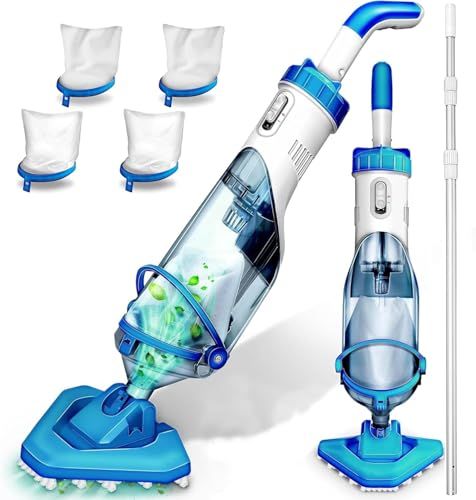
LANCHEZ Pool Vacuum
Overview and real-world performance

The LANCHEZ Pool Vacuum is designed for pool owners who want a practical, hands-on way to keep floors, corners, and hard-to-reach areas free of debris without committing to a fully robotic system. In day-to-day use, it aims to simplify the most common cleaning tasks: collecting leaves, sand, silt, and small organic matter that settle after storms, heavy pool use, or weeks of gradual buildup. The appeal is straightforward: you can spot-clean as needed, target the dirtiest areas first, and avoid running a larger system longer than necessary.
Performance with any pool vacuum tends to come down to suction strength, head design, and how well the unit maintains consistent pickup as it moves across different surfaces. With a product like the LANCHEZ, users typically notice the biggest difference when dealing with fine debris such as sand or gritty sediment, because those particles reveal whether suction is steady and whether the vacuum head seals well enough against the pool floor. For larger debris like leaves, the practical experience often depends on how quickly the debris path clogs and how easy it is to clear. A good pool vacuum should let you resume cleaning quickly, rather than turning maintenance into a repeated stop-and-start routine.
Another real-world factor is maneuverability. Pools are rarely simple rectangles with open floor space; they have steps, curves, drains, ladders, and tight corners that collect debris. A vacuum that feels comfortable to guide and that can reach awkward areas without constant repositioning saves time and frustration. Owners who clean frequently will appreciate anything that reduces wrist strain, awkward angles, or the need to fight the tool to keep it on the floor. If you are the kind of user who prefers quick touch-ups a couple of times a week instead of long cleaning sessions, controllability can matter just as much as raw suction.
Finally, consistency over time is what separates a “works fine once” purchase from a dependable tool. Pool gear lives in a harsh environment: chlorinated water, sun exposure, temperature swings, and grit. A vacuum that is easy to rinse, quick to inspect, and simple to store tends to get used more often, which indirectly keeps the pool cleaner. If the LANCHEZ is used as intended and cared for properly, it can serve as a regular maintenance tool that helps keep water clarity and hygiene in a better place between deeper cleanings.
What to consider before buying
Before purchasing the LANCHEZ Pool Vacuum, the most important consideration is compatibility with your pool type and your current cleaning setup. Pool surfaces vary widely, and not every vacuum head or pickup approach behaves the same on plaster, vinyl, fiberglass, or tile. If your pool has a delicate liner, you’ll want to be confident the vacuum won’t snag, scuff, or create unnecessary friction. If your pool is plaster or concrete, you may prioritize a vacuum that can handle gritty sediment without skipping or losing suction at the edges.
Suction and debris handling are next, and they tend to be the practical deal-breakers. Think about what your pool actually collects. If your yard drops lots of leaves, blossoms, or seed pods into the water, you need a vacuum that can pass larger pieces without clogging constantly. If you get frequent dust, sand, or fine silt, you need good pickup of small particles and a setup that doesn’t simply stir the debris into a cloudy plume. The “most important” factor here depends on your environment, but in many households fine debris performance is the more telling benchmark because it’s harder to remove and more visible when left behind.
Ease of use is an often underestimated factor that becomes critical after the novelty of a new tool wears off. Consider how you will actually clean: do you prefer short cleaning sessions, or do you do a long weekly clean? Are you comfortable assembling and disassembling parts, or do you want something that is ready quickly? A pool vacuum that is a hassle to set up tends to sit unused, and the pool pays the price. If the LANCHEZ integrates smoothly into your normal routine and doesn’t create extra steps, it is more likely to deliver real value.
Durability and maintenance should be weighed with the same seriousness as performance. Pool equipment fails when seals degrade, plastic becomes brittle, or moving parts trap grit. Look for a vacuum that you can rinse thoroughly, inspect easily, and store out of direct sun. A product that is cheap but fragile can cost more in the long run if it needs replacement or frequent troubleshooting. If you share the pool maintenance duties with family members, the best option is the one that anyone can use without special knowledge or excessive force.
Finally, consider whether this tool is meant to replace or complement what you already have. Some users will pair a manual or semi-manual vacuum with a skimmer routine and occasional deep cleaning. Others want a vacuum to handle most debris so the filter system doesn’t do all the work. The most important decision is clarity about your goal: if you want “set it and forget it,” a robotic cleaner may be the better category. If you want fast, targeted control and the ability to react immediately after a windy day or pool party, the LANCHEZ style of vacuum can be a smart fit.
Common Questions
Will the LANCHEZ Pool Vacuum work for both above-ground and in-ground pools? In many cases, yes, as long as the vacuum’s design and your setup match the pool’s size and surface. The key is ensuring the vacuum can comfortably reach the areas you need to clean and that it performs well on your particular liner or finish.
How well does it handle fine debris like sand or silt? Fine debris is where suction consistency and seal-to-surface contact matter most. If you frequently see dust-like sediment on the floor, you’ll want to move slowly and methodically so the vacuum can pick up particles rather than stirring them into the water.
Is it difficult to maintain? Routine maintenance is typically manageable if you rinse the vacuum after each use and check for trapped debris that could reduce performance. Storing it out of direct sunlight and away from extreme heat can also help extend its usable life.
Do I still need to skim and brush my pool if I buy this vacuum? Yes, in most cases. Skimming removes floating debris before it sinks, and brushing prevents buildup on walls and steps. A vacuum is excellent for what settles on the floor and in corners, but it works best as part of a simple, consistent maintenance routine.
Overall, the LANCHEZ Pool Vacuum is best viewed as a practical cleaning tool for owners who value direct control, quick response cleaning, and a straightforward routine. If you prioritize compatibility with your pool surface, strong real-world debris pickup, and ease of use you’ll actually stick with, it can be a worthwhile addition to your maintenance setup. The right choice comes down to matching the vacuum to the debris you get most often and selecting a tool that makes cleaning feel simpler rather than more complicated.