


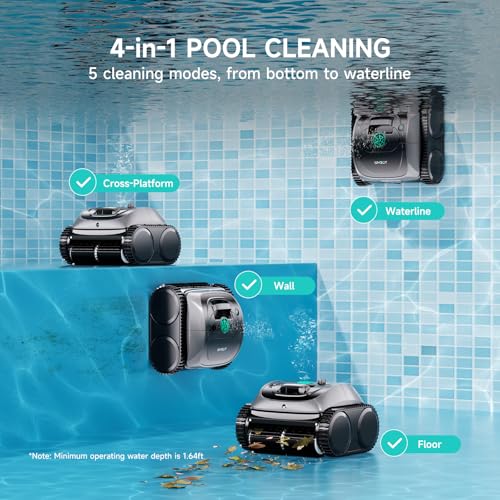





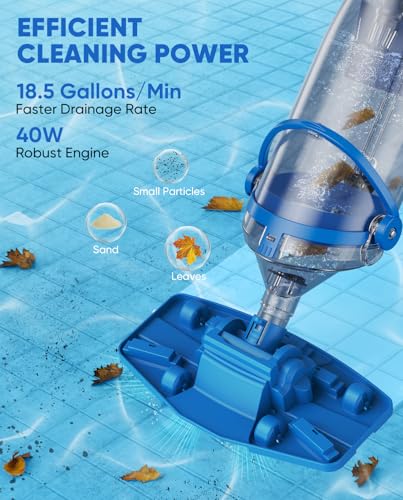


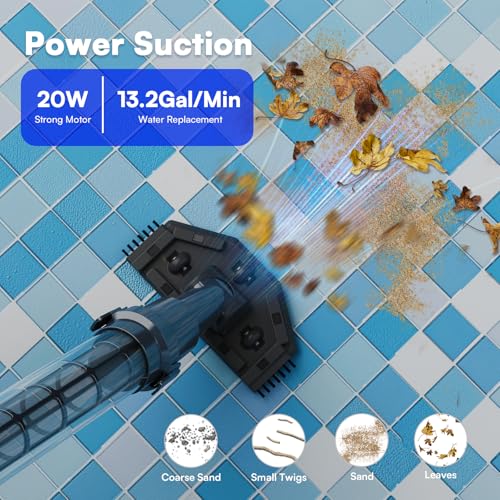
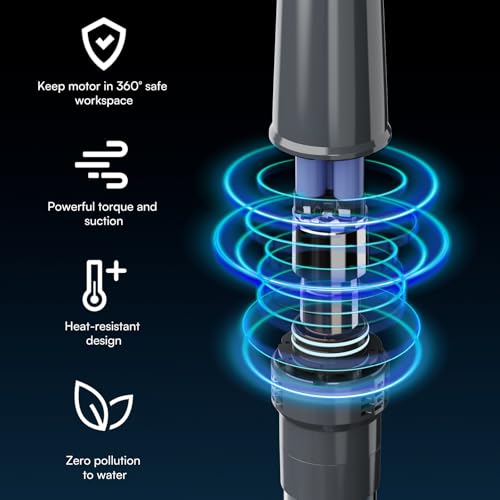

We also considered 10 others:


Our Top Choice
Compare Features


The order above is not editorial opinion, and it is not paid placement. It comes from what shoppers across our network actually do - which pool cleaners they compare, and which they ultimately buy. We re-rank as new data comes in, so the long-term favorites have to keep earning their spot against new entrants. The full method, including how we make money.
Pool Cleaners Buyer's Guide
Pool cleaners are not one-size-fits-all: a cleaner that excels at floor sand may do little for pollen and bugs on the surface, while a skimmer may never scrub the floor or climb walls. The sharpest checks are matching the cleaner type to your pool’s debris pattern, surface, shape, plumbing or charging setup, and whether it can finish a cycle without getting stuck, clogging, or becoming another chore to maintain.
Cleaning
You want a pool cleaner that consistently removes the debris your pool actually gets—leaves, sand, dirt, algae-prone buildup, or fine dust—so the water looks clearer and requires less manual brushing or skimming. Look for strong cleaning performance across the floor, walls, waterline, and tight corners if those areas matter for your pool shape, and watch out for models that only pick up large debris while leaving fine sediment behind or stirring it back into the water.
Choose cleaning coverage based on where your pool actually gets dirty: surface-only skimmers are best for leaves, bugs, petals, and pollen before they sink; floor vacuums are better for sand, silt, dirt, and settled debris; wall/waterline cleaning matters if algae rings or dusty tile lines are a recurring issue. For suction-side or pressure-style cleaners, confirm they are compatible with your pump flow and hose length; for robotic or cordless units, check whether they can handle slopes, steps, drains, vinyl liners, and irregular shapes without stalling. Owner feedback supports this split: automatic cleaners are praised for hands-off daily clarity and reliable debris pickup, while surface skimmers earn especially strong approval from people with trees, pollen, bugs, and floating debris.
Ease
A pool cleaner should save you effort, not create another chore, so look for one that’s straightforward to set up, start, empty, and rinse after each cycle. Pay attention to how easily you can access the debris basket or bag, whether controls are intuitive, and whether routine maintenance requires tools or awkward disassembly. If a cleaner is cumbersome to lift, untangle, or clean out, its time-saving benefits can disappear quickly.
Prioritize ease features that reduce the jobs pool owners actually avoid: fast basket removal, no-tool filter rinsing, tangle-resistant cord or cordless operation, easy lift-out weight, simple start controls, and a debris basket large enough that it does not need emptying mid-cycle during leaf season. If you have an above-ground pool, spa, shallow shelf, or tight corners, look for lightweight handling, pole compatibility, compact heads, and attachments that can reach confined areas; if you have an in-ground pool, make sure the cleaner can be retrieved without straining your back. Owners consistently describe the best-liked units as set-it-and-forget-it, simple to turn on and empty, quieter than expected, and much less hassle than dragging out hoses or manually skimming.
Value
A pool cleaner should justify its cost by saving you time and keeping your pool consistently clean without constant fixes or supervision. Look for the right balance of cleaning coverage, reliability, ease of maintenance, and included features for your pool type, and be wary of paying extra for capabilities you won’t use or a low upfront price that leads to frequent repairs, replacement parts, or poor performance.
Judge value by avoided labor and avoided incompatibility, not just by buying the lowest-cost cleaner. A cheaper suction cleaner is only a good buy if your pump, skimmer line, hose run, and debris load suit it; a cordless or robotic unit is worth more if it replaces frequent manual vacuuming, has accessible filters and wear parts, and can finish your pool size in one run. Owner sentiment supports strong value when cleaners deliver reliable bottom cleaning or routine maintenance at a lower overall cost than more complex alternatives, especially when buyers compare the results favorably with higher-cost automatic cleaners.
Build
A well-built pool cleaner is more likely to handle repeated cycles, debris, chemicals, and sun exposure without constant breakdowns or parts wearing out early. Look for sturdy wheels or tracks, solid hoses or cables, secure seals, and easily available replacement parts; watch out for flimsy plastics, weak connectors, or designs that make routine maintenance harder than it should be.
For build quality, look closely at the parts that fail first in pool environments: drive tracks or wheels, brushes, hose sections, swivels, seals, latches, filter baskets, charging contacts, and plastic exposed to sun and chemicals. Saltwater pools, high chlorine, rough plaster, and constant outdoor storage can accelerate wear, so favor sturdy housings, replaceable consumables, secure basket locks, and a design that will not crack or warp after repeated use. Owners tend to praise cleaners that work right away, start moving without fuss, and reliably take over routine vacuuming, with positive quality impressions strongest when the unit arrives intact and continues to feel dependable in regular maintenance.
Battery
If you choose a cordless or solar-powered pool cleaner, battery life determines whether it can finish a full cleaning cycle without stopping short. Look for a runtime that matches your pool’s size, shape, and debris load, and consider recharge time as well as whether the cleaner maintains suction and navigation as power drops. For solar-powered options, watch how dependent performance is on steady sunlight, especially if your pool is shaded or you need predictable cleaning on cloudy days.
For battery-powered or solar units, match runtime to your pool volume and cleaning job: a surface skimmer can benefit from all-day solar assistance, while a floor robot needs enough battery to complete the full floor pattern before recharge. Check charge time, rated runtime under real debris load, whether shade limits solar recovery, whether the unit can be left in the pool safely, and whether it has a clear low-battery or retrieval behavior so it does not die in the deep end. Owners strongly support cordless and solar convenience, reporting long runs, full cleaning cycles on larger pools, and around-the-clock skimming with less plug-in charging, especially when solar charging keeps up with constant use.
Debris
Debris pickup matters because it determines whether your pool cleaner can handle the actual mess in your pool, from fine sand and dirt to leaves, twigs, and heavier debris. Look for strong, consistent suction and a debris system that matches your pool’s needs, since some cleaners do well with large leaves but struggle with fine particles, while others can lose effectiveness when the basket or filter starts to fill.
Match debris capacity and filtration to your dominant mess: large leaves and twigs need a wide intake and roomy basket; sand, pollen, silt, and dead algae require finer filtration that will not simply blow particles back into the water. If you have trees over the pool, avoid tiny baskets that clog quickly; if you fight fine dust or desert sand, verify micron-level filter options or fine mesh inserts; if algae is present, remember a cleaner collects debris but does not replace chemical treatment and brushing. Owner reports back this up: strong performers are praised for pulling in leaves, bugs, pollen, petals, sand, silt, dirt, algae residue, twigs, and both large and fine debris, with easy-to-empty baskets making high-debris pools more manageable.
1,000,000+ shoppers use Buyer's Guide every week to find the best products and services online.

Helping millions of users make smarter purchases online.


