









We also considered 10 others:


Our Top Choice
The order above is not editorial opinion, and it is not paid placement. It comes from what shoppers across our network actually do - which plant light meters they compare, and which they ultimately buy. We re-rank as new data comes in, so the long-term favorites have to keep earning their spot against new entrants. The full method, including how we make money.
Plant Light Meters Buyer's Guide
Plant light meters sit at the awkward intersection of light placement and soil-care decisions: shoppers want a simple answer for where a plant should live, but many products bundle light with moisture, pH, and temperature. The sharpest concerns are whether the light and moisture readings are useful enough to change care decisions, and whether extra pH or multi-function claims are reliable or just distracting.
Light Insight
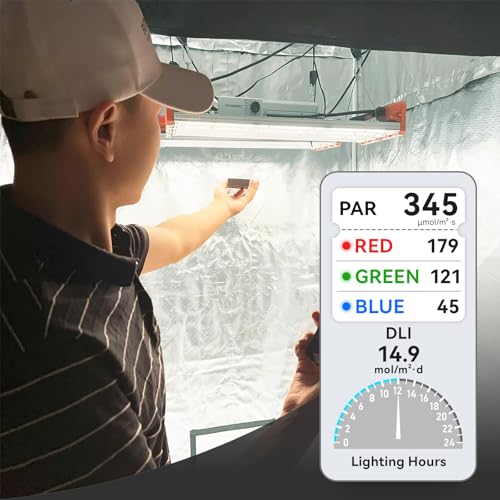
Plant light meters are most useful when they help match a plant’s actual location to its light needs, not just when they show a number. Indoor light changes sharply with window direction, distance from glass, season, shade, and grow-light placement, so a meter should make it easy to compare spots and check whether a plant is receiving enough usable light over time.
For a plant light meter, look for readings that are easy to interpret in the context of houseplant care: the ability to compare window spots, check shaded corners, and evaluate grow-light distance matters more than a flashy feature list. Avoid treating a single instant reading as the whole answer; for indoor plants, you want a tool that helps you observe changes across the day and place plants according to low, medium, bright indirect, or direct-light needs. Owner feedback supports this practical-use view: shoppers found light functions helpful for everyday plant care, especially alongside moisture checks, and the strongest praise went to meters that took guesswork out of plant care with readings shown directly on the display.
Moisture Accuracy
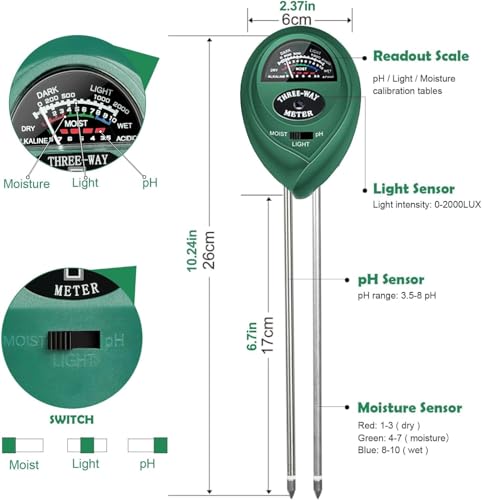
Many plant-light-meter products are actually multi-function soil meters, and the moisture probe often ends up being the feature owners use most. A good probe helps reveal what is happening below the dry-looking surface, which is especially important in deep pots, dense mixes, and containers without obvious weight cues.
Choose a meter with a probe long enough for your typical pot depth and use it correctly: insert it into the root-zone area, avoid forcing it through bark or stones, and wipe it clean between plants. This matters because surface soil can look dry while the lower root zone is still wet, leading to root rot, or it can look fine while a large pot is dry deeper down. Owner sentiment strongly backs moisture as a standout use case: buyers valued meters that helped prevent over- and under-watering, and several noted that probe readings deeper in the pot were more useful than judging the soil surface by sight.
pH Caution
Built-in pH claims are a common trap in simple plant meters because soil pH is harder to measure reliably than moisture or rough light levels. Shoppers should treat pH on basic probe-style meters as a screening feature, not a substitute for a dedicated soil test when pH-sensitive plants or amendments are involved.
If pH is important for your plants, prioritize a dedicated pH testing method or confirm suspicious readings before changing soil chemistry. A plant light meter with pH included can be convenient, but avoid buying primarily for that function unless the design and instructions make clear how readings are obtained, how soil moisture affects them, and how to clean the probe. Owner complaints make this the clearest watch-out: pH indicators were reported to stay stuck at one reading, fail to change across locations, stop working, or give hit-or-miss acidity and alkalinity results.
Easy Reading
A meter that is hard to read or awkward to position gets used less often, which reduces its value for routine plant care. Clear displays, simple controls, and readable dials matter because light and moisture checks are often done around crowded shelves, hanging plants, and pots near windows.
Look for a display or dial you can read at the angle you will actually use: in deep pots, under foliage, near windows, or beside grow lights. Rotating heads, large screens, high-contrast markings, and immediate readings are especially helpful for indoor plant shelves where glare, leaves, and tight spacing can make small dials frustrating. Owners repeatedly praised quick setup, straightforward use, large readable screens, and no-battery immediate operation, though readability was not universal—many found dials clear while some still struggled with the display.
Build Quality
Probe meters are pushed into soil repeatedly, exposed to moisture, and sometimes used in compacted mixes, so weak construction or inconsistent needles quickly becomes a problem. Reliability matters more than feature count if the readings do not change, the probe bends, or the mechanism becomes erratic after normal use.
Favor a sturdy probe, stable dial or sensor housing, and a design that does not feel flimsy where the stem meets the body. Do not use any soil meter as a digging tool; pre-loosen very compacted soil and clean the probe after use to reduce corrosion, residue buildup, and false readings. Owner feedback was split but useful: some buyers described meters as well-built, reliable, and true to the listing, while others reported units where needles barely moved or readings seemed unreliable.
Feature Fit
Multi-function plant meters can be helpful when the extra readings match the way you care for plants, but more functions can also create false confidence. The best choice is the one that fits your actual decisions: where to place the plant, when to water, whether temperature is in range, and whether a separate test is needed.
Decide before buying whether you need a dedicated light meter or a multi-function soil tester that also covers moisture, temperature, time, or rough pH. For most houseplant owners, light comparison plus moisture guidance is the practical core; temperature and time displays can be useful near windows, heat vents, or grow-light setups, while basic pH should be treated cautiously. Owners liked all-in-one monitors for combining moisture, temperature, light, and time, and some felt rotating heads and 4-in-1 functions made a meter more useful than a basic tester, but value depended heavily on whether the basic readings actually worked.
1,000,000+ shoppers use Buyer's Guide every week to find the best products and services online.

Helping millions of users make smarter purchases online.


