











We also considered 10 others:


Our Top Choice
The order above is not editorial opinion, and it is not paid placement. It comes from what shoppers across our network actually do - which soil moisture testers they compare, and which they ultimately buy. We re-rank as new data comes in, so the long-term favorites have to keep earning their spot against new entrants. The full method, including how we make money.
Soil Moisture Testers Buyer's Guide
Soil moisture testers sit between guesswork and true soil analysis: the right one helps you water at the root zone, but the wrong one can give stuck needles or misleading extra readings. The sharpest tradeoff is simple, reliable moisture guidance versus multi-function features like pH and light, which can be convenient but are not always equally trustworthy.
Root Moisture
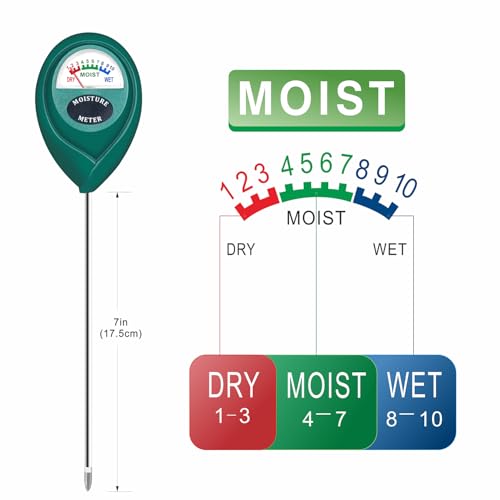
Moisture is the core job of this category because the top of a pot or bed can dry faster than the root zone. A good tester helps you check below the surface, but results still depend on probe depth, soil contact, and checking more than one spot.
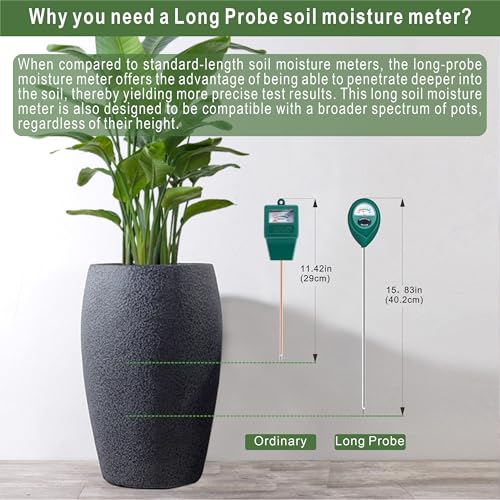
Prioritize a tester with a probe long enough to reach the active root zone: shorter probes are fine for small houseplants, while deep pots, sod, raised beds, and outdoor garden soil benefit from a longer stem. Insert it near, but not through, the main root mass; avoid judging by surface appearance alone, and compare several spots in larger containers because dry pockets and wet pockets can coexist. Expect the most useful readings when soil has enough moisture to make contact with the probe; in very dry, fluffy, rocky, or bark-heavy mixes, analog needles may barely move until contact improves. Owner feedback strongly supports moisture checking as the standout use, especially because surface soil can be misleading while a probe gives a better read deeper in the pot, but buyers also report that consistency improves when directions are followed, the probe is allowed to settle briefly, and multiple spots are checked.
Extra Readings
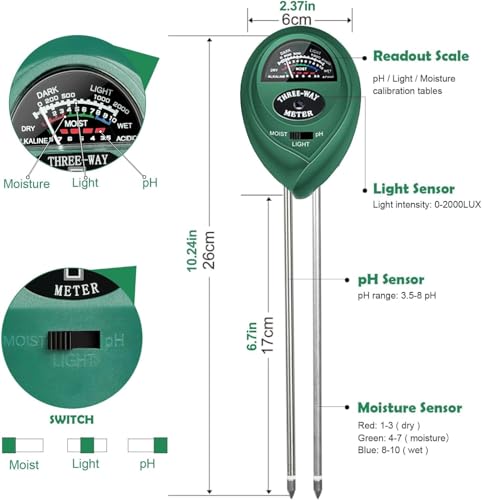
Many soil moisture testers add pH, light, or fertility-style readings, but those functions are not equally dependable. Moisture and light tend to be practical for day-to-day care, while pH readings from simple probes should be treated as rough screening rather than lab-grade soil testing.
Buy a multi-function tester only if the extra data matches your use: moisture plus light can help with houseplants and larger pots, while pH is best viewed as a rough warning sign before you amend soil or change fertilizer. Be cautious of pH dials that do not move across very different soils, because a stuck acidity/alkalinity indicator can lead to bad fertilizing decisions; for precise pH correction, use a dedicated soil test method instead of relying on a simple combination probe. A display that shows moisture and pH or light together is convenient, but it is only valuable if the needles respond independently and return to baseline after cleaning. Owner sentiment backs this split: multi-reading displays are appreciated for giving plant-care data at a glance, moisture and light are often helpful, but pH is the main watch-out, with repeated complaints about indicators staying stuck or never changing.
Easy Reading
A soil moisture tester is most valuable when it is quick enough to use before every watering decision. Clear markings, immediate response, and simple operation reduce the chance that the tool gets ignored or misread.
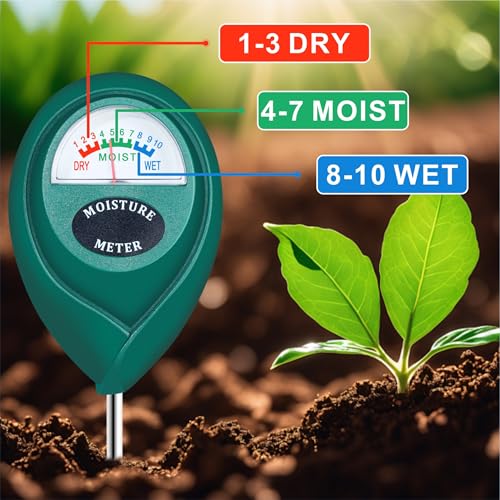
Look for a large, high-contrast dial or display with clearly separated wet/dry zones, especially if you will read it while crouching near floor pots or outdoor beds. A rotating or angled head can make a big difference in tall planters and crowded shelves, and battery-free analog models are convenient for quick checks as long as you are comfortable with relative readings rather than exact numbers. Avoid cluttered scales if you only need watering guidance; too many small markings can make it harder to act confidently. Owners often praise simple testers for being immediate to use with no batteries required and basic readings available out of the box, while readability is mixed: many find the dial clear, but some still struggle with the display.
Probe Build
The probe is the part that takes all the abuse, so build quality matters more than cosmetic design. Weak or poorly finished probes can bend, corrode, lose contact, or stop moving the needle, especially in compacted or gritty soil.
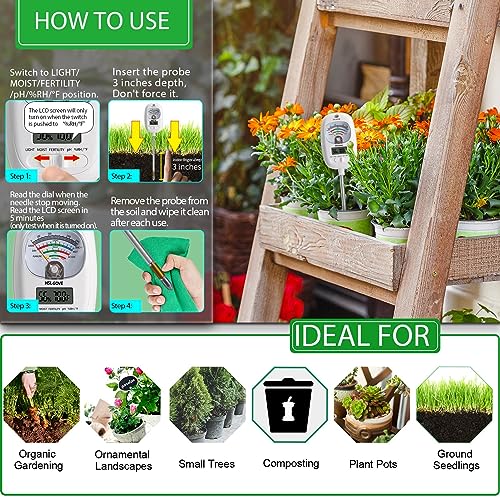
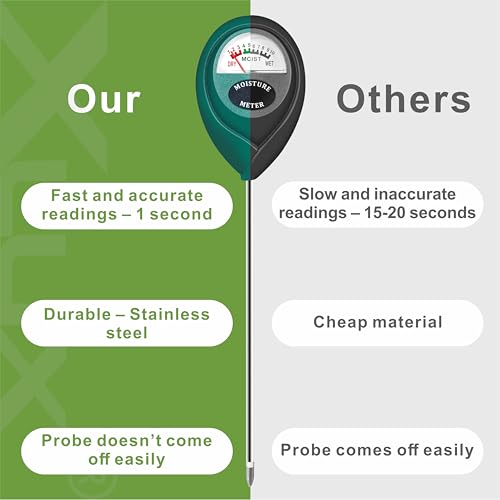
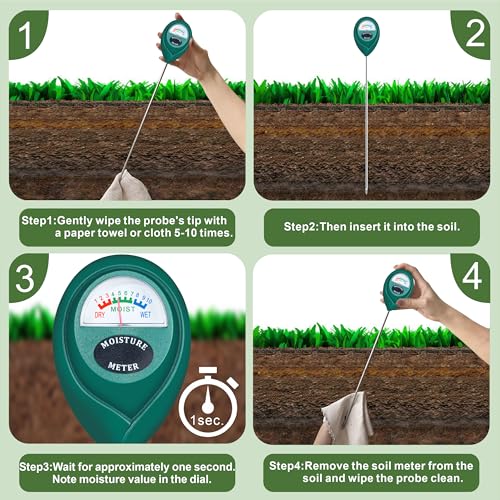
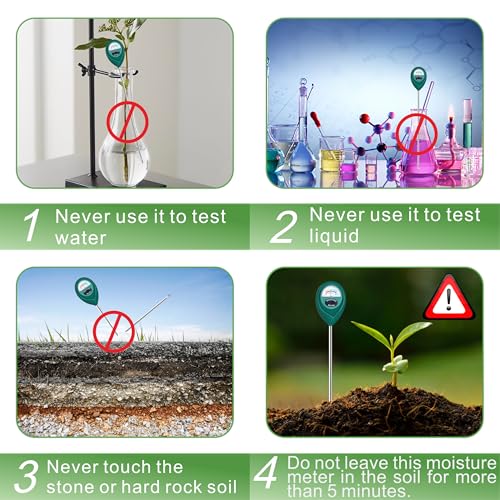
Choose a tester with a rigid probe, smooth tip, secure connection to the head, and construction that feels aligned rather than loose; a wobbly stem or sticky needle is a red flag. Do not force the probe into dry, compacted clay, root-bound pots, gravelly mixes, or frozen soil—pre-make a narrow hole if needed, then insert gently to avoid bending the stem or damaging roots. Wipe the probe clean after each use and avoid leaving non-continuous-use meters buried long-term, since soil salts and moisture can degrade contacts. Owner reports describe some testers as well-built and useful, but also show quality variation: when the basic meter works it feels worthwhile, while some buyers receive units where needles barely move or readings seem unreliable.
Plant Fit
Different planting situations need different tester behavior. Small indoor pots require a slim, careful probe, while large planters, sod, and garden beds need enough reach and repeatable spot checks to guide watering across a wider area.
Match the tester to where you garden: for small potted plants, favor a slim probe that can enter without tearing roots; for deep containers, sod, and beds, favor length and a readable head you can use at ground level. Use readings as a decision aid, not an automatic command—combine them with plant type, pot drainage, soil mix, weather, and recent watering history. This is especially important for large pots and indoor plants, where the surface may look dry while the lower mix is still wet. Owners describe these tools as helpful for amateur home gardeners because they make watering and fertilizing feel less like guesswork, with particular usefulness for potted plants, sod, garden beds, larger pots, and indoor plants.
Practical Value
Soil moisture testers range from basic watering aids to multi-function gauges, but more functions do not automatically mean better decisions. The best value comes from a tool that performs the readings you will actually trust and use consistently.
Decide first whether you need a simple moisture checker or a multi-reading tool. A basic, reliable moisture meter can be the better buy if your main goal is preventing over- and under-watering, while a 3-in-1 or 4-in-1 model makes sense only if the display is readable and the non-moisture functions are responsive enough to inform care. Keep expectations modest: these tools are best for trend and zone checks, not laboratory measurements. Owner sentiment says value feels good when the basic meter works, and rotating heads or 4-in-1 functions can make a tester feel more useful, but buyers are divided when accuracy or build quality disappoints.
1,000,000+ shoppers use Buyer's Guide every week to find the best products and services online.

Helping millions of users make smarter purchases online.


