



















We also considered 10 others:


Our Top Choice
The order above is not editorial opinion, and it is not paid placement. It comes from what shoppers across our network actually do - which picture lights they compare, and which they ultimately buy. We re-rank as new data comes in, so the long-term favorites have to keep earning their spot against new entrants. The full method, including how we make money.
Picture Lights Buyer's Guide
Picture lights have to balance gallery-style presentation with the realities of a normal wall: beam width, glare, color accuracy, mounting clearance, and visible wiring all matter. In this niche, the sharpest tradeoff is usually cordless convenience versus battery upkeep, followed closely by whether the light flatters the artwork instead of overpowering it.
Lighting Quality
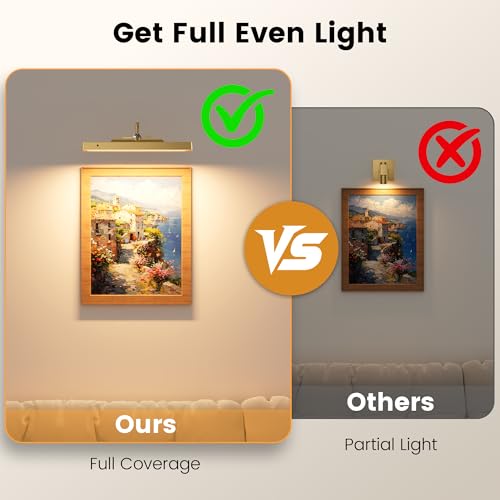
A picture light has to illuminate the artwork evenly without creating glare, hot spots, or a washed-out patch in the center. The best choice depends on the width of the frame, wall color, ambient room light, and whether the piece is viewed up close or from across the room.
Look for a picture light with smooth, downward-directed coverage, enough width for the artwork, and dimming that can go lower than you think you need; art lighting often looks better at a restrained level than at full brightness. Avoid a light that only has one harsh output setting, especially over glass-covered frames, glossy prints, or textured paint where glare and reflections are obvious failure modes. Owner feedback supports brightness as a major differentiator: buyers repeatedly praised strong brightness, quality that exceeded expectations, and the way the lights made artwork and rooms look more polished.
Color Control
Color temperature changes how art reads: warm light flatters traditional paintings and wood frames, while cooler light can suit modern prints but may make some colors look sterile. Extra color modes can be useful for shelves or mood lighting, but fine white-light control matters most for faithful art display.
Prioritize selectable white temperatures and dimming before decorative color effects if the main goal is to display artwork accurately. A good picture light should let you shift between warm, neutral, and cooler white so the frame, wall paint, and art colors do not look yellowed, bluish, or overly dramatic. RGB modes and presets are a bonus for shelves, accent walls, or mood lighting, and owners specifically liked adjustable brightness, color temperatures, RGB colors, and mood-oriented controls for making the lighting feel customizable.
Easy Install
Installation matters more for picture lights than many fixtures because the light sits in a visually prominent spot above art. Cordless designs avoid visible wires and electrical work, but they still need secure mounting, level placement, and enough clearance from the frame.
Measure the frame width, top clearance, and wall material before buying, and favor mounting hardware that can hold the bar level without damaging the artwork or forcing the light too close to the frame. Cordless models are especially useful where there is no outlet or junction box above the art, but check whether the light detaches easily for charging and whether the mount will stay aligned after repeated handling. Owner sentiment strongly favors this area: buyers consistently described setup as simple, appreciated avoiding messy wiring, and liked the clean, stylish cordless look on the wall.
Control Ease
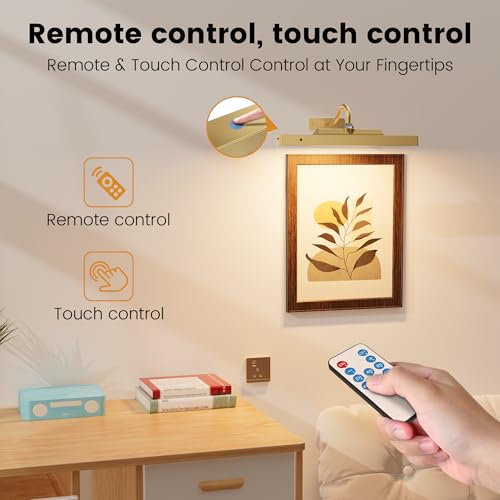
A picture light often sits above eye level, so controls on the fixture can become annoying quickly. Remote operation, memory settings, and timers make it easier to use the light daily instead of treating it as decoration that stays off.
Choose controls that match how the light will actually be used: a remote is helpful for high-mounted art, timers are useful for evening ambience, and memory settings prevent constant readjustment. Look for separate brightness and color controls rather than a single cycle button that forces you through unwanted modes. Owners found remote control genuinely convenient because it handled brightness, color modes, dimming, and timer functions without needing to touch the light, reinforcing that usability features can matter as much as raw brightness.
Battery Life
Rechargeable picture lights trade clean installation for the need to manage runtime. Battery performance depends heavily on brightness level, timer use, color mode, and how many hours per night the light is on.
For cordless picture lights, think in terms of your usage pattern: a light used briefly for evening display may be fine with modest runtime, while one used as daily room lighting needs longer battery life or very easy recharging. Check whether the fixture can be removed from its mount without tools, how it charges, and whether full brightness drains it much faster than dimmed accent use. Owner sentiment is mixed here: some buyers were happy with the charge or said it lasted a while, while others only considered battery life decent or were unsure how long it would last between recharges.
Room Value
With picture lights, value is not just the fixture itself; it is the combined effect on the artwork, the wall, and the room. A cheaper light can disappoint if it looks bulky, has poor color, or needs constant charging, while a better-balanced one can upgrade the space immediately.
Judge value by the total package: brightness control, color temperature options, clean mounting, remote/timer features, and whether the finish looks appropriate above the frame. Avoid paying for flashy modes if the beam is uneven or the mounting looks cluttered, because the light will sit in a focal point of the room. Owners generally saw these lights as a good buy when the brightness, color controls, and polished room effect came together, with several comments tying perceived value to both functionality and appearance.
1,000,000+ shoppers use Buyer's Guide every week to find the best products and services online.

Helping millions of users make smarter purchases online.


