





We also considered 10 others:


Our Top Choice
The order above is not editorial opinion, and it is not paid placement. It comes from what shoppers across our network actually do - which panini makers they compare, and which they ultimately buy. We re-rank as new data comes in, so the long-term favorites have to keep earning their spot against new entrants. The full method, including how we make money.
Panini Makers Buyer's Guide
A good panini maker has to balance compact convenience with enough heat, plate area, and hinge clearance to crisp bread while melting the filling. The sharpest buying concerns are heat control, cleanup after cheese or batter leaks, and whether the handle, hinge, and coating can survive frequent pressing.
Heat & Press
A panini maker has to do two jobs at once: toast the bread and heat the filling before the exterior burns. Even heat and consistent pressure are what separate a crisp, melted sandwich from one that is pale, scorched, or flattened unevenly.
Choose a panini maker that reaches sandwich-searing heat quickly, browns both sides evenly, and has enough top-plate weight or hinge pressure to compress bread without squeezing all the filling out. For thicker paninis, look for a floating hinge or adjustable-height lid so the top plate sits level instead of pushing fillings forward; avoid units that run either too cool for stuffed sandwiches or unpredictably hot for delicate bread. Owner feedback strongly favors models that make fast sandwiches with crispy bread and melted centers, with multiple reports of quick everyday results and neatly pressed paninis. The main caution is that heat behavior varies: some owners report units running hotter than desired, while others find smaller or cheaper-feeling units not hot enough for thicker fillings.
Size Fit
Panini makers often look larger on the counter than they cook in practice because hinges, rims, and drip channels reduce usable plate space. The right size depends on whether the shopper wants a single quick lunch appliance or a press that can handle multiple sandwiches and thicker builds.
Match the plate size to how you actually eat: a compact press is fine for one sandwich, bagel warming, or quick snacks, but families or meal-preppers should verify whether it can fit two full sandwiches without crowding. Check both usable cooking surface and lid clearance, because large bread slices, thick sourdough, waffles, or stacked fillings can hit the hinge or spill out even when the listed footprint looks adequate. Owners like compact designs for small kitchens and simple daily meals, but capacity is a recurring tradeoff: some buyers are disappointed when a small unit cannot handle two sandwiches at once. Sentiment also shows that size impressions are mixed, with some liking the space-saving format and others finding the cooking area smaller than expected.
Easy Cleanup
Panini makers collect melted cheese, oil, crumbs, and batter in hot grooves, so cleanup design affects whether the appliance gets used often or stored away. Removable plates, durable nonstick release, and fewer trap points matter more in this category than they do for a simple toaster.
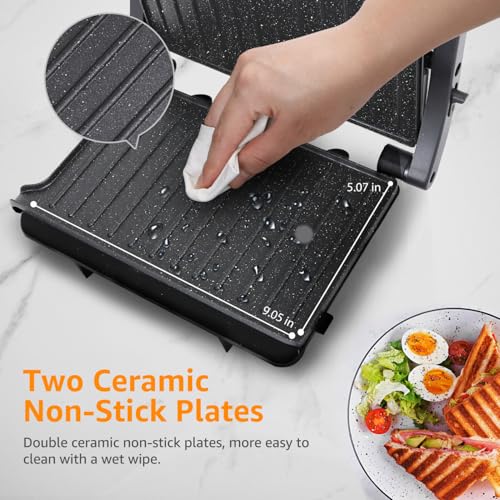
Prioritize truly easy-clean plate design: removable plates are best if you plan to cook waffles, cheese-heavy sandwiches, meats, or anything that drips; fixed plates can be fine for dry sandwiches if the grooves are shallow and accessible. Look for nonstick or ceramic-coated plates with few seams around the hinge, a clear grease or cheese runoff path, and enough room to wipe while warm but unplugged; avoid deep crevices where melted cheese or batter can harden. Owner sentiment supports this split: many find nonstick or ceramic plates easy to wipe down, especially right after cooking. But cleanup becomes frustrating when batter or melted cheese gets into crevices, and fixed grooved plates are a repeated hassle for some users.
Safe Controls
A panini maker is a contact-heating appliance that sits close to hands, cheese, oils, and bread crumbs. Controls and heat management matter because they determine whether the user can stop cooking quickly, avoid scorching, and handle the press confidently.
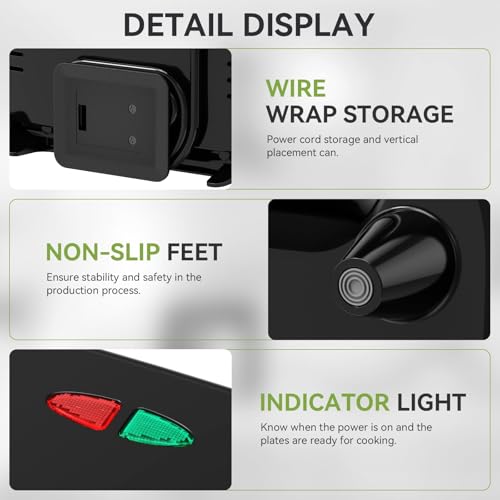
For safer, more predictable cooking, look for an on/off switch, ready lights, temperature control or at least clear heat indicators, and a cool-touch handle with stable feet. A press that must be unplugged to turn off is less convenient and can be riskier in a busy kitchen; also be cautious of reports involving smoking, odd smells, unsafe broken parts, or runaway heat. Owner feedback highlights this as a major watch-out: some units lack temperature and power controls, must be unplugged to shut off, and can run hotter than some shoppers want for sandwiches. There are also owner concerns around smoking, odd smells, and broken parts making a unit feel unsafe to keep using.
Build Quality
Panini makers experience repeated heat cycles, compression force, and cleaning friction. If the hinge, handle, or coating fails early, the appliance can become unpleasant or unsafe to use even if it cooked well at first.
Inspect the stress points before buying: the handle, hinge, latch, plate coating, cord exit, and lid alignment matter because pressing sandwiches puts repeated leverage on the appliance. Choose a sturdy handle with minimal flex, a hinge that opens smoothly without wobble, and a cooking surface that resists coating wear; avoid flimsy plastic handles or designs where a broken part would expose hot surfaces or make the unit hard to close. Owners often describe good units as sturdy, good-quality gadgets that get frequent use and feel durable for everyday lunch prep. The strongest negative pattern is durability: handle failures, broken parts, coating wear, and broader reliability complaints show why build quality matters even for a simple sandwich appliance.
1,000,000+ shoppers use Buyer's Guide every week to find the best products and services online.

Helping millions of users make smarter purchases online.


