



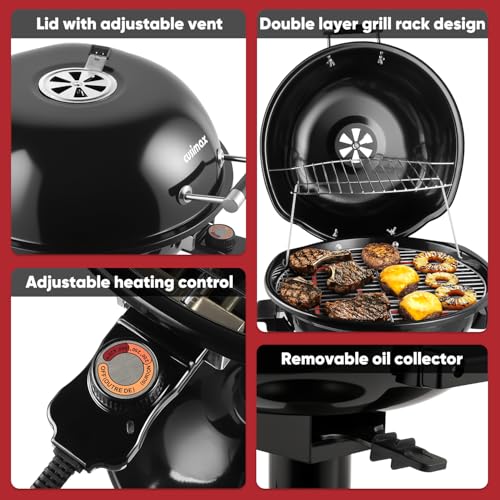


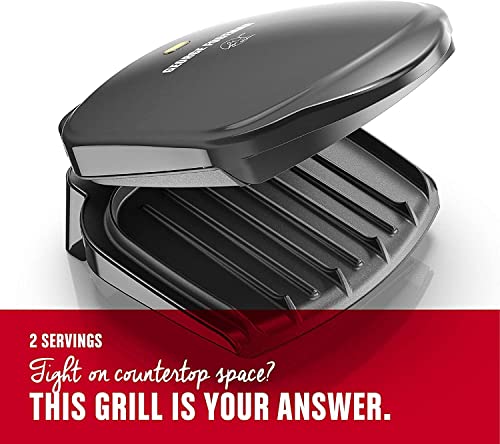


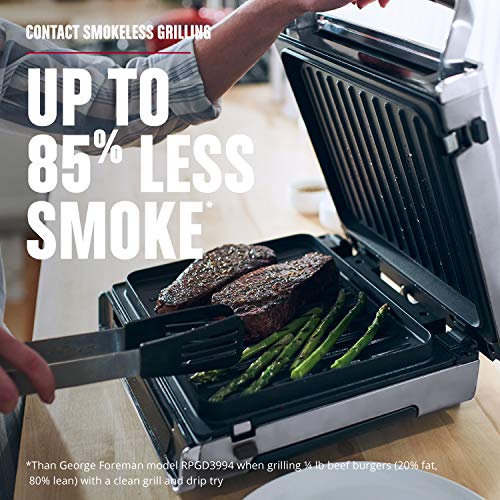
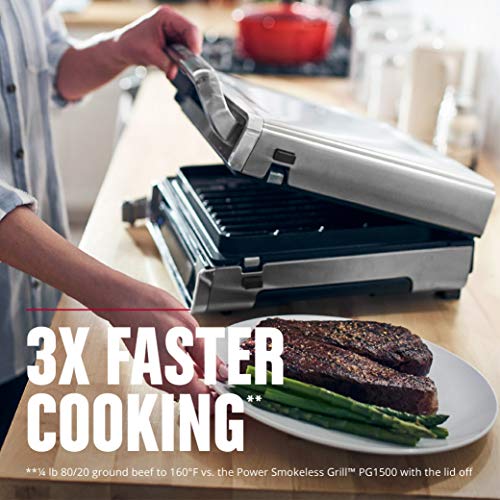


We also considered 10 others:


Our Top Choice
Compare Features


The order above is not editorial opinion, and it is not paid placement. It comes from what shoppers across our network actually do - which george foreman grills they compare, and which they ultimately buy. We re-rank as new data comes in, so the long-term favorites have to keep earning their spot against new entrants. The full method, including how we make money.
George Foreman Grills Buyer's Guide
Electric contact grills trade outdoor-grill flavor and capacity for speed, compact storage, and indoor-friendly grease control. The sharpest buying concerns are whether the plates heat evenly under a closed lid, whether grease actually drains into the tray, and whether cleanup stays easy after fatty foods rather than becoming a hinge-and-groove chore.
Build
A grill’s build quality determines how well it holds up to heat, weather, movement, and repeated use outdoors. Look for sturdy construction, stable legs or cart design, durable grates and firebox materials, tight-fitting parts, and a finish that resists rust and peeling. Watch out for thin metal, wobbly frames, flimsy handles, or components that feel loose, since those can signal weaker long-term durability.
For this category, prioritize a solid floating hinge, firmly locking removable plates, a stable sloped grease channel, and a drip tray that sits securely under the runoff path; these parts take the most abuse because the lid presses on food while grease drains forward. Avoid flimsy hinges, shallow grease lips, or coatings that look thin or easy to scratch, since a contact grill becomes frustrating once food bonds to the plates or grease misses the tray. Owner feedback supports this: shoppers repeatedly praise sturdy-feeling builds, higher-quality nonstick surfaces that release food cleanly, and drip-pan designs that make grease easier to manage.
Cooking
How well a grill cooks determines whether you can get strong sear marks, even browning, and reliable doneness without constant babysitting. Look for steady heat, enough power for high-temperature searing, good control at lower temperatures, and grates or heat distribution that minimize hot spots and flare-ups. A grill that struggles here may cook slowly, burn the outside before the inside is done, or make it hard to handle common tasks like burgers, vegetables, chicken, and steaks.
Choose based on the foods you actually cook: a contact grill is best for thin to medium burgers, chicken cutlets, paninis, vegetables, sausages, and quick proteins, while very thick steaks, bone-in cuts, or delicate fish need enough lid clearance and gentle pressure from a floating hinge. Adjustable temperature is worth seeking if you want more than basic sandwiches and burgers, because fixed high heat can overcook exteriors before thicker food finishes. Owner sentiment lines up with that use case: buyers like these grills for fast everyday meals, burgers, steaks, pork chops, chicken, shrimp, brats, pancakes, eggs, and paninis, with many noting quick cooking and good searing on common foods.
Ease
You want a grill that feels intuitive from startup to cleanup, because easier controls, clear temperature feedback, and straightforward fuel or ash management help you cook more confidently with fewer interruptions. Look for simple ignition, readable gauges or displays, accessible grates and grease trays, and clear cooking information; watch out for cramped layouts, confusing settings, or maintenance steps that make regular use feel like a chore.
Look for a true low-friction setup: clear preheat/ready indicators, simple temperature controls, a cool-touch handle, a drip tray that slides in without fiddling, and a footprint that can stay accessible rather than buried in a cabinet. For apartment or dorm use, also consider steam and splatter control, cord reach, and whether the lid opens far enough to load food safely without touching hot plates. Owners reinforce the convenience angle, saying these grills work well for apartments, condos, balconies, small patios, and quick stovetop-free meals, with simple controls and fast cook times making weeknight use feel easy.
Cleaning
A grill that’s easy to clean saves you time after cooking and helps prevent flare-ups, stuck-on residue, and lingering odors from old grease. Look for grates that release food easily, removable grease trays or ash catchers, and accessible interior surfaces; watch out for designs with tight corners, awkward drip paths, or parts that are difficult to remove and scrub.
Do not treat all nonstick plates as equal: removable plates are the key feature to check, ideally with accessible grease channels and a drip tray that can be washed separately. Nonremovable plates can still wipe clean, but the hinge area and lower grease trough are common annoyance points, especially after burgers, bacon, or marinated foods. Owner feedback strongly supports making cleanup a top criterion, with repeated praise for removable nonstick plates, wipe-clean surfaces, removable drip pans, and designs that avoid the older hassle of scrubbing fixed plates.
Size
Choose a grill that fits both how you cook and where you’ll keep it: the overall footprint affects patio space, storage, and how easily you can move it. Look for enough cooking area for your usual group size, but watch out for oversized grills that are harder to maneuver, store, clean, and use efficiently.
Ignore vague “serving” claims and check the actual usable plate area: contact grills lose capacity because food needs spacing for steam and grease flow, and the sloped surface can crowd round patties or long sausages. Singles and couples may prefer a compact unit that stores upright or fits a crowded counter, while families should verify it can cook the full batch at once rather than forcing multiple rounds. Owner sentiment reflects this tradeoff: compact models are liked for dorms, rentals, small kitchens, couples, camping, and truck use, while larger cooking areas are appreciated for family-style meals—though some buyers still find smaller units tight for true four-serving batches.
Heat
Heat affects how well your grill can sear, cook evenly, and hold steady temperatures for low-and-slow cooking. Look for strong temperature control, consistent heat distribution across the grate, and enough heating performance for the way you cook; watch out for grills with obvious hot spots, weak recovery after opening the lid, or controls that make small adjustments difficult.
For this niche, check heat recovery and evenness across both plates, not just maximum temperature; a contact grill needs enough sustained heat to brown food before it steams under the closed lid. Adjustable heat, adequate preheat time, and plates that maintain temperature at the edges matter for burgers, chicken, and vegetables, while hot spots can mean rotating food or accepting uneven browning. Owner sentiment is positive but cautious here: many buyers report quick heating, even cooking, and good searing, but heat distribution is the main mixed point, with some needing to work around hot spots or finding performance best for smaller batches.
1,000,000+ shoppers use Buyer's Guide every week to find the best products and services online.

Helping millions of users make smarter purchases online.


