












We also considered 10 others:


Our Top Choice
The order above is not editorial opinion, and it is not paid placement. It comes from what shoppers across our network actually do - which overbed tables they compare, and which they ultimately buy. We re-rank as new data comes in, so the long-term favorites have to keep earning their spot against new entrants. The full method, including how we make money.
Overbed Tables Buyer's Guide
Overbed tables have to balance bedside reach with stability: the farther the top extends over a bed, recliner, or couch, the more the base, height lock, and casters matter. The sharpest buying concerns are whether it fits your furniture geometry and whether it stays steady while holding meals, laptops, medication, or recovery essentials.
Stability
Overbed tables carry weight away from their base, so stability depends on the frame, base shape, and locking points more than on tabletop size alone. A stable table protects meals, devices, and bedside supplies from tipping, especially when used at maximum height or beside soft furniture.
Prioritize a wide, low base, rigid metal frame, and a secure height-locking mechanism before considering extras. An overbed table often sits cantilevered over a mattress or recliner arm, so a narrow base, loose upright, or weak lock can turn a laptop, meal, or medication setup into a wobble-prone surface; it should not be relied on as a grab bar or transfer aid. Owner sentiment strongly supports this focus: many tables are praised as sturdy, solid, and well made, but the recurring watch-outs are wobble when loaded unevenly, top-heavy feel when the top is offset, and height locks that may not hold securely.
Fit & Reach
The right overbed table must physically fit around the furniture and the person using it. If the base cannot slide under the bed or the top cannot reach far enough, even a sturdy table becomes awkward for meals, laptops, recovery, or recliner use.
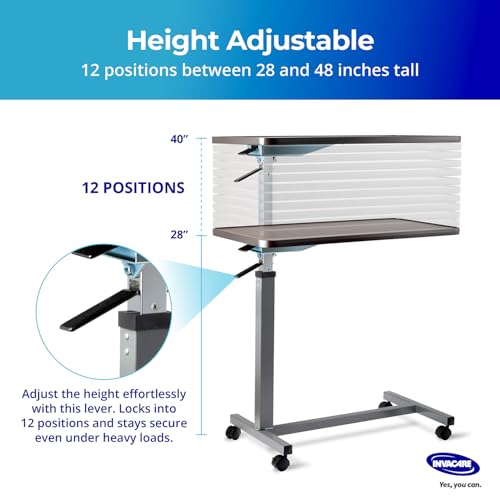
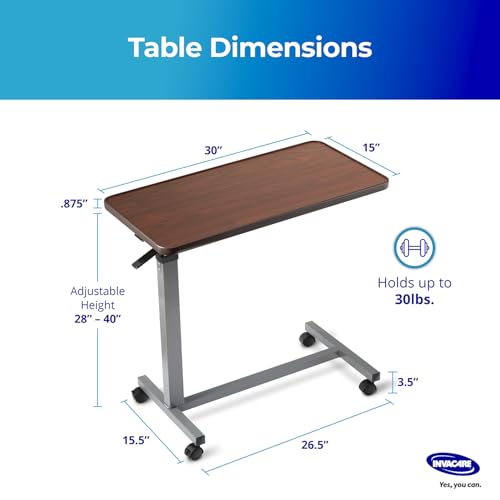
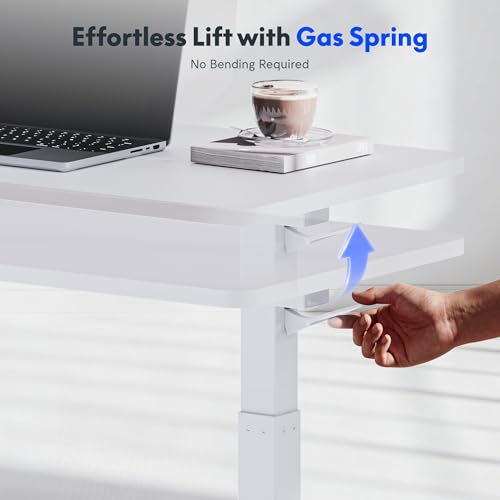
Measure the actual bed, sofa, or recliner setup before buying: mattress height, armrest height, clearance under the furniture, and how far the tabletop must reach over the user. Look for a height range that covers both sitting upright and lying in bed, plus an overhang design deep enough for eating, typing, or reading without forcing the user to twist. Owner sentiment repeatedly praises smooth pneumatic height adjustment and wide usability across beds, couches, desks, and standing setups, while also noting that some lift mechanisms can rise too eagerly, resist lowering, or feel finicky until adjusted.
Mobility
Overbed tables are frequently moved between bed, chair, and storage positions. Wheel quality and base clearance determine whether that movement feels effortless or becomes a daily frustration.
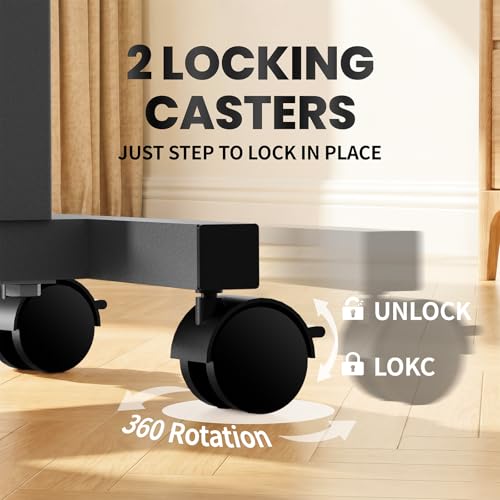
Choose casters based on the floor, not just the room: small smooth wheels may be fine on hard floors, while carpet, rugs, and thresholds call for better rolling hardware and a base that will not catch under low furniture. Locking casters are especially useful when eating, typing, or using the table beside a recliner, because the table should move easily when repositioned but stay put during use. Owner feedback supports this split: rolling bases are often described as convenient and easy to reposition, yet mobility is mixed on carpet, rugs, low furniture, and less forgiving surfaces, and some users specifically wish the wheels locked.
Top Space
Tabletop size is a tradeoff between usable workspace and easy placement in tight bedrooms or beside recliners. A surface that is too small feels cramped, while one that is too large can be harder to maneuver around bedding, arms, and medical equipment.
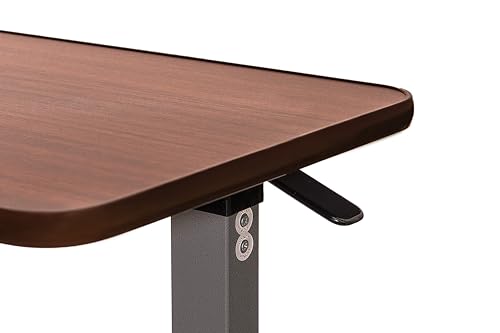
Match the tabletop to the real task: a drink-and-plate setup needs less space than a laptop with mouse, medication organizer, book, phone, and water bottle. For bed care and meals, favor an easy-wipe surface, sealed edges, rounded corners, and enough depth to keep items away from the edge; if tilt is included, look for a retaining lip so tablets or papers do not slide off. Owner sentiment says many tabletops feel appropriately sized for laptops, eating, reading, bedside items, and supplies, but compact models can feel limited if the user needs more than a plate and drink or needs the surface to reach farther over a recliner.
Build & Setup
Assembly quality directly affects how stable and dependable the table feels in use. Durable materials and a cleanable finish matter because the surface may handle meals, drinks, devices, recovery supplies, and frequent repositioning.
Look for labeled parts, clear fasteners, a square metal frame, and a surface material that can handle repeated wiping, spills, and daily contact. Overbed tables often arrive flat-packed, so poor alignment or weak hardware can create wobble even if the design looks sturdy; after assembly, periodically retighten bolts if the table is rolled or adjusted often. Owner sentiment consistently praises quick, approachable assembly, included hardware, clear instructions, solid metal-and-wood or laminate construction, and finishes that feel better made and less clinical than basic medical furniture.
1,000,000+ shoppers use Buyer's Guide every week to find the best products and services online.

Helping millions of users make smarter purchases online.


