


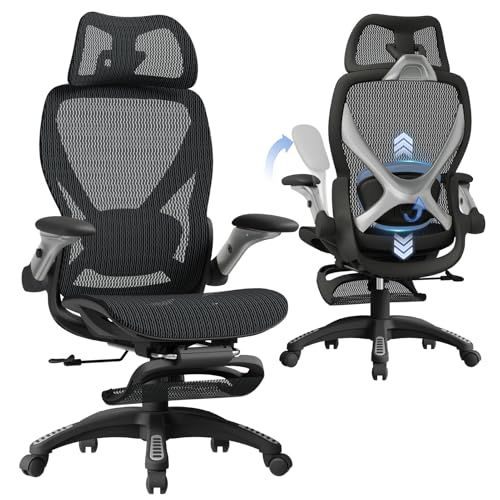
- Material: Mesh
- Support: Lumbar, headrest, foot rest
- Seat Height: 18.3" - 23"
- Weight Limit: 300 lbs
- Tilt/Recline: Back recline
- Armrest: 5-way adjustable





ELABEST X100 Ergonomic Mesh Office Chair
Design, Comfort, and Everyday Performance

The ELABEST X100 Ergonomic Mesh Office Chair is clearly aimed at people who spend long hours at a desk and want a breathable, supportive chair that looks at home in a modern office or a tidy home workspace. Its defining feature is the mesh back, which prioritizes airflow and temperature control. If you tend to overheat in cushioned chairs or live in a warmer climate, the mesh design can be a meaningful quality-of-life upgrade. Unlike thicker padded backs that can trap heat, a well-tensioned mesh back promotes ventilation while still providing a firm, springy support that encourages a more upright posture.
In day-to-day use, the X100’s comfort is most noticeable during extended sessions when posture starts to deteriorate. A good ergonomic chair should not just feel soft at first sit; it should keep you aligned after two or three hours, when fatigue makes you slouch. The X100’s ergonomic shaping, combined with adjustability, is intended to reduce that gradual collapse into poor posture. Most users will appreciate the sense of support through the mid-back and the general “held” feeling you get when the chair is tuned properly to your body. Mesh chairs can sometimes feel too rigid or too forgiving depending on tension, but the X100 aims for a middle ground that works well for mixed tasks like typing, video calls, and reading.
The seat comfort often becomes the deciding factor for many buyers, and with any mesh-backed ergonomic chair, the seat cushion matters because it’s where pressure builds first. A supportive seat should distribute weight evenly, avoid sharp edges that compress thighs, and maintain comfort without bottoming out. The X100 is positioned as an ergonomic option, so the expectation is that the seat supports long sitting while encouraging a neutral pelvis position rather than letting you sink too deeply. For people who alternate between focused work and short breaks, that moderate firmness can be beneficial: it’s comfortable, but it doesn’t lull you into an overly reclined, unsupported posture that can make your lower back work harder.
Recline behavior is another aspect that affects everyday performance. In a good office chair, recline should feel stable and predictable rather than suddenly dropping backward or forcing you to fight the chair’s resistance. For many users, the real value of recline isn’t lounging; it’s micro-movement. Small posture shifts throughout the day reduce stiffness and can help with circulation. If the X100’s recline and tilt tension suit your body weight and preference, it can make long workdays feel less punishing by letting you alternate between upright focus and a gentle, supported lean-back during calls or reading.
What to Consider Before Buying (and What Matters Most)
Before purchasing the ELABEST X100, it helps to clarify your priorities, because “ergonomic” can mean different things depending on your body and your work habits. The most important factor is adjustability that matches your frame. An ergonomic chair that cannot be dialed in for your height, torso length, and sitting style may end up feeling like an expensive compromise. Look closely at whether the chair can support your lower back in the way you need. Lumbar support is often the make-or-break feature for people with back sensitivity, and it should land in the right place and provide enough presence to guide posture without feeling like a hard lump pushing you forward. If you’ve struggled with back discomfort, prioritize lumbar support quality over nearly everything else.
The next major consideration is seat height and depth compatibility. Seat height determines whether your feet can rest flat on the floor with knees roughly at a comfortable angle. If the chair’s minimum height is too tall, shorter users may end up with dangling feet and increased pressure under the thighs, which is uncomfortable and can contribute to fatigue. Seat depth matters because it affects thigh support and clearance behind the knees. Too deep, and the seat edge presses into the back of your legs; too shallow, and you lose support and may feel perched. These fit issues often matter more than cosmetic details or even materials, because they influence posture every minute you sit.
Armrests are another high-impact factor, especially for people who type for hours or experience shoulder and neck tension. Ideally, armrests should help you keep your shoulders relaxed, elbows supported, and wrists neutral. If armrests are too high, they can elevate shoulders and create trapezius strain; if too low, they fail to offload your arms. People who use a narrower desk setup or a keyboard tray should also consider whether the armrests can move out of the way when needed. For many users, armrest adjustability ranks just behind lumbar support in importance, because it directly affects upper-body comfort and repetitive strain risk.
Breathability and material feel can be decisive if you run warm or sit in the same position for long stretches. Mesh is excellent for airflow, but not all mesh feels the same. Some mesh can be abrasive on bare skin or snag delicate clothing; other mesh feels smooth and supportive. If you tend to wear shorts in a home office or live in a humid area, prioritize a mesh back for comfort across seasons. That said, breathability should not outweigh fit and support. A cool chair that doesn’t support your spine will still become uncomfortable, just more slowly.
Finally, consider stability, noise, and long-term durability. A chair should feel steady when you shift your weight, roll, or recline. Wobbly armrests or a creaky tilt mechanism can become an everyday annoyance that distracts from work. If you’re using the chair on hard floors, the casters and base stability matter; on carpet, smooth rolling and the ability to reposition without strain are important. The most important takeaway is that ergonomic fit and core support should be your top priorities, followed by arm support and then materials and secondary features. If the X100 fits your body and supports your lumbar region consistently, it’s far more likely to feel like a genuine upgrade rather than just a nicer-looking seat.
Common Questions
Is the ELABEST X100 a good choice for long workdays? Yes, it’s designed for extended sitting with a breathable mesh back and an ergonomic shape intended to promote better posture. It will be most effective for long days if you take time to adjust the seat height, recline tension, and lumbar area so your spine stays supported as you move through different tasks.
Will the mesh back feel too firm compared to a padded chair? It depends on what you’re used to. Many people find mesh initially firmer than plush padding, but also more supportive and less heat-trapping over time. If you dislike the sinking feeling of thick cushions, the X100’s mesh style may feel more stable and posture-friendly.
Does this chair work for shorter or taller users? It can, but the key is whether the chair’s adjustment range matches your height and proportions. Check that the minimum and maximum seat height will let your feet rest comfortably on the floor and that the back support hits the right area of your spine. If you’re at the extreme ends of height ranges, fit becomes especially important to confirm before buying.
Is it suitable for gaming as well as office work? Yes, many ergonomic office chairs work well for gaming because they support longer sessions and encourage healthier posture than many “racing-style” chairs. If you like to recline during breaks, pay attention to how the tilt feels for relaxed positions as well as upright focus.
What should I do if I feel discomfort after switching to the X100? Minor adjustment discomfort can happen when moving to a chair that promotes a more neutral posture. Start by setting seat height so your feet are flat, then adjust lumbar support so it fills the natural curve of your lower back without pushing you forward. If discomfort persists beyond a couple of weeks, the fit may not be ideal for your body, or your desk height and monitor position may need adjustment as well.
Overall, the ELABEST X100 Ergonomic Mesh Office Chair makes a strong case for buyers who want cooler, more supportive seating and are willing to fine-tune adjustments to match their body. If lumbar support alignment, seat fit, and armrest positioning work well for you, the X100 can deliver the kind of comfort that holds up not just for the first hour, but for the full rhythm of a workday.