



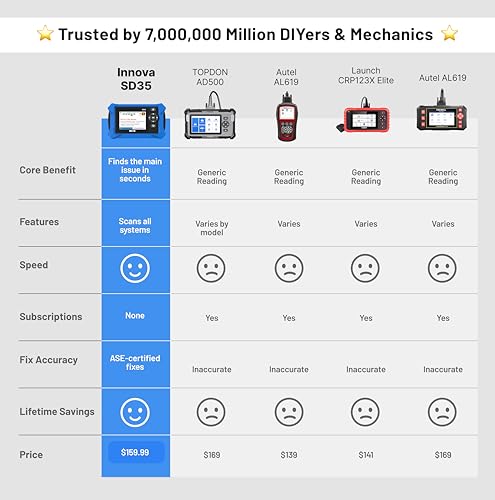


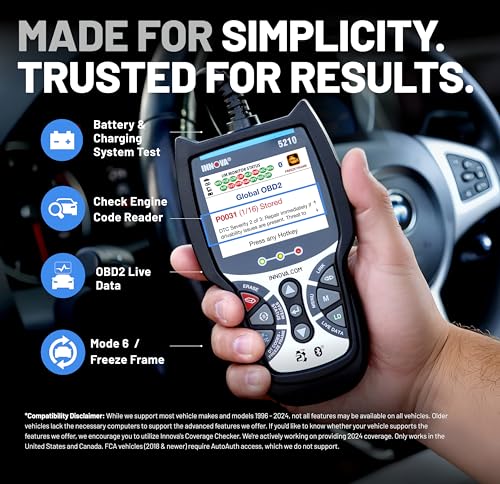


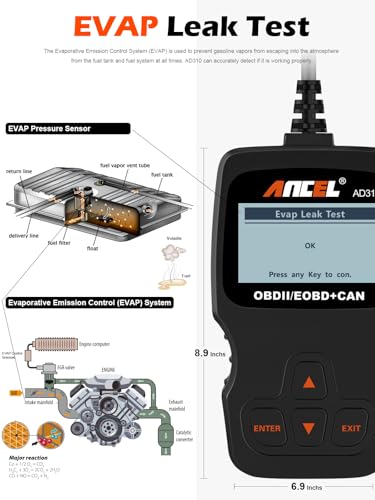


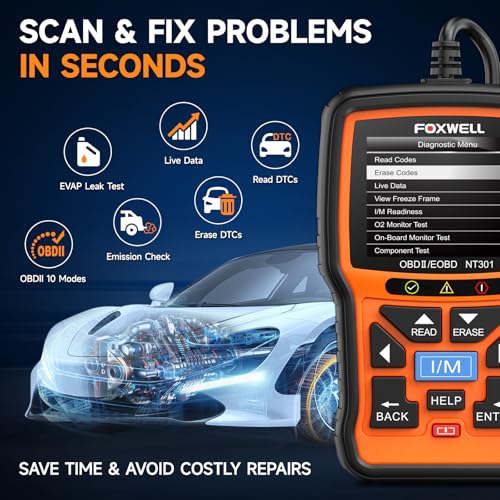


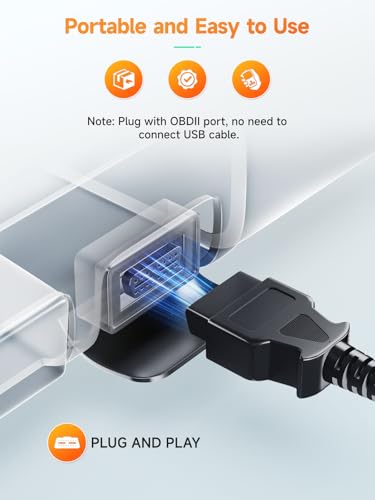


Our Top Choice
Why These Features Matter:
A car scanner sounds like a “dad drawer” purchase — the kind of gadget you buy, use twice, then lose under a tangle of charging cables and expired insurance cards. But the right one earns its keep fast. Not because it’s flashy, but because it saves you from three specific modern annoyances:
- The mysterious dashboard light that appears on a Tuesday night and ruins your mood until Saturday.
- The shop phone call where you’re trying to sound calm while someone says “It’s throwing a code” like you’re supposed to know what that means.
- The “maybe it’s fine?” spiral — especially when you have an older car and a calendar that doesn’t allow for surprise errands.
Car scanners don’t need to be intimidating. The best ones feel less like a diagnostic tool and more like a translator: plug in, get a clear read on what’s actually happening, and decide what to do next (drive, fix, ignore — in that order).
1) The Feature That Actually Makes a Scanner “Good”: Plain-English Explanations
You can buy a scanner that spits out an alphanumeric code and leaves you alone with your thoughts. That’s not helpful; that’s a riddle. What you want is a scanner (or app, if it pairs with your phone) that tells you what the code usually means in human language, plus the most common fixes.
- Notable strengths: You get context, not just a code. It reduces panic-googling at a red light.
- Things to know: “Plain English” varies wildly. Some are genuinely clear (“loose gas cap / evap leak”), others read like a bad translation.
- Honest caveat: Even the good ones can’t promise the exact culprit — a code is a clue, not a verdict.
2) Live Data You’ll Use (and Live Data You Won’t)
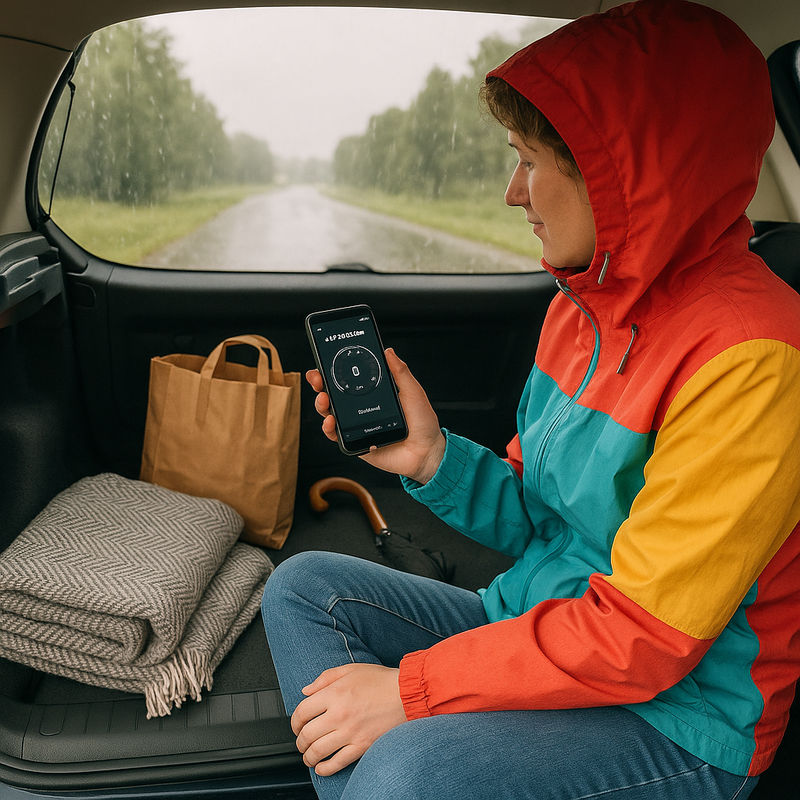
Live data is the feature people brag about and then never open again. But a small handful of live readings are genuinely useful in daily life: things like battery/charging health, coolant temperature, and basic sensor behavior that helps confirm “this car is acting weird” isn’t just in your head.
- What’s worth having: Simple graphs, easy-to-read gauges, the ability to watch a value change as the car idles.
- What’s mostly noise: Endless lists of obscure sensor names that feel like you’re reading your car’s diary.
- Guidance: If you’re not the kind of person who enjoys spreadsheets recreationally, prioritize readability over sheer volume of data.
3) “Can It Clear the Light?” Yes — But It Should Also Tell You When Not To
Clearing codes is satisfying in the same way deleting 300 unread emails is satisfying: the mess is gone, but the underlying problems may remain. A smart scanner will warn you if clearing a code might wipe useful info you’ll want for a mechanic, or if the issue is likely to come right back.
- Notable strengths: The best ones make it hard to do the dumb thing accidentally.
- Things to know: Some cars will re-trigger the light after a few drive cycles. That’s not the scanner being “bad.” That’s your car being honest.
- Honest caveat: Clearing a light doesn’t pass an emissions test. It just quiets the dashboard temporarily, like turning down a smoke alarm.
4) Bluetooth Dongle vs. Handheld Scanner: The Real-Life Difference
This is less about tech and more about your personality.
- Bluetooth + phone app is great if you like a clean interface, want updates, and don’t mind pairing devices. It’s also the easiest to keep in the glovebox because it’s tiny.
- Handheld scanner is great if you want a dedicated object that does one job, every time, without app logins, OS updates, or “allow access to Bluetooth” prompts.
Small, real-world detail: Bluetooth dongles are so small they’re easy to misplace. Handheld units are harder to lose but more annoying to store if your center console is already a graveyard of lip balm and spare masks.
5) App Design Matters More Than You Think (Because You’ll Use It While Annoyed)
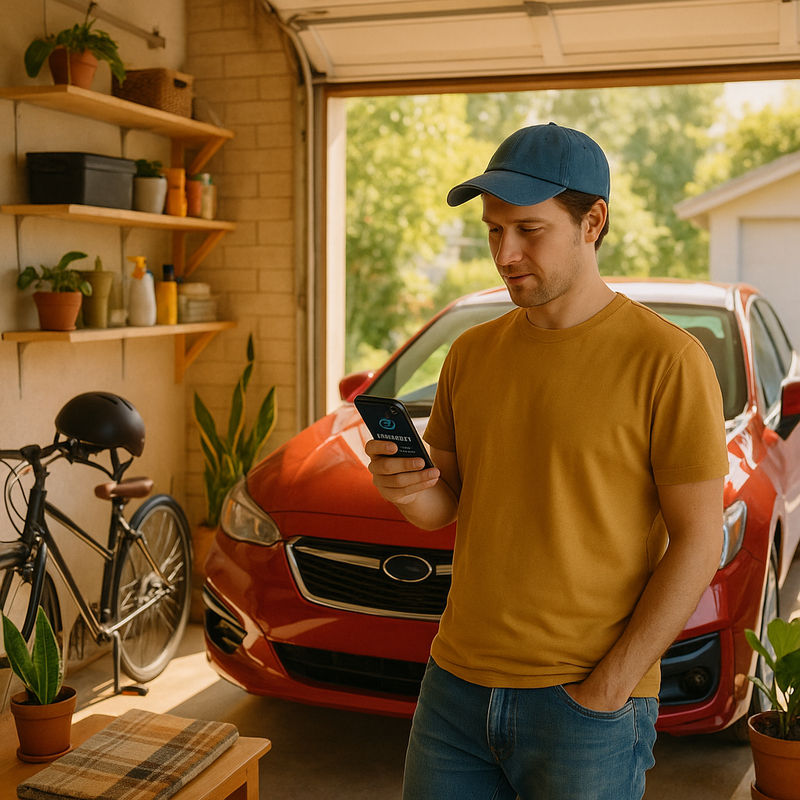
You rarely scan your car in a cheerful mood. You’re usually standing in a driveway, slightly late, slightly stressed, possibly holding a coffee you shouldn’t set on the roof but will anyway.
A good scanner experience means:
- Fast connection (no ritualistic unplugging and replugging)
- Big, legible text that doesn’t require squinting in sunlight
- Clean navigation so you’re not hunting through five menus for “Read Codes”
- Export/share options so you can text a screenshot to your mechanic without sounding like you’re narrating a dream
Honest caveat: Some apps get subscription-happy. If a scanner is cheap but every useful feature is paywalled, it’s not a deal — it’s a slow leak.
6) Coverage: The Question That Saves You From Buying Twice
Not all scanners play nicely with all cars, and the mismatch is maddening because it’s rarely obvious until you’re crouched under the steering column, realizing your “universal” tool has opinions.
- Guidance: Check your car’s year and region, and make sure the scanner supports the systems you care about (engine is table stakes; ABS and airbags are where it gets more useful).
- Things to know: Some tools do deeper reads for certain brands and only shallow reads for others.
- Honest caveat: If you’re trying to diagnose brand-specific modules, you may need a more specialized tool — or a mechanic with the right software.
7) Build and Ergonomics: Buttons, Cords, and the Steering-Wheel Yoga Pose
Using a scanner is not an elegant activity. You’re twisting to find the port, you’re balancing the device, you’re reading a screen at an angle that makes you feel 45 years older.
- What helps: A cable that’s long enough to be sane, a screen you can read without tilting your head like a confused dog, buttons that work with cold hands.
- What annoys: Stiff cables that fight you, glossy screens that turn into mirrors, tiny buttons that demand precision you simply don’t have at 7 a.m.
Small detail that matters: Backlit screens are not a luxury. They’re the difference between a quick check and a flashlight-in-mouth situation.
8) The Features Most People Think They Need (But Probably Don’t)
- Fancy performance dashboards unless you truly enjoy monitoring your car the way some people monitor their sleep cycles.
- Dozens of “advanced tests” you’ll never run because you don’t want to accidentally initiate something you can’t undo.
- Lifetime everything claims that quietly exclude the features you’ll want in six months.
Buy for the reality of your life: quick answers, clear guidance, minimal friction.
9) What a Car Scanner Can’t Do (and What It’s Still Great For)
A scanner can’t magically diagnose every rattle, vibration, or “it feels off” moment. It can’t fix the car. It can’t always tell you which specific part to replace.
It can:
- Tell you if the problem is likely minor or “please don’t drive this far.”
- Help you avoid being upsold on something unrelated.
- Give you a shared language with a mechanic — which is half the battle.
- Let you check an older car before a long trip without spiraling into worst-case scenarios.
How to Choose the Right One for Your Life
- If you want the simplest experience: pick a dedicated handheld scanner with a clear screen, basic code reading/clearing, and good on-device explanations.
- If you like using your phone for everything: choose a Bluetooth model with an app people actually like using (and check for subscription traps).
- If you have an older car you’re keeping alive out of spite: prioritize reliability, quick pairing, and coverage for more than just engine codes.
- If you share cars in a household: choose something easy enough that anyone can use it without an instructional YouTube session.
The Bottom Line
A good car scanner is less about “being a car person” and more about reclaiming a little control. It’s for the moment your dashboard throws a tantrum and you’d like to respond with information, not dread. Get one that’s readable, honest, and friction-free — the kind you’ll actually keep in the glovebox, not the kind you’ll admire for its feature list and then resent in a crisis.
1,000,000+ shoppers use Buyer's Guide every week to find the best products and services online.

Helping millions of users make smarter purchases online.

