





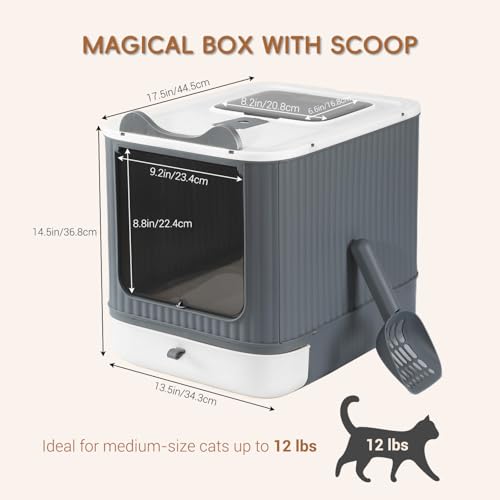


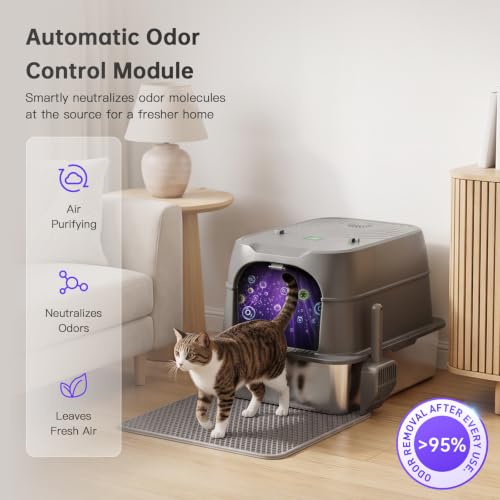


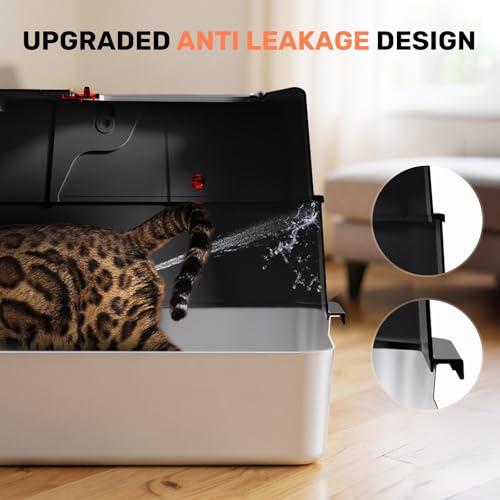


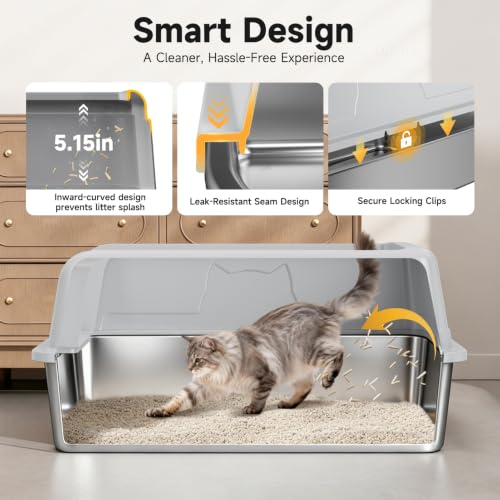


We also considered 10 others:


Our Top Choice
Compare Features


The order above is not editorial opinion, and it is not paid placement. It comes from what shoppers across our network actually do - which no smell litter boxes they compare, and which they ultimately buy. We re-rank as new data comes in, so the long-term favorites have to keep earning their spot against new entrants. The full method, including how we make money.
No-Smell Litter Boxes Buyer's Guide
No-smell litter boxes have to balance odor trapping with cat acceptance: a box that seals smells well is useless if the cat avoids it or sprays at the entrance. The biggest things to scrutinize are non-absorbing surfaces, leak-proof high containment, easy full cleaning, and enough interior room for your cat to posture normally.
Containment
You want a litter box that keeps scattered litter, spray, and tracked waste contained so your floors stay cleaner and daily upkeep is easier. Look for features like higher sides, a well-sized entry, covered or top-entry designs, and smooth interior surfaces that limit leaks and sticking, but make sure the setup still gives your cat enough room and easy access.
For a no-smell setup, containment should stop both odor escape and odor-causing messes: prioritize high walls, a tight-fitting cover or well-designed entry path, a front step or mat for litter on paws, and a shape that keeps high-spraying cats from hitting seams or the floor. Avoid boxes where a large cat must crouch, turn awkwardly, or face the opening, because misses at the entrance quickly defeat odor control. Owners generally support this: high-sided and covered designs are praised for reducing urine leaks, wall-peeing messes, kick-out, tracking, and smells, while feedback also notes that containment depends on the cat’s size and posture.
Build
A well-built litter box holds its shape, resists cracking, and stands up to daily scooping, washing, and your cat’s digging or jumping in and out. Look for sturdy, non-brittle materials, stable construction, and smooth surfaces that won’t trap waste or odors; watch out for flimsy plastic, weak seams, loose lids, or parts that flex easily under pressure.
For odor prevention, build quality matters most where waste touches the box: choose nonporous, smooth surfaces that do not absorb urine, and inspect lids, snaps, hinges, seams, and slide-out trays for gaps where damp litter can collect. Stainless steel pans or very smooth, sturdy plastic are better than thin, scratched, flexible plastic, because scratches and trapped residue can hold ammonia smell over time. Owner sentiment backs this up, with many buyers saying stainless surfaces release clumps more easily, wipe down cleaner than plastic, and feel like a durable sanitary upgrade, while sturdy high-sided plastic is also appreciated for everyday handling and leak control.
Use
You’ll interact with a litter box every day, so easy setup, simple assembly, and reliable functionality can make the difference between a box you tolerate and one that fits smoothly into your routine. Look for designs that are intuitive to put together, easy for your cat to enter and use, and convenient for scooping or cleaning; watch out for awkward lids, flimsy parts, tight openings, or mechanisms that add hassle instead of reducing it.
A no-smell litter box only works if the cat uses it consistently and the human can maintain it easily, so match the entry style to your cat before chasing features: older, large, anxious, or mobility-limited cats may reject tight covered boxes, top exits, or high steps. Automatic models can reduce odor by removing waste sooner, but check that the cycle is quiet, sensors are reliable, the waste drawer seals well, and the app or controls do not make basic use harder. Owners report that simple open pans are easy to lift, dump, rinse, and scoop, while self-cleaning boxes are liked for reducing daily scooping and keeping the box ready; front-entry/top-exit designs are also credited with lowering tracking and splashing, though not eliminating every mess.
Cleaning
Cleaning matters because a litter box that’s hard to scoop, empty, or wash can quickly lead to odors, buildup, and skipped maintenance. Look for smooth interior surfaces, minimal seams or tight corners, and parts that are easy to remove and rinse; watch out for bulky shapes, textured plastic, or complicated components that can trap waste and make regular cleaning harder.
For this category, cleaning access is odor control: look for a pan you can fully reach with a scoop, rounded corners, removable or hinged covers, slide-out trays, and surfaces that release wet clumps without scraping. Avoid complicated covered designs with hidden crevices, textured bottoms, or filter compartments that are hard to wash, because dried urine residue is what turns a “no smell” box into a persistent-smell box. Owners repeatedly praise boxes that are quick to dump, rinse, refill, and scoop, especially stainless or smooth-bottom designs where clumps do not cling; slide-out trays and self-cleaning systems are also valued because they reduce the amount of time waste sits in the box.
Size
Choose a litter box that gives your cat enough room to turn around, dig, and enter comfortably, while still fitting the space where you’ll keep it. Pay attention to entry height for kittens, seniors, or cats with mobility issues, and be cautious with lids or covered designs if your cat dislikes tight spaces or you need easier access for cleaning. Appearance matters, but a box that looks neat in your home should still be large, accessible, and practical enough for daily use.
Size should be chosen for odor performance, not just floor space: the cat needs enough interior length and height to enter, turn, dig, and posture without aiming at the door, lid seam, or back corner. For big cats or multi-cat homes, go extra-large and high-sided; for kittens, small cats, or tight apartments, keep the entry low enough and the footprint manageable while still leaving room to move. Owner feedback reflects this split: extra-large and roomy high-sided boxes are praised for larger cats and multi-cat homes, smaller boxes are liked for kittens and tight spaces, and covered designs are appreciated when they hide the box visually while helping contain odor and scatter.
Odor
Good odor control matters because even a well-kept litter box can affect the comfort of your home, especially in small spaces or multi-cat households. Look for designs that help contain smells without making cleaning harder, such as effective lids, ventilation, or compatible filters, and watch out for boxes that trap odors inside or rely on strong scents that may bother your cat.
Do not judge odor control by a lid alone: the best no-smell boxes combine fast waste removal, non-absorbing materials, controlled airflow, replaceable filtration or deodorizer space, and a design that prevents urine from reaching seams. Be cautious with heavily enclosed boxes if your cat dislikes them or if ventilation is poor, because trapped humidity can intensify ammonia unless the box is scooped and cleaned regularly. Owners consistently report major odor reductions from stainless surfaces, covered designs, flaps, filters, quiet automatic cleaning, and deodorizer options, with many describing rooms that smell fresher or boxes that do not hold odor after cleaning.
1,000,000+ shoppers use Buyer's Guide every week to find the best products and services online.

Helping millions of users make smarter purchases online.


