





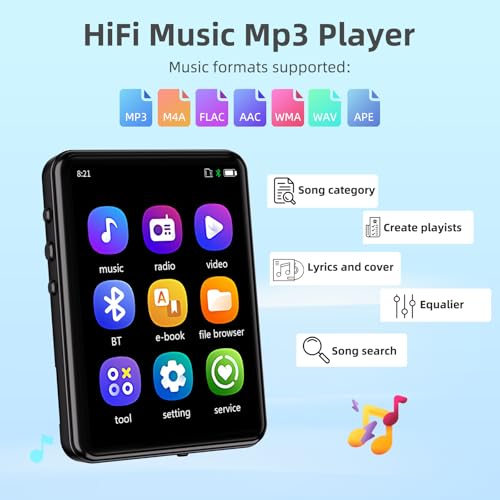


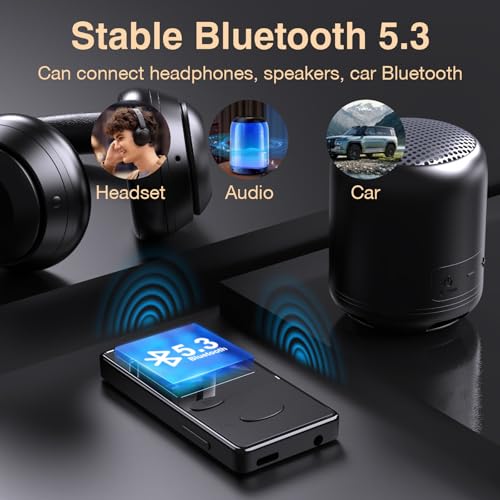


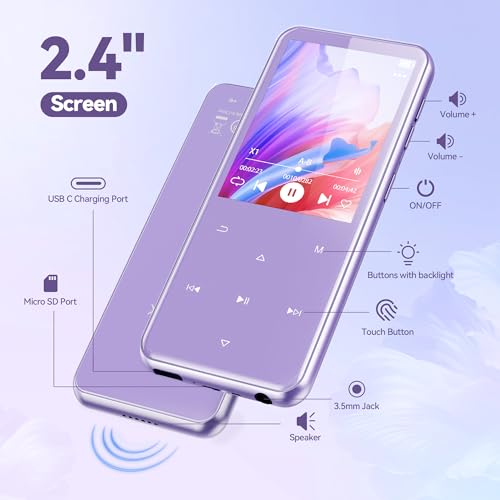
We also considered 10 others:


Our Top Choice
The order above is not editorial opinion, and it is not paid placement. It comes from what shoppers across our network actually do - which mp3 players with bluetooth they compare, and which they ultimately buy. We re-rank as new data comes in, so the long-term favorites have to keep earning their spot against new entrants. The full method, including how we make money.
Mp3 Players with Bluetooth Buyer's Guide
Bluetooth MP3 players sit between two use cases: a distraction-free offline music library and a small connected device that can feed earbuds, car audio, speakers, or apps. The biggest buying risks are not just sound quality, but whether Bluetooth actually works with your headphones or vehicle, whether your files and playlists are easy to load, and whether the battery and interface stay reliable in daily use.
Bluetooth Fit
Bluetooth is the feature that makes this category convenient, but it is also where compatibility gaps show up first. A careful shopper should match the player to the exact listening chain they use most, because earbuds, car stereos, speakers, and call features do not all behave the same way.
Check the Bluetooth version, supported profiles, and real output limits before buying: some players transmit to earbuds and speakers but do not receive audio, some handle car systems poorly, and many will not support every headphone control or microphone feature. If car use matters, confirm whether you need direct Bluetooth pairing, aux output, FM transmission, or a charging adapter-style setup; FM playback can be convenient but is vulnerable to local radio interference and static. Owner sentiment supports this as a make-or-break area: many buyers report dependable everyday pairing and quick phone setup, but others describe inconsistent compatibility with particular earbuds, cars, remotes, or device memory behavior, and hands-free call quality is more variable than basic music playback.
Music Storage
An MP3 player is only useful if it can organize your library in a way that matches how you listen. Storage size matters less if the device cannot read your card cleanly, sort albums correctly, or make playlists without friction.
Prioritize real library handling over headline capacity: look for expandable TF/SD support with a clearly stated maximum card size, folder browsing, playlist creation/editing, resume behavior, and compatibility with the file types you actually own. If you are moving music from a laptop, check whether the player mounts like a simple drive, whether drag-and-drop transfer is supported, and whether it sorts tracks by tags, folders, or file names; poor indexing can make a large library frustrating. Owners repeatedly value large storage, card expansion, easy music transfer, offline listening, and playlist navigation, while a few note that music navigation or car recognition can take patience.
Sound Path
In this category, “good sound” is not one single trait because the player may be feeding wired headphones, Bluetooth earbuds, a car stereo, or a tiny onboard speaker. The weakest link in that chain often determines the listening experience.
Judge sound by the output path you will actually use: wired headphones depend on the internal DAC and headphone power, Bluetooth depends on pairing stability and codec support, built-in speakers are usually for casual listening, and FM transmission can be limited by available open frequencies. For serious listening, look for standard headphone support, EQ that is easy to disable or tune, clean volume steps, and the option to use your preferred earbuds or headphones instead of relying on bundled accessories. Owner feedback says everyday sound can be satisfying, especially through chosen headphones or earbuds, but built-in speakers and included earbuds are less consistently liked, and car/FM setups can suffer from distortion, static, or competing radio signals.
Easy Control
A dedicated music player should reduce friction, not add a tiny-computer learning curve. Controls matter more than they seem because you use them every time you skip tracks, pair headphones, change folders, or resume listening.
Choose controls based on where you will use the player: physical buttons are safer for pocket, gym, and car use, while touchscreens can make playlists and app-style browsing easier if they stay responsive. Look for a lock function, clear back/home behavior, fast search or folder access, readable menus, and simple pairing and transfer steps; avoid players that bury core actions behind vague icons or multi-press button combinations. Sentiment shows many buyers find setup, menus, touchscreens, and playlist tasks easy once learned, but some need patience with button behavior, music navigation, connection use cases, or an experience that is not uniformly smooth.
Daily Reliability
Portable music players are handled constantly, charged often, and expected to work without attention. Battery and reliability issues are especially frustrating because they can interrupt the simple, offline listening experience people buy these devices for.
Look beyond claimed runtime and check charging port type, charge time, standby drain, whether Bluetooth sharply reduces battery life, and whether the unit can survive pockets, bags, workouts, or car use. Reliable players should not heat noticeably during normal playback, freeze during indexing, forget paired devices, or require frequent resets; a compact body is useful only if the buttons, screen, card slot, and battery hold up. Owners praise pocketable size, better-than-expected battery life, and decent build on some low-cost players, but also report split reliability, finicky charging, battery fade, glitches, slowness, heat, and units that lose functionality or need troubleshooting.
Feature Value
More features can make a player more useful, but they can also make the buying decision easier to get wrong. The best value comes from features you will actually use reliably, not from a long spec list that does not fit your listening habits.
Decide first whether you want a true offline MP3 player, a small app-enabled media device, or a car-focused Bluetooth/FM/charging accessory, because each adds different complexity. For app-enabled models, verify the specific apps you need, offline download support, account compatibility, WiFi requirements, and whether the device can still work well as a local music player if an app is missing or unsupported. Owner sentiment shows strong appeal for bundled features such as Bluetooth, WiFi, built-in apps, large storage, fast charging, FM transmission, and hands-free use, but also shows that value depends heavily on whether the included apps and features match the buyer’s actual needs.
1,000,000+ shoppers use Buyer's Guide every week to find the best products and services online.

Helping millions of users make smarter purchases online.


