







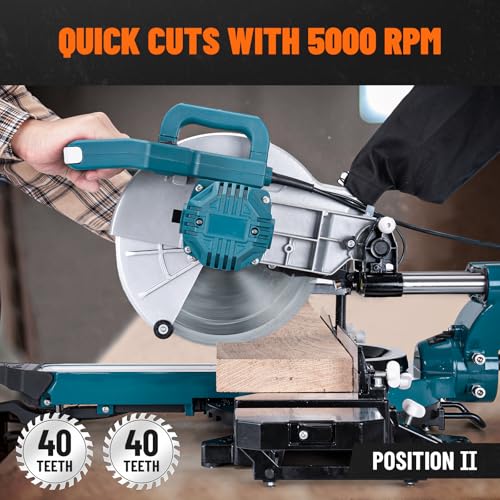

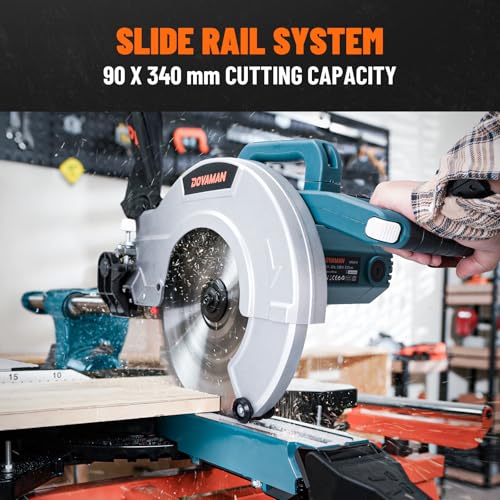


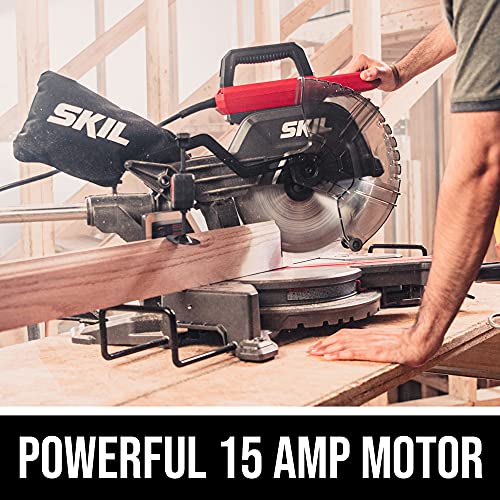


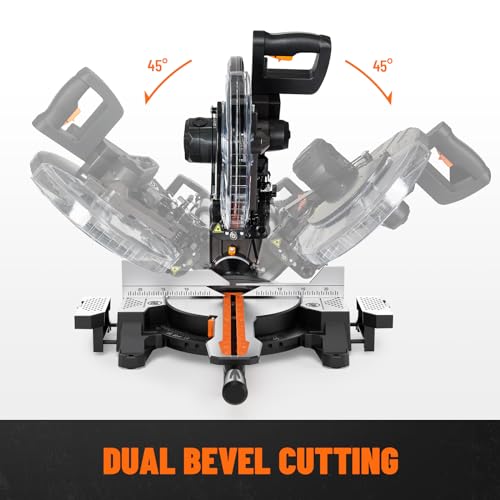


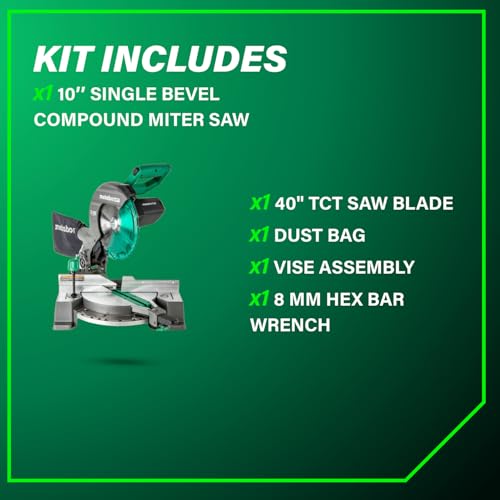

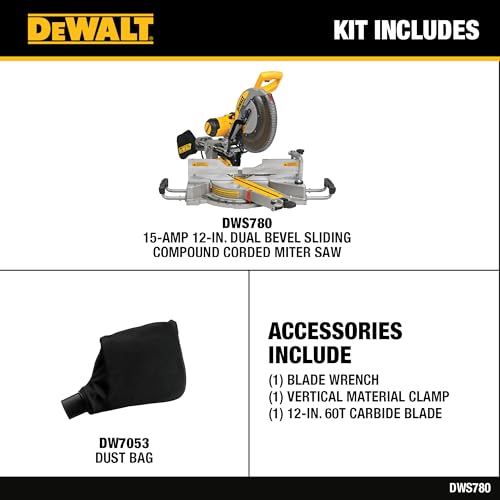
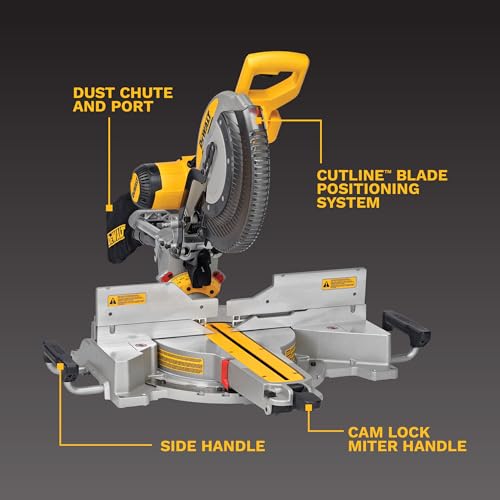


We also considered 10 others:


Our Top Choice
The order above is not editorial opinion, and it is not paid placement. It comes from what shoppers across our network actually do - which miter saws they compare, and which they ultimately buy. We re-rank as new data comes in, so the long-term favorites have to keep earning their spot against new entrants. The full method, including how we make money.
Miter Saws Buyer's Guide
A miter saw is bought around one core tradeoff: the cleaner and more repeatable the angled cut, the more you need to care about calibration, fence rigidity, blade capacity, and bevel controls. The sharpest concerns are whether it will stay square through real trim/framing work and whether its size, slide, and dust-control compromises fit the space where you will actually cut.
Cut Accuracy
Miter saws are precision layout tools as much as cutting tools. Small errors in squareness, bevel angle, or cut-line indication can multiply across casing, crown, picture frames, flooring, and deck boards, making gaps obvious even when the saw feels powerful.
Prioritize a saw with a clear blade-shadow cutline, a rigid fence, a flat table, and easy ways to verify 90-degree, 45-degree miter, and bevel alignment with a square. A blade-shadow system is especially useful because it shows the actual blade kerf width, while lasers can be offset, drift out of adjustment, or mislead when the blade is changed. Also check for minimal blade deflection, a smooth plunge, and a stock blade suited to your work: fine-tooth for trim and cleaner crosscuts, tougher construction blades for framing. Owner feedback strongly supports making accuracy a top filter: buyers repeatedly praise clean, professional-looking cuts, dependable alignment, strong straight/bevel/miter calibration out of the box, and shadow lines that make the cut location easier to trust.
Power & Capacity
The right miter saw must clear the actual boards you cut without forcing flips, unsafe angles, or multiple passes. Power matters most when the blade is buried in wider lumber, dense hardwood, wet framing material, or thick trim stacks, where bogging can burn the cut and pull the blade off line.
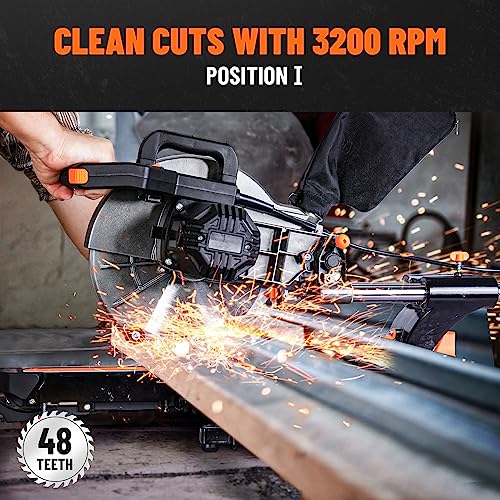
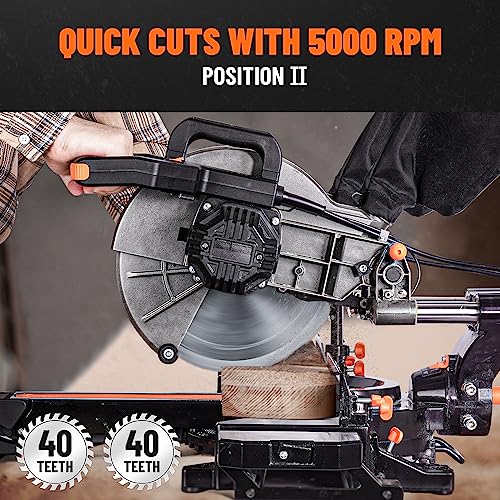
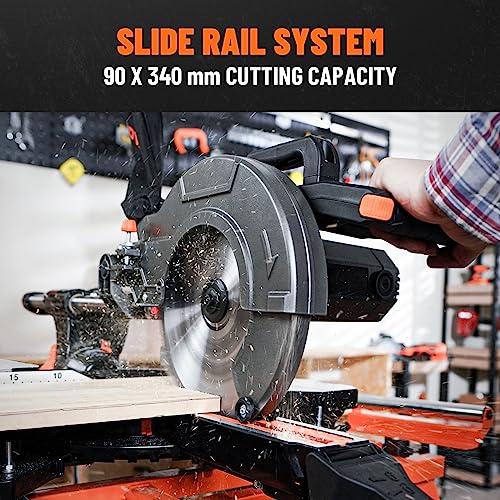
Match the saw to your real cut list: a non-sliding saw is simpler and often enough for narrow trim, while a sliding model is important for shelving, wider baseboards, stair treads, flooring, and dimensional lumber. Blade diameter affects vertical and crosscut capacity, but slide design, fence height, and bevel clearance matter just as much as the number on the blade. Look for confident starts, steady speed through larger stock, and a blade appropriate to the material; avoid underpowered setups that require pushing hard, because that can worsen tear-out and accuracy. Owner sentiment backs this priority, with cutting performance described as smooth, confident on larger lumber, and capable of straight, clean results when the blade is sharp and the saw is properly aligned.
Adjustments
Miter saw adjustments decide how quickly you can move between common jobsite cuts and how reliably the saw returns to square. Good detents and accessible locks reduce trial cuts, but every saw still needs verification because transport, assembly, and factory tolerances can shift alignment.
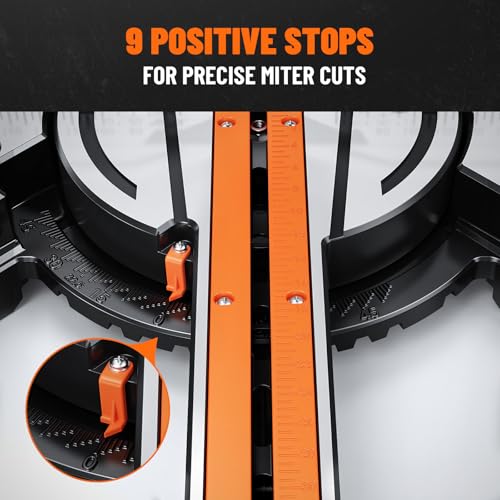
Look for positive miter detents at common trim angles, a readable scale, a secure miter lock, and bevel controls you can reach without awkwardly reaching behind the saw. If you cut crown, choose dual bevel or at least very easy bevel changes; if you cut mostly baseboard and framing, fence stability and fast miter changes may matter more. Check that the fence can be squared, the bevel stops can be tuned, and the saw returns accurately to zero after angled cuts. Owners generally find setup and adjustment straightforward, but the sentiment also warns that minor calibration, stop tweaks, fence quirks, and bevel-related details can appear, so a careful buyer should expect to test and tune before finish work.
Build & Safety
A miter saw’s frame and moving parts have to stay rigid while the blade is pulled, plunged, and angled repeatedly. Weak rails, flexing fences, rough slides, or sticky guards can turn a precise saw into an inconsistent or frustrating one over time.
Inspect for a solid table casting, a fence that does not flex, smooth sliding rails with little side play, a guard that retracts cleanly, and clamps or hold-downs that keep short offcuts away from your hands. Dust ports and seals are not just convenience features: poor capture throws chips into the slide path, clogs bevel areas, and makes indoor trim work harder to control. Heavier saws can feel more stable, but excess heft becomes a problem if you move between rooms or jobsites, so balance mass against portability. Owner impressions are mostly positive on quality and well-made feel, yet the mixed durability comments point to the exact areas to examine: heft, rough initial slide action, dust-collection seals, and guard parts.
Workflow Fit
A miter saw can be accurate and powerful but still be the wrong daily tool if it is awkward to position, store, or adjust. Workflow features matter because trim and framing jobs often involve dozens of repeated cuts with frequent angle changes.
Before buying, measure your bench or stand depth, including the rear clearance needed by the slide; some saws need significant space behind them unless designed for compact rail travel. Favor front-access controls, clear scales, good handles, material supports, stop blocks, and a dust setup that works with your shop vacuum if you cut indoors. For small household cuts and craft-style trimming, a compact saw or lighter setup may be faster to grab than a large sliding model; for production trim, quick angle changes and repeatability are worth more than minimum size. Owner feedback supports this workflow focus, noting quick cut changes, straightforward use, and appreciation for compact, lightweight tools on small jobs.
Value Fit
Value in this category is not just getting more features; it is getting the right features for the cuts you make most often. Overspending on unused capacity is wasteful, but buying too little saw can force inaccurate workarounds or an early replacement.
Decide first whether your work is mainly trim, framing, flooring, furniture parts, or general home repair, then pay for the features that solve those cuts: sliding capacity for wide boards, dual bevel for crown and compound cuts, a reliable shadow line for visible layout, and strong detents for repeated angles. Avoid choosing only by headline blade size or feature count; a smaller, well-calibrated saw can beat a larger saw with sloppy fences or awkward controls for finish carpentry. Owner sentiment shows why value deserves its own filter: buyers strongly reward saws that combine quality, performance, accuracy, and features normally associated with higher-end tools, especially when they still perform well for the money.
1,000,000+ shoppers use Buyer's Guide every week to find the best products and services online.

Helping millions of users make smarter purchases online.


