















We also considered 10 others:


Our Top Choice
The order above is not editorial opinion, and it is not paid placement. It comes from what shoppers across our network actually do - which compound miter saws they compare, and which they ultimately buy. We re-rank as new data comes in, so the long-term favorites have to keep earning their spot against new entrants. The full method, including how we make money.
Compound Miter Saws Buyer's Guide
A compound miter saw has to balance power and cut capacity against portability, setup speed, and long-term angle accuracy. The sharpest buying concerns are whether it can make repeatable miter/bevel cuts on your actual lumber and trim, and whether the fence, clamps, and build stay stable after repeated use.
Cut Power
Compound miter saws are bought for fast, repeatable crosscuts, but capacity varies sharply once the blade is angled or beveled. A saw with enough power and usable cutting envelope will feel effortless on project lumber, while an undersized one can burn wood, slow down, or force unsafe flip-and-finish cuts.
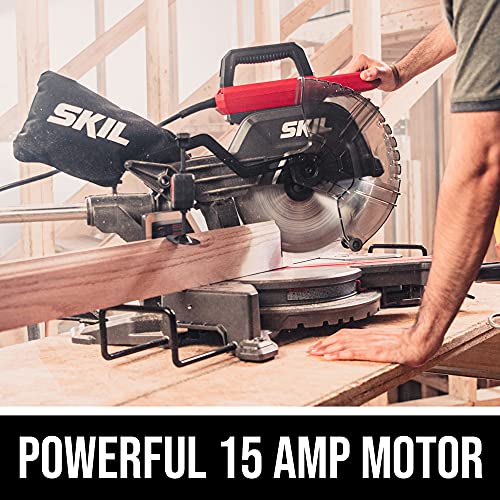
Match the saw’s real cut capacity to the material you will actually use: 2x framing, 4x posts, deck boards, baseboard, crown, and wide shelving all stress a compound miter saw differently. Check maximum crosscut width, vertical cut height, miter-at-angle capacity, and bevel-at-angle capacity—not just blade diameter—because a saw that handles a straight 2x4 may still fall short on tall trim or nested crown. For repeated framing cuts, prioritize steady motor power, clean spin-up, and a blade that does not bog or deflect; owner feedback supports this as a key separator, with strong reports for smooth repeated cuts through common lumber including 2x4s and 4x4s.
Angle Accuracy
The difference between an acceptable miter saw and a frustrating one often shows up in small angle errors. Detents, bevel locks, fences, and calibration points determine whether the saw repeats the same cut cleanly after setup, transport, and heavy use.
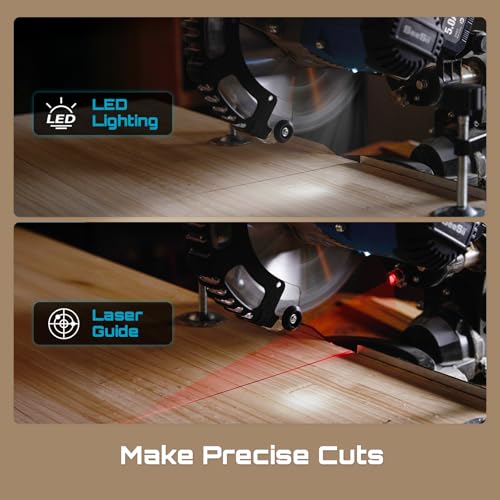
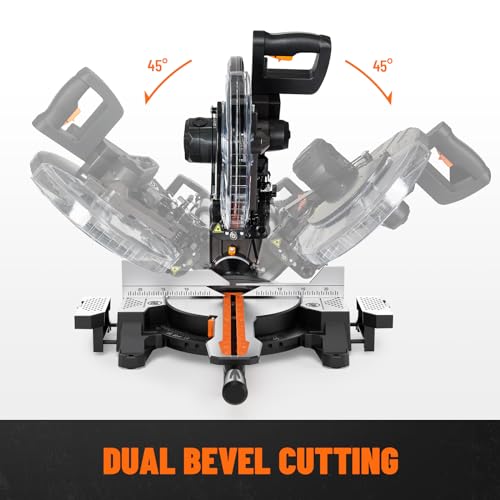
For trim, picture frames, shelving, and compound corners, choose a saw with positive miter detents at common angles, a clear scale, secure lockup, and bevel controls that are easy to set without nudging the workpiece. Dual-bevel capability is helpful if you cut crown or repeat left/right bevels often, while single-bevel designs can be fine for basic DIY if you are comfortable flipping stock accurately. Look for calibration access, a rigid detent plate, and a cut-line aid that can be aligned; owner sentiment reinforces this need because buyers praised beginner-friendly angle-cut performance, while longer-term confidence in parts and precision was more mixed.
Fence Support
A compound miter saw is only as accurate as the surface that supports the work. Weak fences, flexing tables, and poor clamping can turn a powerful saw into an inconsistent or unsafe one, especially on narrow trim and long boards.
Prioritize a flat table, a straight fence, a firm hold-down clamp, and enough side support for longer boards; these features keep the cut square and help prevent the offcut from shifting into the blade. A tall fence matters for crown and baseboard, while removable or auxiliary fence compatibility is useful for zero-clearance support, small pieces, and cleaner trim cuts. Owner comments point the same way: buyers valued well-built, sturdy saws, and one common-use pattern improved when the saw was paired with a simple fence setup.
Easy Setup
Many shoppers use a compound miter saw intermittently, so setup friction can decide whether it gets used or avoided. Portability is valuable, but it should not come at the cost of a wobbly base, awkward controls, or alignment that shifts every time the saw is moved.
Decide whether the saw will live on a bench, ride to different work areas, or be stored between projects, then choose the weight, footprint, handle placement, and stand compatibility accordingly. A good portable setup should have a blade lock, stable carry points, fast assembly, and settings that stay reasonably square after being moved; compact rail designs also help if the saw must sit close to a wall. Owner feedback strongly supports this dimension: buyers praised quick setup, easy management, and a lightweight, straightforward feel for home-project use.
Lasting Build
Durability in this category is not only about whether the motor still runs. The more important question is whether the saw continues to lock square, hold bevel settings, and cut repeatably after vibration, dust, transport, and repeated stock changes.
Look beyond first impressions and check the parts that preserve accuracy: bevel pivots, slide rails if present, detent plate, fence mounting, table casting, guard action, and lock levers. A saw can feel solid on day one but lose precision if the stops wear, rails develop play, or clamps stop holding firmly after heavy cutting. Owner sentiment is positive on initial build—several buyers described saws as sturdy, well made, or better than expected—but durability feedback was mixed, with some confidence after heavy cutting and some uncertainty about long-term parts and precision.
Blade & Dust
The blade determines cut cleanliness as much as the saw body does, especially when switching between framing lumber and finish trim. Dust control also affects visibility, cleanup, and mechanical longevity because fine sawdust collects around slides, pivots, and detents.
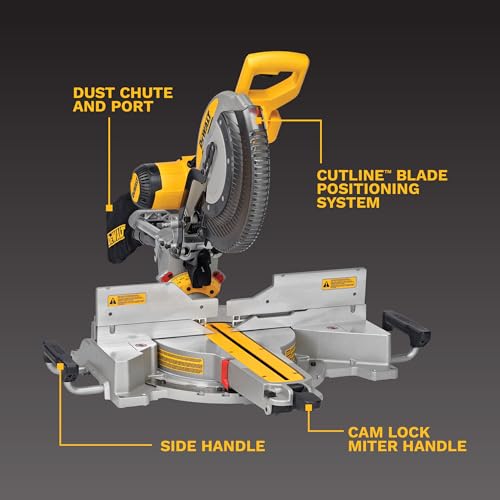
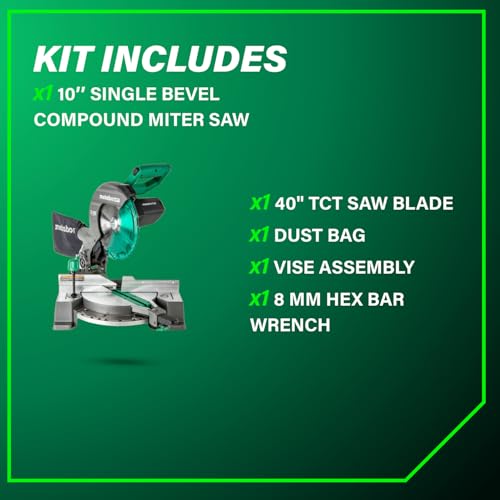
Plan for the blade and dust path before judging the saw: a coarse general blade may be fine for framing but will tear out trim, while a higher-tooth, material-appropriate blade is often necessary for clean finish work. Check arbor size, blade diameter, kerf clearance, guard behavior, and whether the dust port matches a vacuum hose, because miter saw dust bags alone often leave debris around the cut area and rails. Owner sentiment supports blade choice as a practical upgrade point, with buyers noting good beginner and project performance especially when paired with a good blade; overall value impressions were also strong when the saw matched the user’s project level.
1,000,000+ shoppers use Buyer's Guide every week to find the best products and services online.

Helping millions of users make smarter purchases online.


