
Join the millions that have trusted BuyersGuide.org to help them make smarter buying decisions. Let our independent expert reviews and data-driven shopping recommendations help you find the one that's right for you.
















We also considered 10 others:


Our Top Choice
Compare Features


Why These Features Matter:
A mattress topper is basically the easiest way to negotiate with a bed you otherwise like. You’re not “redoing your sleep setup.” You’re trying to stop waking up with a hip that feels personally offended, or you’re attempting to soften a mattress that’s somehow both expensive and mean. The right topper can make your bed feel newly intentional. The wrong one becomes a rolled-up, dusty regret you keep moving from closet to closet because it cost too much to throw away.
Here’s what actually matters in real life (not in a lab, not on a product page):
- Feel, not just firmness. “Soft” can mean plush and buoyant or sinky and stuck. If you’ve ever had to climb out of bed, you know the difference.
- Heat management. Foam can sleep warm. Some “cooling” claims are… aspirational. If you wake up sweaty, pay attention to materials and covers more than marketing.
- Noise and motion. Foam is quiet. Some fiber-filled or quilted toppers can swish. If you share a bed with a light sleeper (or a cat who sprints at 3 a.m.), this matters.
- Edge behavior. A topper that collapses at the sides makes you feel like you’re camping on a slope. Especially relevant if you sit on the edge to put on socks like a responsible adult.
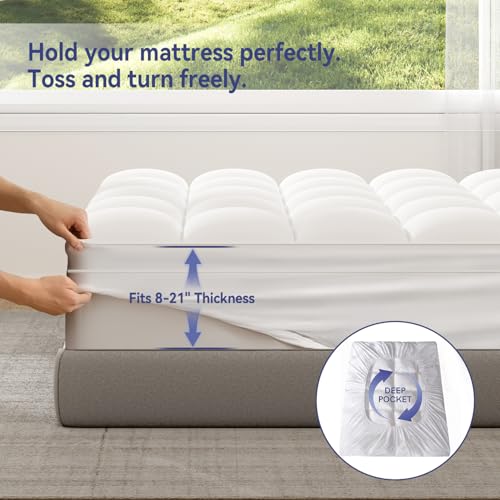
- Staying put. Elastic corner straps sound reassuring until they’re twisted, sliding, or just barely reach because your mattress is too tall. A topper that drifts is a nightly micro-annoyance.
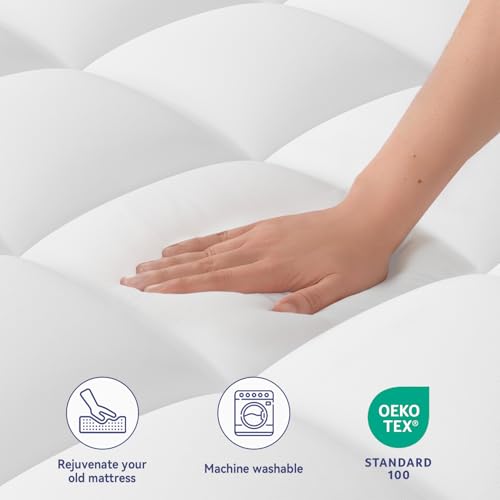
- Maintenance realism. If the cover isn’t washable, you’ll eventually have a gross moment of clarity. If it is washable but impossible to get back on, you’ll still have that moment—just later.
The “My Mattress Is Too Firm and I’m Not Starting Over” Pick (Memory Foam)
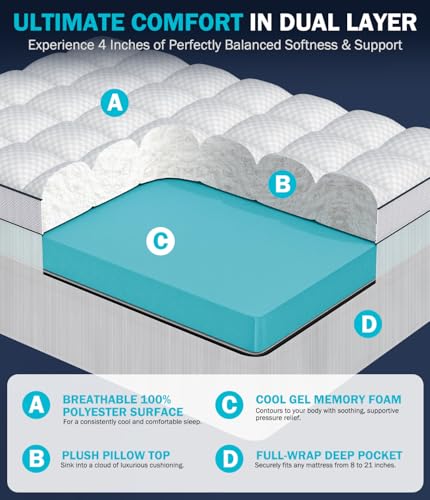
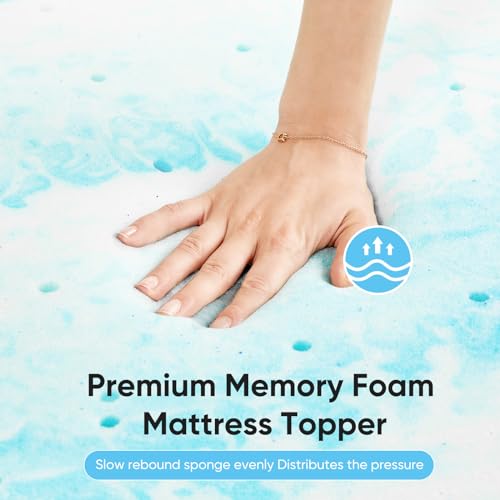
This is the classic fix for a mattress that feels like it was designed by someone who hates shoulders. A good memory-foam topper adds pressure relief in the places that tend to complain first (hips, shoulders, lower back), and it does it quietly—no crinkling, no swishing, no drama. It’s also the category most likely to make you feel like you’ve upgraded your bed without having to explain a new mattress purchase to your bank account.
- Notable strengths
- That slow, contouring “ahh” feeling that makes side-sleeping less punishing
- Typically the best at smoothing out a too-firm mattress (and minor lumpiness)
- Very low noise; partner movement is less noticeable
- Things to know
- Look for a topper with a removable cover. Not glamorous, but it’s the difference between “fresh” and “mysterious.”
- If you’re heat-sensitive, prioritize breathable covers and materials that don’t trap warmth. “Cooling gel” can help a little, but it won’t turn foam into linen.
- Honest caveats
- Memory foam is heavy. Rotating it alone is a small workout you didn’t schedule.
- There can be an initial smell. Some dissipate quickly; some linger long enough to make you crack a window and feel smug about “airing things out.”
- If you hate the sensation of sinking in, you may find it a little too clingy—like a hug that doesn’t read the room.
The “I Want Hotel Plush, Not Quicksand” Pick (Latex)
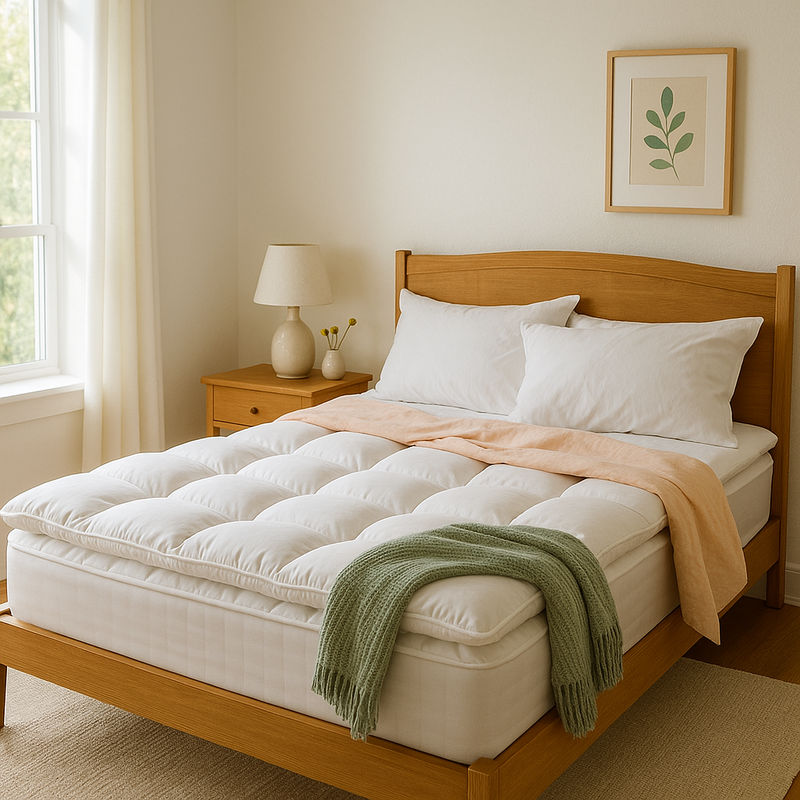
Latex is for people who want softness with bounce—more cushion, less sink. It’s that buoyant, responsive feel that makes rolling over easy instead of an event. Editors love it, chiropractors seem to tolerate it, and people who run warm often find it less swampy than memory foam. It’s also the option I hear most often described as “my bed, but nicer,” which is exactly the point.
- Notable strengths
- Springy support that cushions without trapping you
- Often cooler-feeling than memory foam (especially with a breathable cover)
- Durable—less likely to develop permanent body divots quickly
- Things to know
- Latex toppers can be surprisingly substantial. Plan for a bit of wrestling when you unbox and position it.
- It pairs well with a mattress that’s already decent but needs a comfort upgrade—think “good bones, bad vibes.”
- Honest caveats
- Latex is often pricier up front. You’re paying for longevity and feel.
- Some people notice a faint natural-rubber scent at first (usually mild, but yes, it’s a thing).
The “I Miss My Grandma’s Featherbed (But Cleaner)” Pick (Down Alternative / Fiberfill)
If what you want is fluff—that cloud-on-top look, the cozy loft, the kind of bed you want to dive into fully clothed—fiber-filled toppers deliver. They’re less about orthopedic transformation and more about making your bed feel welcoming. This is the category I recommend to people who don’t necessarily hate their mattress; they just want it to feel softer and more layered, like a properly made guest bed in a house that somehow never has laundry piles.
- Notable strengths
- Instant plushness and a “pillow-top” vibe without changing the mattress itself
- Generally lighter and easier to handle than foam
- Often a good choice for people who dislike the “foam feel”
- Things to know
- These can be great if you sleep cold or want a cozy winter bed—especially with flannel sheets (dangerously inviting).
- Look for designs with stitching or baffles that keep fill from migrating into sad lumps.
- Honest caveats
- They compress over time. Fluffing helps, but it’s not magic.
- Some are a little swishy when you move. Not always, but if you’re noise-sensitive, it’s worth noting.
- If you need real pressure relief, fiberfill may feel lovely but not fix the actual problem.
The “I Run Hot and Still Want Softness” Pick (Wool)
Wool toppers are the quietly competent ones: not dramatic, not trendy, just genuinely good at making a bed feel more comfortable across seasons. They add a gentle cushion, take the edge off a firm mattress, and do a nice job of temperature regulation. If you wake up sweaty but hate the plasticky vibe of some “cooling” fabrics, wool feels like the grown-up solution.
- Notable strengths
- Temperature balancing—cooler in summer, cozier in winter
- Softens the surface without the “stuck” sensation
- Often feels drier and fresher over time (in a way your nose appreciates)
- Things to know
- Wool is less about a marshmallowy sink and more about a supple, padded feel.
- It’s a solid choice if you want comfort but also care about natural materials and long-term wear.
- Honest caveats
- Many wool toppers are spot-clean only. If you have kids, pets, or a nightly tea habit, think hard about this.
- They can feel “firmer” than expected at first; wool tends to settle in rather than poof up forever.
The “My Back Hurts, But I Still Want My Bed to Feel Nice” Pick (Hybrid / Zoned Comfort Designs)
Some toppers try to split the difference: a little cushioning up top, more support underneath, sometimes with targeted zones for hips and shoulders. Done well, they’re legitimately helpful for people who need alignment but don’t want to sleep on something that feels like a gym mat. Done poorly, they can feel strangely uneven—like the bed has opinions about where you should put your body.
- Notable strengths
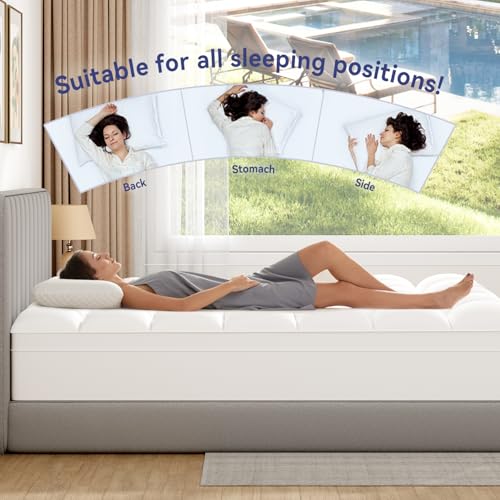
- Can offer a more “balanced” feel for combo sleepers (back/side/half-sprawled)
- Better odds of support without sacrificing comfort
- Often reduces pressure points without overheating as much as dense foam
- Things to know
- If you and your partner have very different sleep styles, consider how zoning lines up—your “hip zone” might be their “rib zone.”
- Pay attention to how it’s constructed and whether it has a stable base; these are the toppers that can shift if the build is flimsy.
- Honest caveats
- They’re often bulkier and harder to store if you decide it’s not your thing.
- Some people feel the zones. Others don’t. It’s annoyingly personal.
Fit, Feel, and the Annoying Little Logistics (That You’ll Definitely Notice)
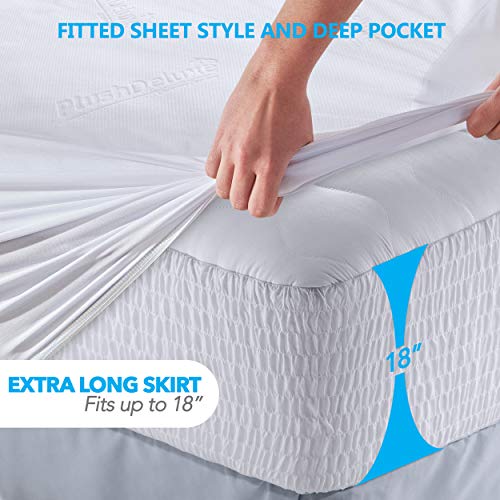
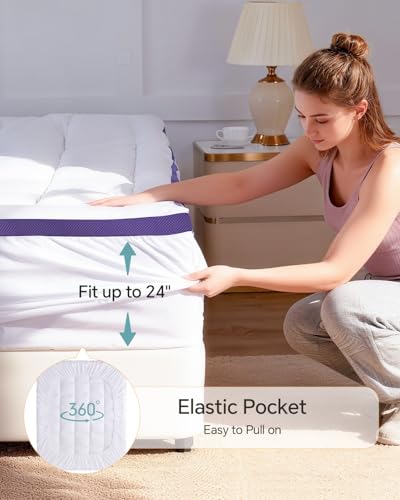
- Thickness isn’t a personality. A thicker topper can feel more luxurious, but it can also make your fitted sheets rage-quit. If you already have a tall mattress, measure before you commit.
- Corner straps: useful, not foolproof. They help, but they can twist, stretch out, or fight with deep mattresses. A grippy underside or a well-fitted cover often matters more.
- Weight is a real factor. Foam and latex can be comically heavy. If you live alone and your bed is wedged into a corner (hello, city apartments), consider whether you’ll actually rotate or clean it.
- Noise isn’t just for cheap stuff. Some quilted toppers rustle. Some covers squeak against certain sheets. If you’re sensitive, stick with quieter materials and smoother covers.
- Return policies are part of the product. A topper can feel different after a week than it does on night one. Give yourself an exit plan.
How to Choose Yours (Without Spiraling)
- If your mattress is too firm: start with memory foam or latex. Foam if you want deep contouring; latex if you want lift and ease of movement.
- If you sleep hot: lean latex or wool, and prioritize breathable covers. Also: accept that your duvet might be the real culprit.
- If you want “hotel bed” vibes: consider fiberfill/down-alternative for that plush, layered look—then add a good mattress pad to keep it civilized.
- If you wake up sore: choose something that adds pressure relief and maintains support. Hybrid designs can work well, but they’re more “try and see.”
- If you hate maintenance: pick a topper with a removable, washable cover and a construction that won’t migrate into lumps or require constant fluffing.
The Editor’s Reality Check
A topper won’t fix a mattress that’s fully shot—deep sagging, broken support, that one crater where your body has been slowly negotiating a truce for years. But if your bed is basically fine and you just want it to feel better, a topper is the rare home upgrade that you notice immediately, every single night. Which is also why it’s worth choosing one that matches your actual habits: your tendency to run hot, your allergy situation, your sheet-washing frequency (be honest), and whether you want plushness or support more than you want a fantasy.
1,000,000+ shoppers use Buyer's Guide every week to find the best products and services online.

Helping millions of users make smarter purchases online.

