













We also considered 10 others:


Our Top Choice
Compare Features


The order above is not editorial opinion, and it is not paid placement. It comes from what shoppers across our network actually do - which level 2 chargers they compare, and which they ultimately buy. We re-rank as new data comes in, so the long-term favorites have to keep earning their spot against new entrants. The full method, including how we make money.
Level 2 Chargers Buyer's Guide
Level 2 chargers are really a home electrical upgrade, not just an EV accessory: the right choice depends on your panel capacity, circuit amperage, vehicle charge limit, connector type, and where the cord must reach. The biggest mistakes are buying more amperage than the circuit or car can use, choosing a weak plug/outlet setup for daily high-current charging, or relying on smart features that fail when WiFi or the app is down.
Build
You’ll handle an EV charger regularly and may leave it exposed to heat, cold, rain, dust, or garage bumps, so solid build quality affects both safety and long-term reliability. Look for sturdy casing, well-sealed connections, appropriate safety certifications, a flexible but durable cable that’s long enough for your parking setup, and strain relief at both ends. If you plan to charge away from home, also consider weight, plug storage, and how easy it is to pack without stressing the cable.
For build quality, prioritize a safety-certified unit with a rugged enclosure rated for its location, a heavy-gauge cable that stays flexible in cold weather, a secure wall holster, good strain relief, and a connector that matches your vehicle inlet or adapter plan. If installing outdoors or in an exposed garage, check the weather rating, cable storage, plug protection, and whether the unit is designed for repeated high-current use rather than occasional portable charging. Owner feedback supports this focus: shoppers often describe well-built Level 2 chargers as sturdy, polished, dependable, and easy to handle daily, with long flexible cables, solid charger bodies, heavy-duty handles, and thoughtful cable storage being especially appreciated.
Charging
Charging performance determines how quickly you can add usable range at home, so it affects whether your EV is ready when you need it. Look for a charger with an amperage and power level your vehicle and electrical panel can actually support, and watch out for units that advertise high output but require professional installation or circuit upgrades to deliver it safely.
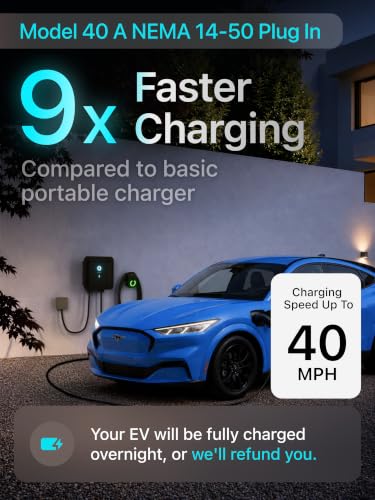
For charging performance, match the charger’s output to both the circuit and the vehicle’s onboard charger: a 40A circuit supports up to 32A continuous charging, a 50A circuit supports up to 40A, and 48A charging typically requires a hardwired 60A circuit. Do not assume a higher-amp charger will charge faster if the car is limited to a lower AC rate, and look for adjustable amperage if you may use a smaller circuit, share panel capacity, or move the charger later. Owner sentiment backs up the benefit when the electrical setup is right: buyers report Level 2 charging as a major upgrade over Level 1, with fast overnight top-offs and, depending on the car and circuit, range gains around the high-20s of miles per hour.
Usability
You’ll interact with your EV charger often, so it should feel simple to plug in, start, stop, monitor, and schedule without extra hassle. Look for clear status indicators, straightforward controls or app menus, and a cable/connector setup that’s easy to handle in your parking space. Watch out for chargers that rely on confusing apps, vague lights, or overly complicated setup steps that can make everyday charging more frustrating than it needs to be.
For usability, plan the physical layout before buying: measure from the outlet or hardwire point to the vehicle charge port in every parking position, then leave slack for routing around bumpers and garage clutter; a 25-foot cable is often useful, but it still may not solve a poorly placed circuit. Also favor clear status lights or an on-unit screen, easy current adjustment, restart behavior after outages, and controls that are understandable to household members who just want to plug in and walk away. Owners tend to reward chargers that feel simple after installation, citing plug-and-play operation, readable screens, clear instructions, convenient long cables, and smooth everyday charging as major strengths.
App
A good app can make daily charging easier by letting you start or stop sessions, set schedules, monitor energy use, and get alerts without going to the garage. Look for clear app usability, reliable Wi-Fi connectivity, and smart features that still work predictably if the connection drops or your network changes. Watch out for chargers that depend too heavily on flaky connectivity for basic functions you’ll need every day.
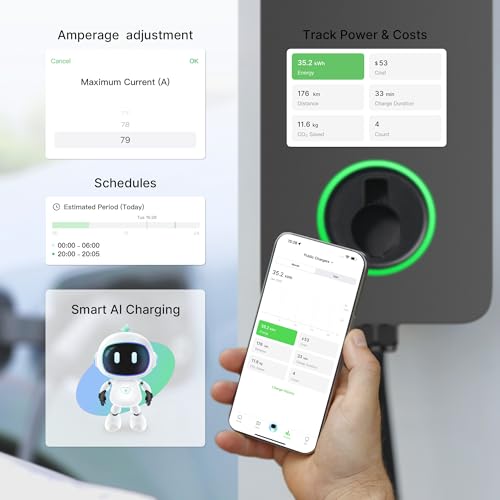
For the app, treat smart control as useful but not a substitute for reliable charging: the charger should still start and stop normally if WiFi is weak, the phone is unavailable, or the app service has an issue. Look for practical EVSE-specific tools such as off-peak scheduling, amperage limits, live session status, energy tracking, cost estimates, charging history, and optional authorization control if the charger is outdoors or in a shared area. Owner feedback is strongest when apps provide exactly those functions without becoming complicated, with buyers praising easy scheduling, charge-cost tracking, usage history, live monitoring, amperage adjustment, and setup visibility from a phone.
Features
You’ll want controls that make everyday charging simple, such as clear status indicators, an easy-to-read display, and settings for scheduling or adjusting current to match your circuit. Look for core safety and convenience functions that are easy to access without guesswork, and be cautious of chargers with confusing menus, vague error messages, or limited control over charging speed.
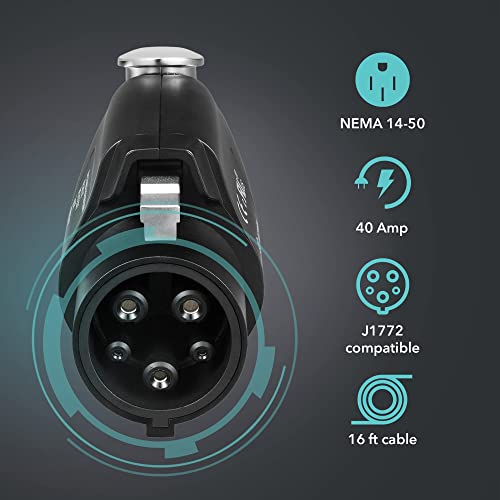
For features, decide whether you need a fixed home station, a portable Level 1/Level 2 backup, or a unit that can handle multiple outlet types; those are different use cases and should not be mixed casually without checking current settings and plug compatibility. Useful Level 2-specific features include adjustable amperage, clear charging information on the unit, scheduling, energy monitoring, charge control, adapter compatibility for your vehicle connector, and outdoor/security features where relevant. Owner reports support these choices: buyers value dependable daily operation, clear on-unit charging information, smart scheduling and control, faster high-amperage home charging, and portable units that can work as travel or backup chargers across different outlet types when properly matched.
Installation
Installation affects both your upfront effort and how safely and reliably your EV charger will work day to day. Look for clear mounting hardware, flexible wiring options such as hardwired or plug-in setups, and straightforward app or onboard configuration; watch out for units that require electrical upgrades, awkward mounting clearances, or professional setup beyond what you planned for.
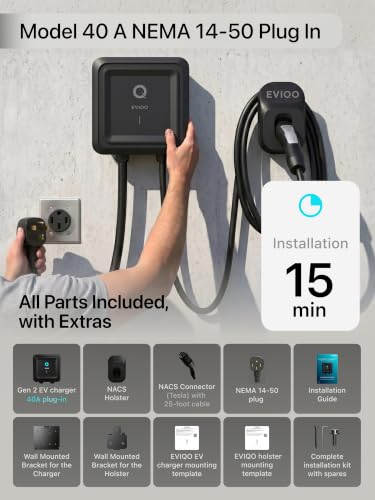
For installation, verify the electrical path before ordering: panel capacity, breaker size, wire gauge, outlet type, grounding, local code, permit requirements, and whether the charger will be plug-in or hardwired. For daily Level 2 use, a quality receptacle and correct torqueing matter; hardwiring can be preferable for higher amperage, outdoor installs, or avoiding receptacle wear, while some jurisdictions require GFCI protection on 240V garage outlets, which can affect plug-in setups. Owner sentiment aligns with the idea that installation is easy only when the electrical groundwork is correct: buyers describe setup as straightforward when a proper 240V outlet or circuit already exists, when mounting hardware and directions are clear, or when an electrician handles the hardwired circuit and activation.
1,000,000+ shoppers use Buyer's Guide every week to find the best products and services online.

Helping millions of users make smarter purchases online.


