





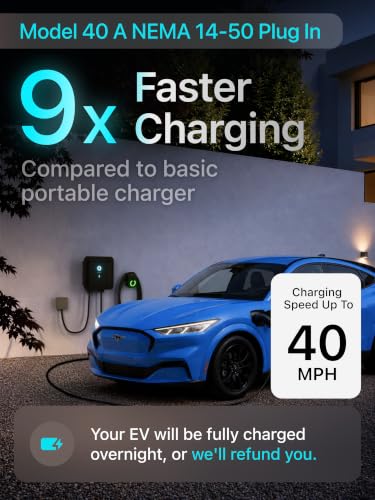


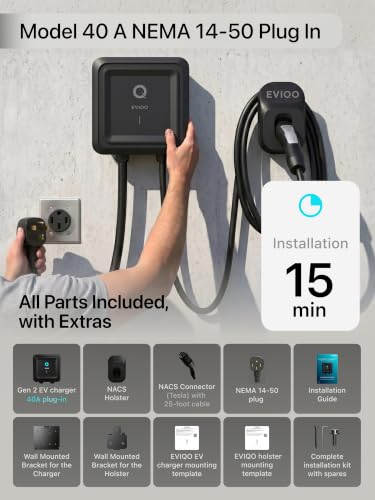


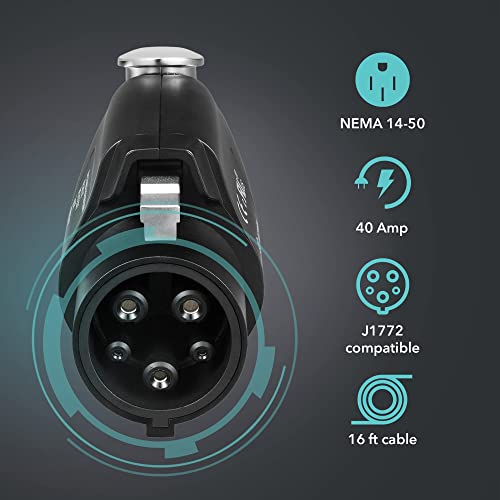


We also considered 10 others:


Our Top Choice
Compare Features


The order above is not editorial opinion, and it is not paid placement. It comes from what shoppers across our network actually do - which ev chargers they compare, and which they ultimately buy. We re-rank as new data comes in, so the long-term favorites have to keep earning their spot against new entrants. The full method, including how we make money.
EV Chargers Buyer's Guide
Choosing an EV charger is less about the box on the wall and more about whether it matches your car’s inlet, your panel capacity, your outlet or hardwire plan, and the charging routine you actually need. The sharpest risks are buying more amperage than your circuit can safely supply, choosing the wrong connector or adapter path, or relying on a plug/outlet setup that is not robust enough for repeated high-load charging.
Build
You’ll handle an EV charger regularly and may leave it exposed to heat, cold, rain, dust, or garage bumps, so solid build quality affects both safety and long-term reliability. Look for sturdy casing, well-sealed connections, appropriate safety certifications, a flexible but durable cable that’s long enough for your parking setup, and strain relief at both ends. If you plan to charge away from home, also consider weight, plug storage, and how easy it is to pack without stressing the cable.
Prioritize an EVSE with a properly rated enclosure, strain relief, thick flexible cable, secure holster, and a connector that fully seats without wobble; for outdoor or carport installs, look for weather-rated construction and avoid flimsy portable-style cords as a permanent high-amperage solution. If you plan to plug in daily, cable flexibility in cold weather and tidy storage matter because repeated coiling, dragging, and connector drops are common failure points. Owner feedback supports this emphasis: buyers and electricians often describe well-liked units as solid, polished, weather-tolerant, and thoughtfully designed, with thick long cables, dependable connectors, and hardware that feels suitable for regular indoor or outdoor use.
Usability
You’ll interact with your EV charger often, so it should feel simple to plug in, start, stop, monitor, and schedule without extra hassle. Look for clear status indicators, straightforward controls or app menus, and a cable/connector setup that’s easy to handle in your parking space. Watch out for chargers that rely on confusing apps, vague lights, or overly complicated setup steps that can make everyday charging more frustrating than it needs to be.
Match the charger to your installation path first: hardwired units are often cleaner for higher amperage and outdoor use, while plug-in models require the exact receptacle type, correct breaker size, and a high-quality outlet rated for continuous EV loads. Check cable length from the mounting spot to the charge port on every vehicle you may own, and if you split use between NACS and J1772 vehicles, favor an integrated dual-connector or captive-adapter design over loose adapters that can be misplaced. Owners commonly report that setup feels simple when the electrical work is already in place, especially with clear instructions, readable screens, plug-and-play operation, convenient 25-foot-class cables, and connector/adapter setups that make daily charging straightforward.
Charging
Charging performance determines how quickly you can add usable range at home, so it affects whether your EV is ready when you need it. Look for a charger with an amperage and power level your vehicle and electrical panel can actually support, and watch out for units that advertise high output but require professional installation or circuit upgrades to deliver it safely.
Choose charging output based on circuit capacity and overnight range needs, not the highest advertised kilowatts: a 32A charger on a 40A circuit is enough for many drivers, while 40A–48A charging needs larger wiring and, for 48A, hardwiring in many setups. Confirm your vehicle’s onboard AC charging limit, because a car capped below the EVSE rating will not charge faster, and remember that continuous loads require derating the circuit. Owner sentiment aligns with this: buyers moving from a standard outlet consistently see Level 2 as a major upgrade, with reliable overnight top-offs, expected 32A-class performance, and higher-output units delivering fast home charging in the rough high-20s miles-per-hour range depending on vehicle and circuit.
Features
You’ll want controls that make everyday charging simple, such as clear status indicators, an easy-to-read display, and settings for scheduling or adjusting current to match your circuit. Look for core safety and convenience functions that are easy to access without guesswork, and be cautious of chargers with confusing menus, vague error messages, or limited control over charging speed.
Look for features that solve EV-specific home-charging problems: adjustable amperage for panel limits, scheduled charging for off-peak utility rates, clear fault indicators, load-management compatibility if your panel is tight, and support for the connector standard you need now and next. For portable chargers, verify the included plug types, voltage support, and whether the unit safely handles both Level 1 and Level 2 use; for multi-EV homes, make sure connector support and session control are practical rather than adapter-dependent. Owners tend to value these features when they are functional rather than decorative, citing dependable daily operation, useful on-unit charging information, high-amperage home performance, and designs that work across multiple vehicles or outlet types.
App
A good app can make daily charging easier by letting you start or stop sessions, set schedules, monitor energy use, and get alerts without going to the garage. Look for clear app usability, reliable Wi-Fi connectivity, and smart features that still work predictably if the connection drops or your network changes. Watch out for chargers that depend too heavily on flaky connectivity for basic functions you’ll need every day.
Treat the app as useful only if it controls things you will actually use: charging schedules, amperage limits, energy tracking, session history, notifications, and cost estimates tied to your utility rate. Also check whether the charger still works normally if Wi-Fi drops, because basic charging should not depend on cloud connectivity; Bluetooth fallback or local controls can matter in garages with weak signal. Owner feedback supports smart connectivity when it is stable and practical, with many praising apps and Wi-Fi for off-peak scheduling, live status, amperage adjustment, power-use tracking, cost estimates, notifications, and easier initialization or monitoring.
Value
You want an EV charger that feels worth what you paid after installation, not just one that looks inexpensive upfront. Look for a balance of charging speed, reliability, safety certifications, warranty support, and smart features you will actually use. Watch out for low-cost options that require extra accessories, have limited support, or feel cheap enough to make daily charging less dependable.
Judge value by total installed cost and long-term fit, not just the charger itself: panel upgrades, trenching, conduit, GFCI requirements, permit work, receptacle quality, and hardwire labor can outweigh the EVSE cost. A cheaper portable unit can be a smart backup or replacement cord if it matches your outlets and amperage needs, while a wall-mounted smart Level 2 charger may be better value if it avoids future replacement, handles scheduling, and suits multiple vehicles. Owners often describe strong value when a unit delivers reliable Level 2 performance, useful smart tools, quick charging, or the ability to reuse an existing outlet, and when it performs like more expensive home charging stations without unnecessary extras.
1,000,000+ shoppers use Buyer's Guide every week to find the best products and services online.

Helping millions of users make smarter purchases online.


