















We also considered 10 others:


Our Top Choice
Compare Features


The order above is not editorial opinion, and it is not paid placement. It comes from what shoppers across our network actually do - which leaf blowers they compare, and which they ultimately buy. We re-rank as new data comes in, so the long-term favorites have to keep earning their spot against new entrants. The full method, including how we make money.
Leaf Blowers Buyer's Guide
Leaf blowers are a tradeoff between air volume for moving real leaf piles and manageable weight, noise, runtime, and control around beds, gravel, vehicles, and walkways. The sharpest checks are whether the blower has enough sustained power for your debris—not just a high peak number—and whether a cordless setup has enough battery capacity to finish the job without turning cleanup into repeated charging breaks.
Power
Power determines how quickly and effectively you can move leaves, grass clippings, and heavier debris, especially across large yards, wet piles, or uneven surfaces. Look for a balance of air speed and airflow rather than focusing on one number alone, since high speed helps loosen debris while strong volume helps push it farther. Watch out for blowers that feel powerful on paper but lack usable control, because too much force without variable settings can scatter debris instead of clearing it efficiently.
For power, match the blower to the debris and surface: prioritize high air volume for broad leaf movement, high air speed and a concentrator nozzle for cracks or matted debris, and variable speed so you can clear mulch beds or gravel without blasting material everywhere. If you need to move wet leaves, pine straw, acorns, or heavy curb piles, avoid underpowered compact models meant mainly for dust, patios, and light leaf touch-ups; blower/vacuum combos are useful, but their vacuum and mulching performance should be judged separately from blowing force. Owner feedback supports this split: lighter models are often praised for porches, garages, decks, cars, and small-to-medium cleanup, while stronger handheld and yard-focused units earn better comments for moving leaves effectively around typical yards and clearing pine straw, dust, and driveway debris.
Ease
A leaf blower that’s easy to use saves you time and frustration, especially if you’ll be starting it often, carrying it around the yard, or switching between surfaces. Look for simple controls, reliable starting, comfortable balance, manageable weight, and intuitive speed adjustment; watch out for awkward grips, confusing settings, or designs that feel tiring during longer cleanup sessions.
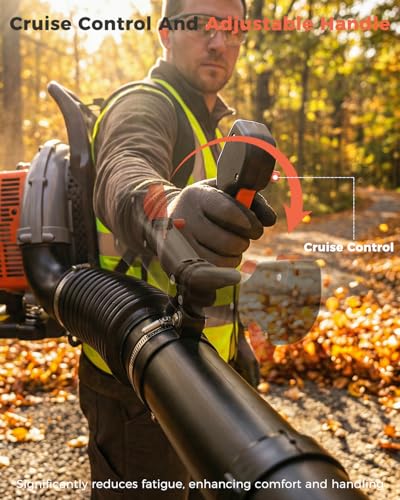
For ease of use, look for the controls and workflow that fit your cleanup pattern: push-button start or easy-pull starting, variable trigger, cruise/trigger lock for long passes, secure tube connections, and simple conversion if you plan to switch between blowing, vacuuming, and mulching. Also check whether the air intake can grab loose clothing, whether the nozzle is easy to aim one-handed, and whether the tool can be stored fully assembled; a blower that is powerful but awkward to start, hold, or reconfigure will be skipped for quick jobs. Owners most often praise models that feel simple, sturdy, compact, and ready to grab, with many calling out easy starts, straightforward operation, and low-fatigue handling for household, shop, job-site, and yard cleanup.
Build
Build quality matters because a leaf blower is often used in dusty, dirty, and vibration-heavy conditions, so weak plastics, loose seams, or flimsy controls can turn into cracks, rattles, or early failures. Look for a blower that feels solid in the housing, handle, tube connections, trigger, and battery or cord interface, with parts that lock together securely and don’t flex excessively. If it feels creaky, poorly balanced, or cheaply assembled in your hands, it may be less pleasant to use and less likely to hold up over repeated yard work.
For build quality, focus on the parts that fail or clog in leaf-blower use: tube latches, trigger feel, battery seating, shoulder-strap mounts, collection-bag zippers, and the impeller if you are buying a vacuum/mulcher. For leaf vacuuming, a metal impeller is worth seeking out if you expect dry leaves, small twigs, and repeated fall use; plastic impellers and narrow intake paths are more likely to clog, chip, or struggle with bulky debris. Owner sentiment backs up these priorities: well-built tools are praised for doing normal leaf cleanup reliably, and vacuum/mulcher users especially value fine shredding, durable-feeling construction, and metal impellers that handle leaves better than plastic-blade designs.
Weight
Weight affects how long you can use a leaf blower comfortably, especially if you’re clearing a large yard, working overhead, or carrying it for extended periods. Look for a blower that feels balanced in your hand or on your back, not just light on paper, and watch for designs that shift strain to your wrist, shoulder, or lower back during use.
For weight, judge the ready-to-use weight, not just the bare tool: include the largest battery, fuel, collection bag, or vacuum tube you will actually use. A light handheld is best for decks, walks, garages, and quick one-handed cleanup, but big yards may justify a backpack or shoulder strap if the job lasts long enough; also check balance, because a nose-heavy blower can strain wrists even if the listed weight looks low. Owners repeatedly favor compact, lightweight, balanced designs, especially for quick jobs, older users, and anyone trying to avoid arm and wrist fatigue during routine cleanup.
Value
A leaf blower that looks affordable upfront isn’t always the best value if it lacks the power, runtime, durability, or included accessories you need. Look for a model that matches your yard size and cleanup frequency without forcing you to buy extras or upgrade sooner than expected. Owner feedback on “value for money” can help you spot whether a blower feels fairly priced for its performance and long-term reliability.
For value, buy for your actual season: a small cordless blower can be the better value for frequent quick cleanups, while a stronger blower or mulcher can pay off if you bag lots of leaves every fall. Factor in the hidden costs that matter in this category—extra batteries, charger speed, replacement collection bags, extension-cord limitations, gas maintenance, hearing protection, and whether the batteries fit tools you already own. Owner feedback shows value is highest when the tool’s power matches the job, when included batteries or chargers reduce add-on purchases, and when mulching cuts big leaf piles down into fewer bags for DIY yard cleanup.
Battery
Battery life determines how much cleanup you can finish before stopping to recharge, especially if you have a large yard, heavy leaf cover, or need to use higher power settings. Look for a cordless leaf blower with enough runtime for your typical jobs, and remember that turbo modes, wet leaves, and higher airspeed settings can drain the battery much faster than light-duty blowing.
For battery models, treat runtime claims skeptically and size the battery system around sustained high-speed use, because turbo blowing drains packs quickly. Look for at least two compatible batteries for medium yards, higher amp-hour packs for fall leaf sessions, and a charger fast enough that one battery can recover while the other is in use; also confirm the battery platform matches your other tools and that replacement packs are easy to obtain. Owner sentiment makes this the main cordless watch-out: some users report only about 10 to 20 minutes from a full charge in real yard work, while two-battery kits are widely praised for reducing interruptions and giving enough runtime for typical household cleanup.
1,000,000+ shoppers use Buyer's Guide every week to find the best products and services online.

Helping millions of users make smarter purchases online.


