




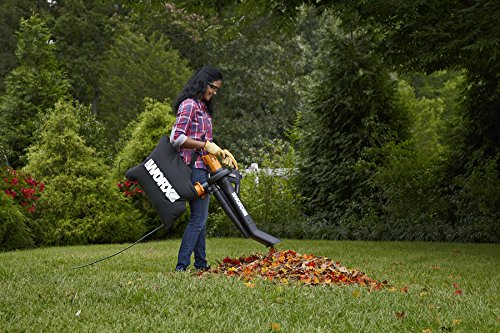


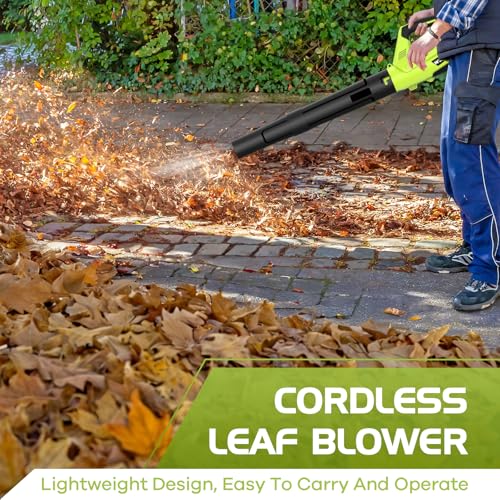


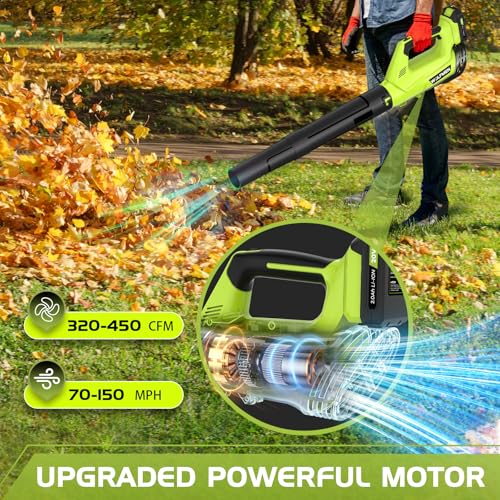


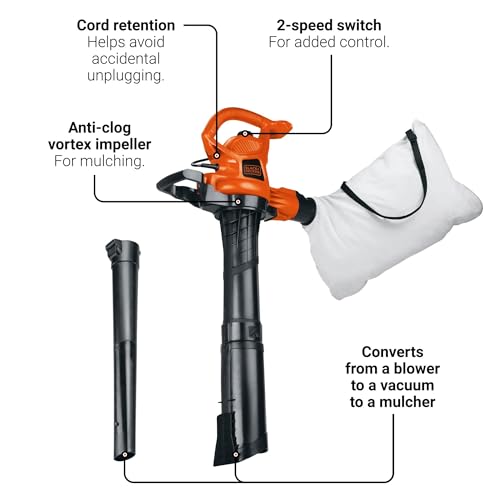
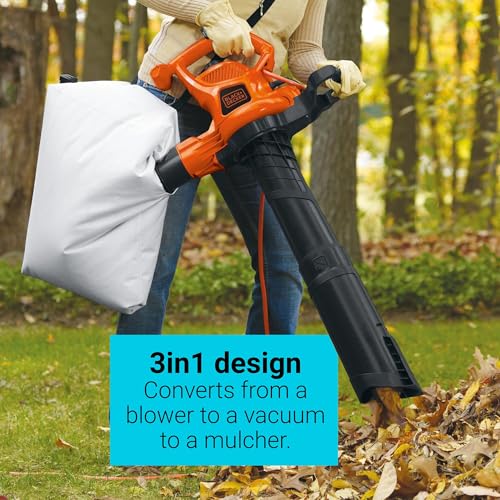


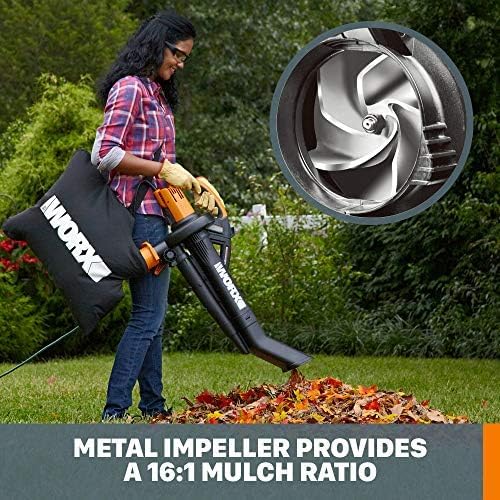
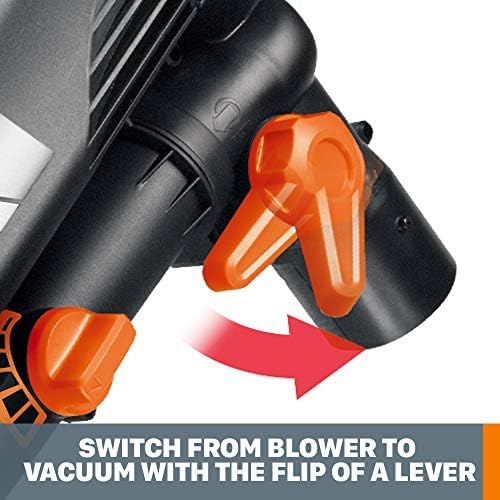


We also considered 10 others:


Our Top Choice
Compare Features


Why These Features Matter:
A leaf blower is one of those tools that sounds simple until it’s not. The “right” one isn’t the most powerful; it’s the one that actually gets used on a random Tuesday when the patio looks like a compost pile and guests are arriving in 20 minutes. Power helps, sure. But so do things like not hating the noise, not wrestling a cord around a chair leg, and not storing a three-foot plastic bazooka in a home that already has too many brooms.
Think of leaf blowers as a small negotiation between your tolerance for mess and your tolerance for fuss. The smartest features are the ones that make the job feel quick and clean—not like an endurance sport.
Power That Feels Like Progress (Not Just a Loud Windstorm)
Power is the headline, but “enough power” is the real goal. A blower that moves dry leaves across a driveway is one thing; a blower that can unstick wet clumps fused to brick pavers is another. The difference shows up in the frustrating moments—when the blower turns into a leaf confetti cannon that redistributes the problem into a new, more spiteful shape.
- Look for: strong airflow you can feel in your forearms—enough to push damp leaves, pine needles, and the gritty layer of sidewalk dust that accumulates like it pays rent.
- Nice to have: a “turbo” or boost mode for stuck-on debris (acorns, seed pods, soggy leaf mats), so you’re not blasting everything at full volume the entire time.
- Real-life tell: if it can clear debris from between deck boards without you doing a slow, humiliating inch-by-inch hover.
Variable Speed: The Feature That Saves Your Mulch Bed (and Your Sanity)
One speed blowers tend to turn a tidy yard into a scavenger hunt. Variable speed is what lets a blower behave like a precise tool instead of a tantrum. It matters most around landscaping—where you’d like the leaves gone but prefer the bark mulch to remain on Earth.
- Look for: a trigger or dial that’s easy to modulate without hand gymnastics.
- Nice to have: cruise control or a speed lock for longer runs (driveways, sidewalks), so your index finger doesn’t feel like it’s been personally wronged.
- Real-life tell: you can clear a porch corner without sending a potted plant into a new zip code.
Noise: The Part Everyone Pretends Isn’t a Dealbreaker (But Is)
Leaf blowers are loud in a way that feels socially loud. There’s the decibel level, and then there’s the vibe: a shriek that announces “someone is doing yard work” to every open window on the block. If the blower is painfully loud, it gets “saved for later,” which is how later becomes never.
- Look for: designs marketed as quieter (often electric models), and pay attention to tone—not just volume. A lower, less whiny pitch is easier to live with.
- Nice to have: a quieter low setting for quick cleanup on a weekday morning.
- Things to know: any blower can feel loud up close; ear protection is a genuinely practical upgrade, not a dramatic one.
Weight & Balance: A Tool You Can Actually Swing Around Corners
“Lightweight” on a product box can still mean “awkward.” The handle angle, the balance, and where the weight sits all affect whether it feels nimble or like carrying a small outboard motor. This matters most for anyone dealing with stairs, tight side yards, patio furniture obstacle courses, or the classic move of cleaning the front walk while also keeping an eye on a toddler who has found a puddle.
- Look for: a comfortable grip and a balanced body that doesn’t torque your wrist when you angle it down.
- Nice to have: padded handles or anti-vibration features—especially if hands go numb easily.
- Honest caveat: more power usually means more weight. The “right” trade-off depends on whether the job is a quick stoop sweep or an entire property perimeter.
Corded vs. Battery vs. Gas: The Lifestyle Choice Disguised as a Tool Purchase
This is less about ideology and more about the kind of friction you’re willing to tolerate.
- Corded electric: often lighter and quieter. Also: the cord will snag on a shrub, a hose, a chair leg, or your last nerve. Best for smaller areas where an outlet is convenient and the path is straightforward.
- Battery-powered: the sweet spot for many households—grab-and-go, no fumes, no cord drama. The catch is runtime anxiety and remembering to charge. It’s the same emotional category as a phone at 12%.
- Gas: serious power and long runtime, but it comes with noise, smell, maintenance, and the minor indignity of storing fuel. Great if the area is big or the debris is heavy, less charming if storage space is tight or neighbors are close enough to hear your thoughts.
Things to know: If other yard tools are already battery-powered, staying in the same battery ecosystem is the quietly brilliant move. Fewer chargers, fewer batteries rolling around a shelf like loose AA’s.
Battery Runtime & Charging: The Difference Between “Quick Cleanup” and “Half a Driveway”
Battery blowers are at their best for frequent, fast cleanups—the kind that keeps a place looking cared-for without making yard work your hobby. But runtime can drop fast on higher power settings, especially in cold weather. A blower that clears the patio beautifully for eight minutes is still useful, just not for the full yard after a storm.
- Look for: batteries with clear indicators and chargers that don’t take all afternoon.
- Nice to have: a second battery if the property is bigger than “tiny front walk + small deck.”
- Honest caveat: turbo modes are battery eaters. They’re for sticky moments, not the whole job.
Storage: Where This Thing Lives Matters More Than Anyone Admits
Leaf blowers have an inconvenient shape. They don’t tuck away gracefully like a broom. They sprawl. They fall over. They catch on everything. If storage is annoying, the blower becomes that tool that’s always in the way—until it gets exiled to the back of the garage behind holiday decorations.
- Look for: compact designs, removable tubes, or wall-hanging options.
- Nice to have: a stable footprint so it can stand without flopping onto a car tire.
- Apartment/condo reality: if it can’t fit in a closet without becoming a whole situation, it’s not the right blower for that home.
Control Around “Fussy” Areas: Gravel, Mulch, and the Patio Corner of Doom
The hardest parts of cleanup aren’t the open driveway stretches; they’re the edges. Gravel paths love to scatter. Mulch is basically leaf-blower confetti. And patio corners collect a gritty, damp sludge that clings like it has an emotional attachment.
- Look for: controllable airflow and a nozzle shape that helps aim without requiring a deep squat.
- Nice to have: attachments that narrow airflow for precision (useful around flower beds and furniture legs).
- Honest caveat: no blower is magic on wet, mashed-in leaf paste. Sometimes a rake and five minutes of resentment still win.
Comfort Details That Separate “Fine” from “Actually Pleasant”
A blower can be powerful and still feel annoying. The little design decisions—the kind you only notice after ten uses—are what make one tool quietly lovable.
- Look for: intuitive controls you can operate with gloves, and a handle that doesn’t force an awkward wrist angle.
- Nice to have: a shoulder strap on heavier models, especially for longer sessions.
- Things to know: vibration and balance fatigue are real. If it feels awkward in the first 30 seconds, it won’t improve at minute 12.
Small, Unromantic Annoyances Worth Checking
These are the details that don’t show up in glossy photos but absolutely show up in real homes.
- Start-up behavior: if it’s temperamental to start (more common with gas), it becomes a weekend-only tool.
- Trigger comfort: stiff triggers turn quick cleanups into hand cramps.
- Debris “boomerang”: too much force in a tight space can send leaves right back into your face, hair, and drink.
- Maintenance: filters, fuel, and tune-ups are a commitment. Some people enjoy that. Many people do not.
Practical Guidance: Picking the Right Type for Your Space
- Small patios, stoops, city sidewalks: prioritize light weight, quieter operation, and easy storage. Battery or corded electric tends to make the most sense.
- Suburban driveway + deck + moderate yard: battery is often the happiest middle ground—especially if you’re already in a battery tool ecosystem.
- Large property, heavy leaf fall, wet seasons: prioritize sustained power and runtime. This is where heavier-duty options (including gas) can earn their keep, provided storage and noise won’t cause a household revolt.
- Homes with lots of landscaping “edges”: prioritize variable speed and control over raw force. The goal is clean lines, not mulch migration.
The Most Honest Takeaway
The best leaf blower is the one that doesn’t feel like a production. If it’s easy to grab, not painfully loud, and doesn’t fight you with cords, weight, or storage drama, it gets used more often—which is how outdoor spaces stay looking quietly pulled together. Power is great. But the real luxury is finishing the job without feeling like you’ve wrestled the wind.
1,000,000+ shoppers use Buyer's Guide every week to find the best products and services online.

Helping millions of users make smarter purchases online.

