

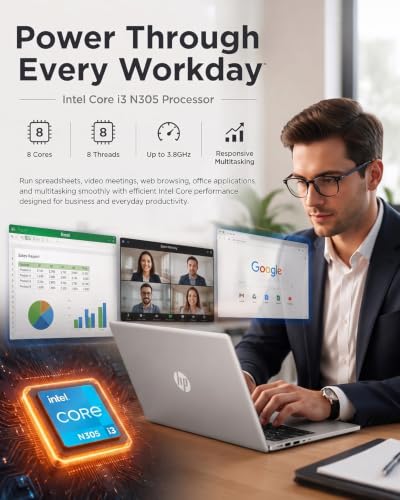



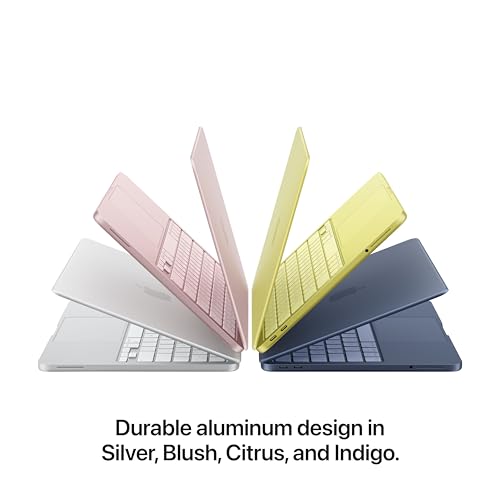


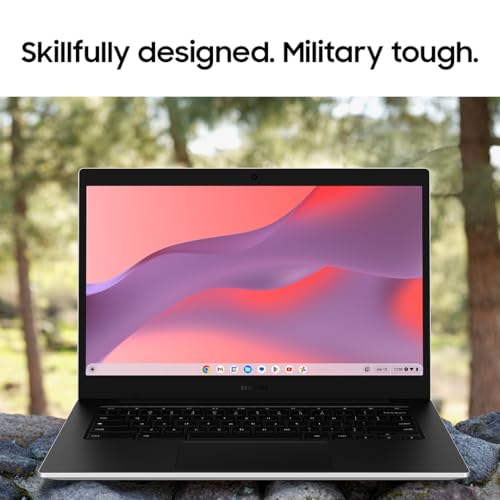

We also considered 10 others:





Our Top Choice
Compare Features


The order above is not editorial opinion, and it is not paid placement. It comes from what shoppers across our network actually do - which laptops they compare, and which they ultimately buy. We re-rank as new data comes in, so the long-term favorites have to keep earning their spot against new entrants. The full method, including how we make money.
Laptops Buyer's Guide
Budget everyday laptops trade raw power and premium materials for affordability, portability, and simplicity, so the main task is avoiding a machine that is cheap in the wrong places. For this niche, the sharpest checks are operating-system fit, update support, enough memory/storage for tab-heavy use, battery and charging reliability, and whether the build can survive school, travel, or shared family use.
Build
Build quality affects how long your laptop feels dependable, how well it holds up to daily carrying, and whether it feels solid every time you open the lid or type. Look for sturdy materials, tight seams, a firm hinge, minimal keyboard or chassis flex, and a clean finish on arrival; watch out for loose parts, uneven gaps, creaking panels, cosmetic damage, or anything that suggests poor durability or quality control.
For a budget everyday or school laptop, prioritize a chassis that can survive backpack use, a hinge that feels firm through the full range of motion, a keyboard you can comfortably type on for assignments, and a screen that is bright and clear enough for long web sessions. If it is a 2-in-1 or starter device for a child, check whether the hinge, corners, and charging port look reinforced; cheap-feeling plastics, flex around the keyboard, or a wobbly display are bigger red flags than cosmetic styling. Owner feedback supports this focus: buyers often describe these low-cost machines as compact, sturdy enough, and reliable for browsing, streaming, schoolwork, light work, kids’ use, and workstation basics, with the strongest praise going to models that feel solid despite their inexpensive positioning.
Performance
Performance determines how quickly your laptop opens apps, switches between tasks, handles demanding work, and stays responsive in daily use. Look for enough processing power, memory, graphics capability, and storage for what you actually do, and pay attention to cooling and thermals because a powerful laptop that runs hot can slow down, get noisy, or feel uncomfortable over time.
Match the specs to the actual workload: for web-first school, email, streaming, documents, and video calls, a Chromebook or entry-level laptop can be enough, but for Windows multitasking you should look for at least comfortable RAM headroom and solid-state storage rather than the bare minimum. Avoid configurations that rely on very small storage, weak processors, or too little memory if the user will keep many browser tabs open, run office apps, join video meetings, or play light games; these are the places budget laptops most often feel slow. Owner sentiment is broadly positive when expectations stay in this lane, with buyers reporting smooth everyday office performance, quick startup, easy app use, and enough speed for school, basic work, browsing, streaming, downloads, and some light gaming.
Value
Value matters because a laptop can look affordable up front but cost you more in compromises like weak performance, limited storage, poor battery life, or build quality that does not hold up. Look for the best balance of speed, screen quality, battery life, ports, and durability for how you actually work or study, and be wary of paying extra for features you will not use.
The best value in this niche is not simply the lowest upfront cost; it is the lowest-cost machine that still has the right operating system, enough memory and storage, a usable screen size, current security-update support, and the ports needed for school or work peripherals. Be especially careful with refurbished or very cheap models: confirm condition, return policy, battery health, charger inclusion, warranty coverage, and whether the device is near the end of its update life. Owner feedback shows why these laptops are appealing: shoppers repeatedly feel they get a lot of usable everyday computer for the money, especially as a first computer, family assignment machine, secondary device, or basic laptop for browsing, email, spreadsheets, streaming, shopping, and light work.
Battery
Battery life determines how confidently you can work, stream, or study away from an outlet, so look for runtime that matches your typical day rather than just the biggest advertised number. Watch for real-world factors that drain a laptop faster, such as a bright high-resolution screen, heavy apps, gaming, video calls, or lots of background tasks, and consider charging speed and charger size if you travel often.
For portable school or work use, check real-world battery claims rather than headline maximums, and look for enough endurance to handle a full class day, commute, or work session with video calls and multiple tabs. Also inspect the charging setup: a loose charging port, proprietary charger dependence, slow charging, or reports of overheating can turn an otherwise good budget laptop into a desk-bound device. Owner reports are split enough to make this a key check: many buyers praise battery life that lasts through daily use, travel, classes, homework, streaming, and work-from-home sessions, while others warn that some units drain quickly, need to stay plugged in, overheat, or have charging reliability problems.
Reliability
Reliability matters because you need a laptop that stays stable through daily work, travel, updates, and years of use without frequent crashes, defects, or unexpected failures. Look for consistent owner feedback about long-term dependability, solid build quality, effective cooling, and responsive warranty support, and be wary of repeated complaints about random shutdowns, hardware failures, or fragile components.
For this category, reliability depends heavily on unit quality and software support, so verify the return window, warranty, update eligibility, and whether the seller has a clear process for defects. During the first few days, stress-test the laptop with the user’s real routine: many tabs, video streaming, conferencing, sleep/wake cycles, charging, and any required school or work apps; freezes, random shutdowns, wake failures, or restart loops should be treated as early return signals. Owner sentiment is generally favorable for dependable basic use, with many buyers saying these machines work well out of the box for email, web browsing, documents, school, business, and simple tasks, but there are also mixed reports of units that freeze, shut off, struggle to wake, or require restarts.
Usability
A laptop should feel effortless from setup through daily use, with intuitive controls, reliable touch or trackpad response, and a keyboard you can type on comfortably for long stretches. Look for a layout and functionality that match how you work—whether that means touchscreen versatility, easy shortcuts, or simple settings—and watch out for cramped keys, inconsistent touch sensitivity, or features that add complexity without improving everyday use.
Choose the operating system around the user’s comfort and required apps: ChromeOS is often simpler for web-based schoolwork and Google services, while Windows is safer if the user needs specific desktop software, certain printers, legacy apps, or broader peripheral compatibility. For kids, seniors, and less technical users, prioritize a simple setup flow, clear keyboard layout, responsive trackpad, webcam and microphone quality for classes or calls, and easy Wi-Fi and account sign-in; avoid machines that require lots of cleanup, driver fixes, or storage management right away. Owner feedback strongly supports this: buyers often describe setup and daily use as fast, intuitive, and approachable for teenagers, students, seniors, first-time Chromebook users, and non-technical shoppers, especially for homework, browsing, study, downloads, and light games.
3,900+ shoppers have used Buyer's Guide in the last week to help find the best Laptops.

Helping millions of users make smarter purchases online.