


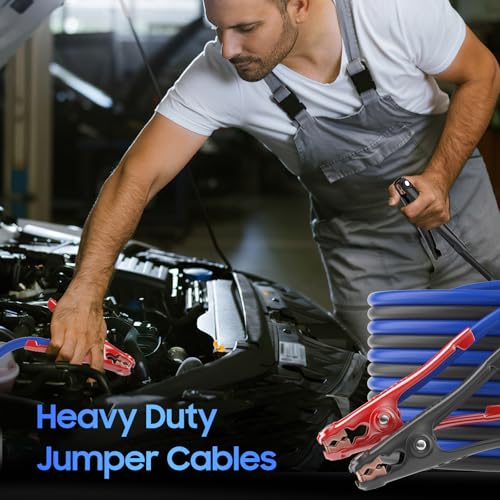


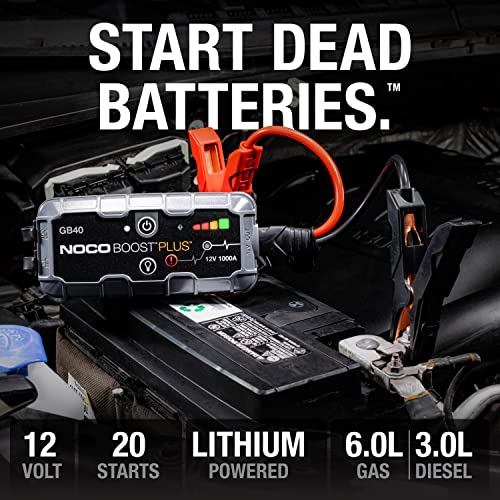





We also considered 10 others:


Our Top Choice
The order above is not editorial opinion, and it is not paid placement. It comes from what shoppers across our network actually do - which jumper cables they compare, and which they ultimately buy. We re-rank as new data comes in, so the long-term favorites have to keep earning their spot against new entrants. The full method, including how we make money.
Jumper Cables Buyer's Guide
Jumper cables are simple emergency gear, but the tradeoff is not: thicker, longer cables start more vehicles from more awkward positions, while cheap thin sets can lose cranking power right when the battery is weakest. The sharpest concerns are current delivery, clamp contact, safe hookup, and whether the set is actually easy to keep in the vehicle instead of left at home.
Cranking Capacity
A weak battery needs high current for a short burst, and undersized cables waste that current as heat and voltage drop. The right cable capacity depends on the largest vehicle you may need to start, not just the smallest car you own.
Choose cables by gauge, metal, and vehicle size before anything else. For ordinary passenger cars, heavy 4-gauge cables are often a practical minimum; larger SUVs, trucks, older engines, and diesel vehicles benefit from thicker 2-gauge or 1/0-gauge cables. Copper carries current better than copper-clad aluminum at the same gauge, so a thinner-looking or lightweight set may need extra scrutiny even if its amp rating sounds high. Avoid sets that lean on vague peak-current claims without a clearly stated wire gauge, length, and construction. Owner feedback strongly supports this: the most praised sets were described as having enough cable and gauge to carry automotive current without noticeable cranking-power loss, and buyers repeatedly said reliable sets jump-started dead or weak batteries even after vehicles sat unused.
Usable Reach
Real jump-starts often happen in cramped parking lots, garages, driveways, or on the shoulder, where the helper vehicle may not be able to line up perfectly. Extra reach reduces risky maneuvering, but it must be backed by enough conductor size to preserve starting power.
Look for enough length to connect batteries when vehicles cannot be parked nose-to-nose. Around 16 feet can work for many basic roadside situations, while 20 to 25 feet gives more flexibility for side-by-side parking, tight garages, angled driveways, and vehicles boxed in by traffic. Longer is not automatically better: if the cable is long but thin, voltage drop can erase the advantage, so length should be paired with a heavy gauge. Owner sentiment repeatedly highlighted long reach as a major advantage because it lets drivers connect vehicles without awkwardly close positioning, and one common praise point was that the length felt practical without being oversized for typical emergency use.
Clamp Grip
Even a thick cable cannot perform if the clamps do not make firm metal-to-metal contact. Clamp design matters most when battery terminals are corroded, recessed, side-mounted, or hard to reach.
Prioritize clamps with strong springs, broad jaws, aggressive teeth, and enough opening width to bite battery posts, remote jump terminals, or solid engine-ground points. Handles should be insulated and easy to squeeze with cold or gloved hands, while the jaw connection to the cable should look mechanically secure rather than thin or loosely crimped. Avoid flimsy clamps that twist, flex, or make contact only at tiny points; poor contact can mimic a weak cable by causing arcing, heat, and failed starts. Owners repeatedly called out solid clamps, sturdy hardware, and heavy-duty construction as confidence-building for emergency use, which matches the way clamp quality directly affects whether current can actually reach the dead vehicle.
Safe Hookup
Jump-starting combines high current, exposed terminals, and hurried roadside conditions, so clear markings and insulation reduce the chance of mistakes. Safe cable design cannot replace correct procedure, but it makes correct procedure easier when visibility, weather, or nerves are poor.
Buy cables that make correct hookup obvious: clear red and black coloring, visible polarity markings, insulated handles, and minimal exposed metal beyond the jaws. For modern vehicles, check the vehicle manual for approved jump points, because many cars use remote positive posts and designated chassis grounds rather than direct battery access. A good set should also remain flexible enough to route away from fans, belts, hot exhaust parts, and moving pulleys. Owner feedback did not focus on procedure, but it did consistently frame dependable, sturdy cables as emergency gear; that reliability only matters if the cables can be connected safely and correctly under stress.
Ready Storage
Jumper cables are emergency equipment, so accessibility matters as much as raw specification. Storage that keeps the set clean, untangled, and easy to grab makes it more likely to be available when a battery fails.
A useful set is one you will actually keep in the vehicle, so check the storage bag, coiled size, weight, and how easily the cable packs away after use. Heavy-gauge cables are bulkier and heavier, but the case should keep them from tangling with cargo or collecting grit in the trunk. If the bag is too tight, tears easily, or forces sharp bends at the clamp ends, it can make storage frustrating and stress the cable over time. Owners specifically appreciated included carrying bags and cases because they kept cables organized in a trunk, behind a seat, or around the house between uses.
Use-Case Value
The best value is not the most cable on paper; it is the right capability for the vehicles and situations you may face. Underbuying can leave you stranded, while overbuying may add bulk you never carry.
Judge value by whether the cable spec matches the hardest start you realistically expect: the largest engine, coldest weather, least convenient parking position, and how often the set may be used. A small-car emergency kit can be lighter and shorter, but a household that may help trucks, SUVs, work vehicles, or older batteries should favor heavier gauge, stronger clamps, and longer reach. Avoid buying a set only because it is inexpensive if it is too short, too thin, or too flimsy for the vehicles involved. Owner sentiment supports this practical view of value: buyers praised sets that felt heavy-duty, dependable, and well made for the money, especially when they delivered substantial cable and basic emergency reliability.
1,000,000+ shoppers use Buyer's Guide every week to find the best products and services online.

Helping millions of users make smarter purchases online.