


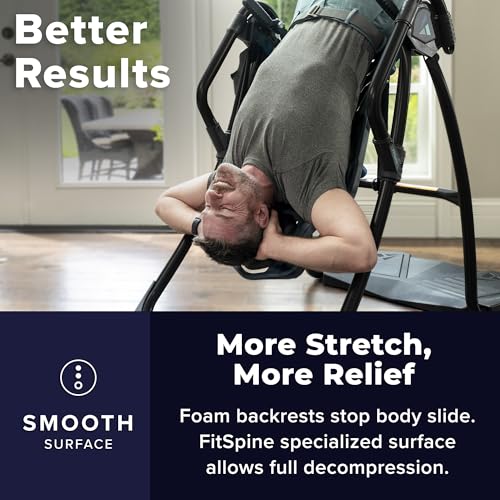
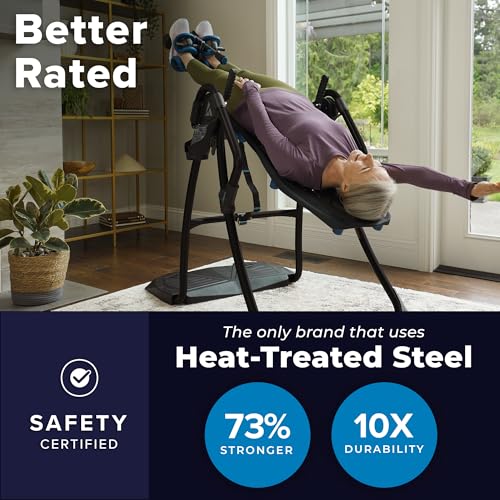
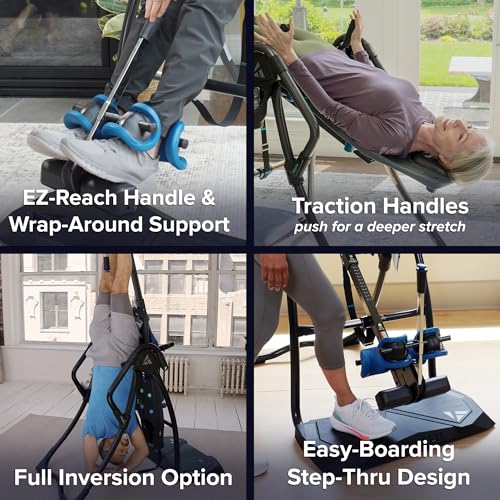


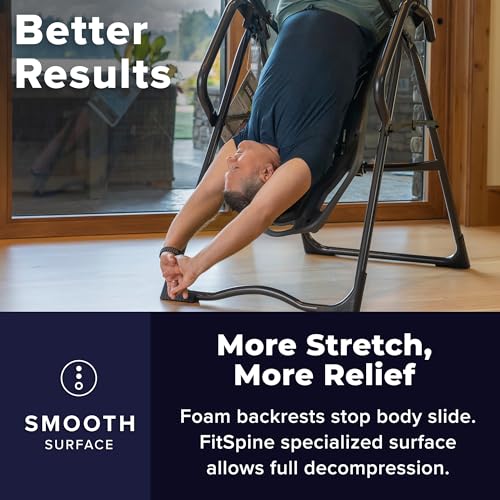









We also considered 10 others:


Our Top Choice
The order above is not editorial opinion, and it is not paid placement. It comes from what shoppers across our network actually do - which inversion tables they compare, and which they ultimately buy. We re-rank as new data comes in, so the long-term favorites have to keep earning their spot against new entrants. The full method, including how we make money.
Inversion Tables Buyer's Guide
Inversion tables are a tradeoff between therapeutic decompression and the need to feel completely secure while your body weight is tilted and held by the frame and ankle system. The sharpest buying concerns are controlled movement, correct fit, and safety under load; comfort features only matter after the table can invert smoothly, hold you securely, and return you upright without strain.
Relief Potential
An inversion table is bought for controlled spinal decompression, not general fitness, so the best choice is the one that lets you build a repeatable relief routine without aggravating symptoms. Angle control, smooth movement, and enough comfort to use it consistently matter more than flashy add-ons.
Look for a table that allows gradual inversion, not just full upside-down positioning: preset angle stops, a secure tether or angle limiter, and smooth pivoting help you start at mild angles and increase only if your body tolerates it. For lower-back pressure, sciatica-type discomfort, or neck-related nerve irritation, the table should keep you aligned and relaxed enough for short, consistent sessions; avoid designs that force awkward head, shoulder, or hip positioning because muscle guarding can defeat the decompression effect. Owner feedback strongly centers on this benefit, with buyers reporting quick traction-like release, reduced lower-back pressure, and meaningful relief for back, sciatic, and even neck discomfort when used regularly.
Safety Build
Inversion puts body weight on the frame, pivot system, and ankle restraint while the user is partially or fully tilted, so perceived stability is a safety issue. A table that wobbles, shifts, or feels underbuilt can make users tense up and can also make controlled return to upright harder.
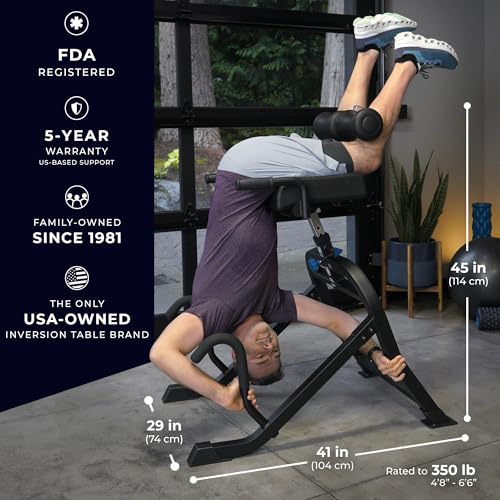
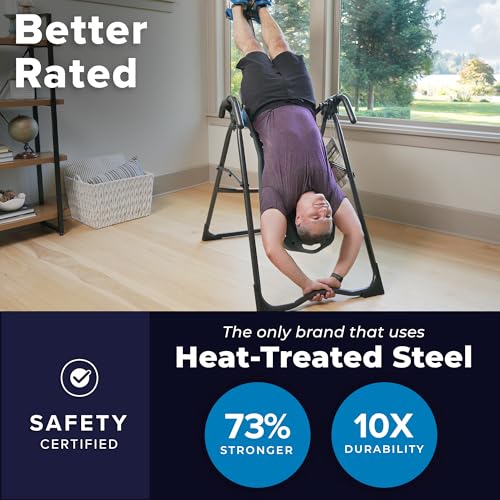
Prioritize a wide steel frame, non-slip feet, clearly stated height and weight limits, strong pivot hardware, and a reliable ankle-locking mechanism before considering comfort extras. Choose a model with long handles, an angle limiter, and enough floor clearance so you can return upright without jerky movement; avoid light frames, vague capacity claims, short side handles, or ankle restraints that feel like the only thing stopping a fall. Also treat inversion as a medical-use product: people with glaucoma, uncontrolled blood pressure, heart or circulation issues, pregnancy, recent surgery, or conditions worsened by head-down positioning should get medical guidance before buying. Owners repeatedly support the importance of build quality, describing good tables as solid, secure, sturdy, durable, well balanced, and confidence-inspiring even for larger users.
Fit Control
The same inversion table can feel effortless or hard to control depending on height calibration and body balance. Fine adjustment is especially important because small setup errors can change how fast the table tips back or how much effort is needed to return upright.
Choose a table with precise height markings, easy boom adjustment, multiple angle settings, and a pivot system that can be tuned to your body weight distribution. The height setting is critical: if it is wrong, the table may tip back too quickly, resist returning upright, or require uncomfortable arm effort. Taller or shorter users, people with limited mobility, and anyone nervous about inversion should look for long reach handles, partial-inversion presets, and a backrest shape that keeps the torso centered. Owner sentiment backs this up: buyers say the inversion action works smoothly when the height is set right and that, once adjusted correctly, the table is easy to control, while some users need time to refine positioning, lumbar support, or the post-inversion feeling.
Body Comfort
Comfort determines whether the table becomes a routine or sits unused. In this category, ankle pressure, headrest fit, back support, and joint tolerance are common make-or-break details because the user is suspended at an angle rather than simply lying flat.
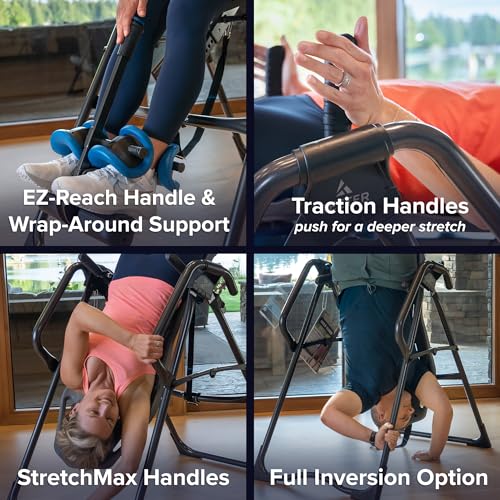
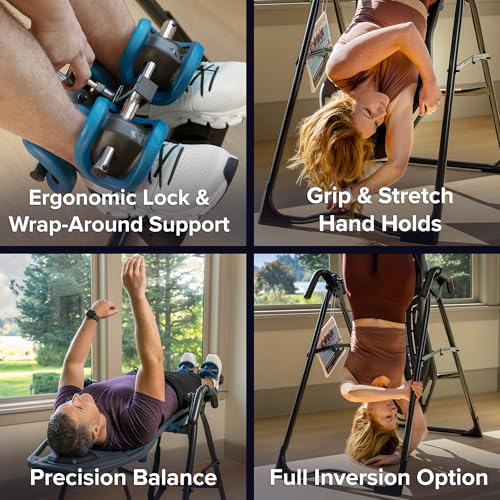
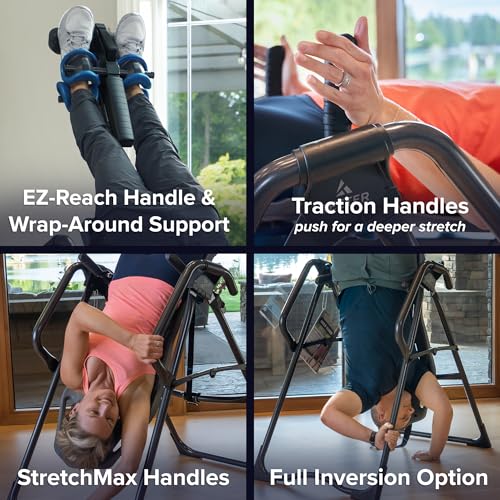
Inspect the ankle system closely: padded cups or well-shaped rollers, a secure ratchet or locking bar, and an easy-reach release handle can make a major difference, especially if bending down is difficult. The backrest should support your spine without forcing your neck forward, and removable lumbar support can help if you need targeted lower-back contact. Avoid assuming thick padding alone means comfort; poor ankle geometry, a headrest that hits the wrong spot, or a narrow frame can still create pressure points. Owners describe comfort as highly fit-dependent: some use the table as part of a daily relief routine and find the ankles comfortable, while others need workarounds for body positioning, headrest feel, lumbar support, limited motion, joint pain, or higher body weight.
Home Setup
A large inversion table has to be assembled correctly and placed where it can move safely through its arc. Clear instructions and well-fitting parts reduce setup mistakes, while quiet, smooth operation makes regular home use more realistic.
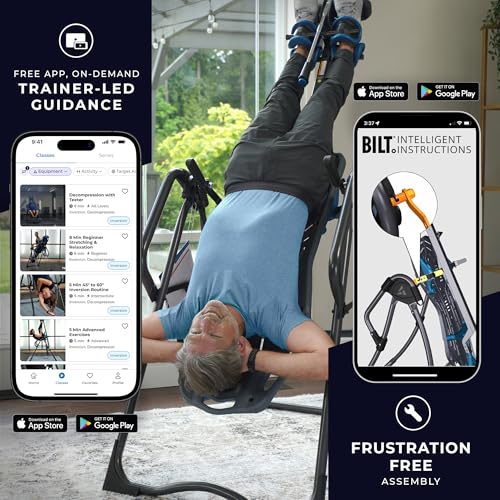
Before buying, measure not only the footprint but also the swing area behind and above the table, including ceiling height, wall clearance, and space to step in and out safely. If the table folds, check whether it folds compactly enough for your storage spot and whether it is still manageable to move. Assembly should involve clearly labeled hardware, cleanly fitting frame parts, and instructions that make the ankle system and pivot points hard to install incorrectly; a second person can be useful for larger frames. Owner feedback is encouraging here, with many buyers finding setup straightforward thanks to clear instructions and organized parts, and some noting that clean part fit and organized packaging contribute to a higher-quality impression. Quiet operation is also valued for home use, especially when the table is part of a regular routine.
Useful Extras
Extras can make sessions more pleasant, but they should not compensate for weak safety, poor fit, or rough inversion control. Value in this category comes from a table you can use consistently, safely, and comfortably enough to justify the space it occupies.
Treat heat, massage pads, lumbar bridges, acupressure nodes, and accessory backrests as secondary features after frame stability, ankle security, and angle control. Heat and massage can help relaxation during a session, but they should be removable or adjustable so they do not create pressure points or force your spine into one position. If you want active stretching or exercise-style movement, make sure the product is actually designed for that use rather than assuming an inversion table will replace a workout machine. Owner sentiment suggests extras can be worthwhile when the core table already works well: buyers view heat and massage as relaxing, useful additions, and many feel the stretching and decompression benefits justify the cost and effort when the machine becomes part of a regular relief routine.
1,000,000+ shoppers use Buyer's Guide every week to find the best products and services online.

Helping millions of users make smarter purchases online.


