














We also considered 10 others:


Our Top Choice
The order above is not editorial opinion, and it is not paid placement. It comes from what shoppers across our network actually do - which instant pots they compare, and which they ultimately buy. We re-rank as new data comes in, so the long-term favorites have to keep earning their spot against new entrants. The full method, including how we make money.
Instant Pots Buyer's Guide
Electric pressure multicookers are bought for a specific tradeoff: they can turn long-simmer foods into weeknight meals, but only if the size, controls, sealing parts, and steam-release design fit how you actually cook. The sharpest concerns are consistent pressure results on staples like beans, rice, stews, and meats, plus avoiding units that feel easy at first but become frustrating to clean, store, or trust over time.
Cooking Results
The main promise of this category is not just speed; it is getting pressure-cooked foods tender and evenly cooked without constant monitoring. Good results depend on pressure control, pot design, heat distribution, and programs that do not hide too much from the cook. If a cooker struggles with staples, its extra modes will not make up for weak core performance.
Prioritize a cooker that builds pressure consistently, has a heavy, flat inner pot for even contact during sautéing, and offers reliable programs for rice, beans, soup, stew, poultry, and tougher cuts. For pressure cooking, the failure modes to avoid are undercooked beans or rice, scorched bottoms after sautéing, watery stews from poor liquid control, and meats that come out stringy instead of tender; a good manual-pressure mode matters more than a long list of presets. Owner feedback strongly supports making cooking performance central: shoppers repeatedly praised dependable, consistent results across soups, rice, stews, beans, meats, potatoes, eggs, and one-pot dinners, with several calling out tender, moist, flavorful, and evenly cooked food.
Time Savings
Pressure cooking can shorten active cooking, but the real convenience comes from predictable unattended operation. A shopper should account for pressure-up and release time, not just the programmed minutes. Timers and warming functions matter because they determine whether the appliance actually simplifies dinner or just moves the waiting to another step.
Look beyond the advertised cook time and consider the full cycle: preheat, pressure build, cooking, natural or quick release, and keep-warm time. A strong choice should have clear timer behavior, dependable automatic shutoff or keep-warm, and steam-release options that fit your routine; quick release is useful for vegetables and weeknights, while natural release is often better for beans, soups, and meats that foam or need carryover tenderness. Owner sentiment consistently emphasizes time savings, with buyers saying these cookers make busy-day meals faster, reduce hands-on work compared with stovetop or slow-cooker methods, and make full family dinners or dishes that normally take hours feel more practical.
Pot Size
Capacity affects more than how much food fits; it changes sauté space, batch-cooking usefulness, storage, and whether common recipes can be made safely. Pressure cookers need headroom for steam and expansion, so usable capacity is lower than the stated volume. The best size is the one that matches your normal portions while still leaving room for high-volume foods.
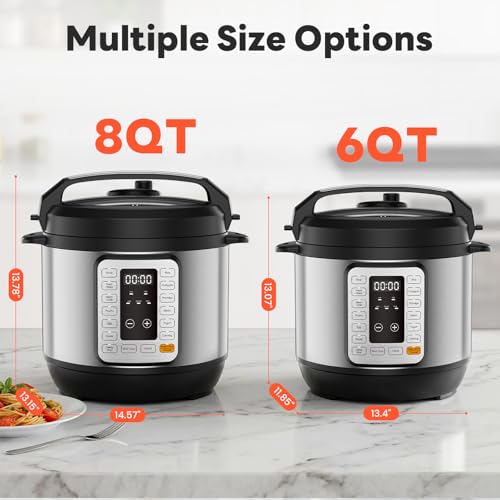
Choose capacity by the food you make most often, not just counter space: smaller pots suit one or two people, side dishes, rice, eggs, and compact kitchens, while mid-size pots are usually more forgiving for family soups, beans, stews, roasts, and batch cooking. Check both quart size and inner-pot shape, because a wider pot sautés better and fits larger cuts, while a narrower pot may be easier to store but less flexible; also remember that pressure cookers cannot be filled to the rim, especially for foaming foods like beans and grains. Owner feedback specifically supports size as a real differentiator, with a 6-quart format described as a strong fit for family meals while still practical for quick everyday cooking, and smaller versions praised for reliable everyday use on soups, rice, stews, and other meals.
Controls & Modes
This category can replace several kitchen tools, but only if the controls make the common tasks easy to repeat. The most useful features are the ones that reduce decisions without locking the cook out of manual adjustments. Smart or guided functions can help, but the cooker should remain fully usable when connectivity is unavailable or unwanted.
Favor clear manual pressure controls, sauté, steam, rice/grain settings, slow-cook or keep-warm if you will use them, and a display that makes pressure level, time, warming, and release status obvious. Presets are helpful only when they are transparent enough to override; avoid paying attention to mode count alone if the interface makes it hard to adjust pressure, time, or release. Guided recipes, app notifications, built-in weighing, or automatic steam release can be valuable for less confident cooks, but they should not be required for basic operation; owner feedback says guided recipe experiences and automated features can reduce mental effort, while connectivity can also lose sync or create setup frustrations for some.
Easy Cleanup
Pressure cooking concentrates starch, fat, steam, and odors around the lid and sealing system, so cleanup is not just about the pot liner. If the gasket, valve, and lid parts are awkward to clean, the appliance becomes less appealing for frequent use. Simple removable parts also help maintain reliable sealing over time.
Inspect the parts that actually get dirty: the removable inner pot, silicone sealing ring, underside of the lid, steam valve, anti-block shield, condensation collector, and any handles or crevices around the rim. A good pick should let you remove and wash the inner pot easily, access the sealing and vent parts without tools, and replace odor-holding silicone rings when needed; avoid designs with hard-to-reach lid channels or valves that trap starch after rice, beans, and soups. Owner sentiment makes cleanup a clear strength when the design is simple, with buyers praising one-pot cooking, fewer messy dishes, removable inner pots, and easy maintenance alongside pressure cooking, steaming, rice, and stew use.
Build Safety
An electric pressure cooker works under pressure, heat, and steam, so small build issues can have an outsized effect on confidence and usability. Durable controls, handles, seals, and lid hardware matter because they are used every time the appliance cycles. Long-term reliability is especially important for a countertop tool meant to replace multiple cooking methods.
Treat safety and durability as buying criteria, not afterthoughts: look for a firm locking lid, stable handles, a clear pressure indicator, protected steam path, reliable sealing ring fit, sturdy housing, and controls that remain readable and responsive. Automatic steam release can reduce handling, but the vent should still direct steam away from cabinets and hands; broken handles, dented bodies, screen problems, and inconsistent pressure behavior are red flags because they affect both safety and everyday trust. Owner feedback is mostly positive on quality and reliability, with many buyers describing dependable, well-built, premium-feeling cookers, but the main watch-out is durability: a minority reported screen issues, failures, replacements, dented units, broken handles, or less consistent performance after some use.
1,000,000+ shoppers use Buyer's Guide every week to find the best products and services online.

Helping millions of users make smarter purchases online.


