We also considered 10 others:
Our Top Choice
The order above is not editorial opinion, and it is not paid placement. It comes from what shoppers across our network actually do - which hitch cargo carriers they compare, and which they ultimately buy. We re-rank as new data comes in, so the long-term favorites have to keep earning their spot against new entrants. The full method, including how we make money.
Hitch Cargo Carriers Buyer's Guide
Hitch cargo carriers solve the space problem without adding a trailer or loading the roof, but they put weight far behind the vehicle where leverage, bounce, and clearance become the real tradeoff. The best pick is not simply the biggest rated basket; it is the one that matches your receiver, tongue-weight limit, cargo shape, ground clearance, and ability to secure gear safely for highway travel.
Load Safety
A hitch carrier’s rating is only useful if the vehicle, receiver, and load placement can safely support it. Because the weight hangs behind the bumper, sag, bounce, and leverage matter as much as the number printed on the carrier.
Start by checking the vehicle and hitch receiver tongue-weight rating, then subtract the carrier’s own weight before deciding how much cargo you can actually load. Keep the heaviest items close to the receiver, strap the load so it cannot shift, and consider an anti-rattle tightener because bouncing can make even a strong rack feel unstable; be especially cautious about assuming the full advertised 500-pound range is appropriate for every vehicle and trip. Owner feedback supports this caution: many buyers describe their carriers as sturdy or heavy-duty, but some specifically question whether the bottom and frame will hold the full rated load over time without sagging or bending.
Hitch Fit
Fit is not just whether the shank slides into the receiver. A good carrier must clear the bumper, hatch, exhaust, spare tire, driveway angles, license plate, lights, and any rear sensors without creating a daily-use nuisance.
Match the carrier to the receiver size and hitch class, and avoid relying on adapters that add wobble or reduce usable capacity. Look for the right shank rise and basket depth for your vehicle: low vehicles need ground-clearance help, SUVs with liftgates need rear-door clearance, and any folding carrier should be checked in both folded and loaded positions so it does not hit the bumper or block important visibility. Owners value folding designs because they make the rack easier to close up and store when empty, and they report that carriers work well for real family travel when the fit is right.
Build Quality
Hitch carriers live in road spray, vibration, and sun, so material and joint quality affect both safety and lifespan. The best choice balances manageable weight with a frame, deck, and hardware that resist flex, rust, and loosening.
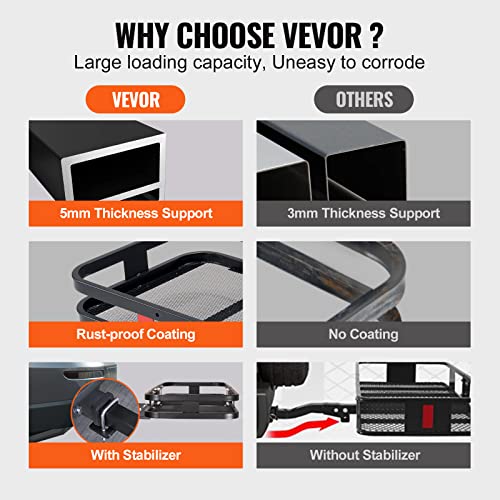
Compare frame material, weld quality, bolt size, mesh or deck support, coating, and drainage before buying. Aluminum is easier to lift and resists rust, while steel can feel more heavy-duty but needs good coating and maintenance; either way, avoid thin-looking floors, poorly supported corners, loose welds, and hardware that is hard to re-tighten after vibration. Owner sentiment repeatedly favors carriers that feel well built, sturdy-looking, and substantial on the hitch, with buyers often calling good construction a strong value, though some still treat long-term durability as something to verify over repeated trips.
Setup Ease
A carrier that is technically strong can still be a bad fit if it is too awkward to assemble, mount, remove, or store. Setup effort matters because hitch carriers are often installed only when needed, not left on the vehicle all year.
Choose a carrier weight you can realistically lift into the receiver, align the hitch pin, and remove without scraping the vehicle or injuring your back. For bolt-together designs, expect to sort hardware, loosely fit everything first, square the frame, then tighten and re-check after the first loaded drive; lots of small bolts can add time even when the process is simple. Owners often appreciate lighter carriers because they are easier to handle while still feeling substantial, and they generally find assembly straightforward, though some note that many small parts make it slower than expected.
Cargo Control
The basket must match what you actually haul, not just the maximum load rating. Coolers, totes, fuel cans, luggage, and camping gear need different rail height, tie-down access, weather protection, and spacing.
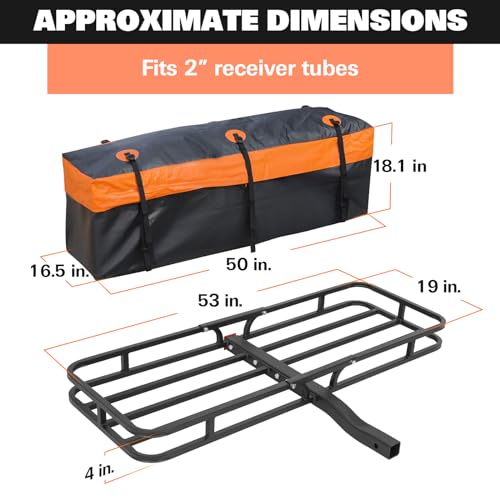
Measure your largest cooler, storage tote, generator, scooter, or camping bin before choosing basket dimensions, and look for side rails and multiple tie-down points that let straps pull cargo down and inward. Use waterproof containers or cargo bags for luggage, secure fuel cans upright and away from hot exhaust, and add reflectors or auxiliary lighting if the load blocks the vehicle’s lights or plate. Owner reports strongly support this real-world focus: buyers use hitch carriers successfully for long trips and extra hauling with boxes, coolers, fuel cans, luggage, camping gear, scooters, and other bulky items kept outside the vehicle.