

The Enhulk pool vacuum is widely received as an effective, quick-cleaning upgrade for keeping the pool bottom clear.
The cordless design makes it easy to handle and maneuver without dealing with hoses or hookups.
Strong suction is a standout, especially for picking up everyday leaves, dirt, sand, algae, and other debris.
The Enhulk pool vacuum is widely received as an effective, quick-cleaning upgrade for keeping the pool bottom clear.
The cordless design makes it easy to handle and maneuver without dealing with hoses or hookups.
Strong suction is a standout, especially for picking up everyday leaves, dirt, sand, algae, and other debris.


The Enhulk pool vacuum is widely received as an effective, quick-cleaning upgrade for keeping the pool bottom clear.
The cordless design makes it easy to handle and maneuver without dealing with hoses or hookups.
Strong suction is a standout, especially for picking up everyday leaves, dirt, sand, algae, and other debris.
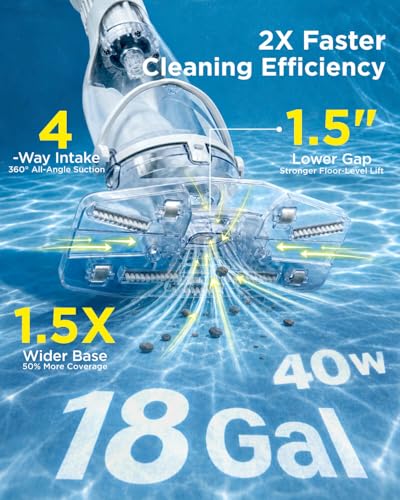
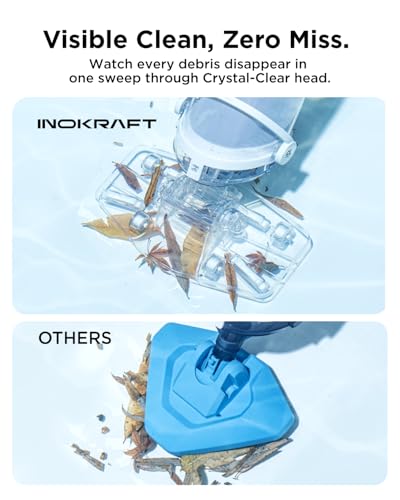
The InoKraft pool vacuum is widely liked as an effective hands-on cleaner for spots robots and hose vacuums miss, including spas, stairs, tanning decks, and above-ground pools.
Suction and debris pickup are strong for a cordless unit, with buyers describing it as able to pull in everything from fine sand and dirt to twigs and tree debris.
Battery life is acceptable for many normal cleanups, but longer jobs can have caveats because the unit may need charging time or repeated pauses when the bag fills.
The InoKraft pool vacuum is widely liked as an effective hands-on cleaner for spots robots and hose vacuums miss, including spas, stairs, tanning decks, and above-ground pools.
Suction and debris pickup are strong for a cordless unit, with buyers describing it as able to pull in everything from fine sand and dirt to twigs and tree debris.
Battery life is acceptable for many normal cleanups, but longer jobs can have caveats because the unit may need charging time or repeated pauses when the bag fills.



The InoKraft pool vacuum is widely liked as an effective hands-on cleaner for spots robots and hose vacuums miss, including spas, stairs, tanning decks, and above-ground pools.
Suction and debris pickup are strong for a cordless unit, with buyers describing it as able to pull in everything from fine sand and dirt to twigs and tree debris.
Battery life is acceptable for many normal cleanups, but longer jobs can have caveats because the unit may need charging time or repeated pauses when the bag fills.
The AQUAFYSH vacuum is received as a genuinely effective spa and small-pool cleaner that quickly picks up grit, sand, and small debris without making cleanup feel like a project.
Setup, handling, and cleaning are consistently described as simple, with the lightweight body, adjustable pole sections, and small-head attachments helping it reach tight or shallow areas.
Suction is the one area with more mixed expectations: many buyers call it strong, but some find it less forceful than advertised and need multiple passes for fine dirt.
The AQUAFYSH vacuum is received as a genuinely effective spa and small-pool cleaner that quickly picks up grit, sand, and small debris without making cleanup feel like a project.
Setup, handling, and cleaning are consistently described as simple, with the lightweight body, adjustable pole sections, and small-head attachments helping it reach tight or shallow areas.
Suction is the one area with more mixed expectations: many buyers call it strong, but some find it less forceful than advertised and need multiple passes for fine dirt.


The AQUAFYSH vacuum is received as a genuinely effective spa and small-pool cleaner that quickly picks up grit, sand, and small debris without making cleanup feel like a project.
Setup, handling, and cleaning are consistently described as simple, with the lightweight body, adjustable pole sections, and small-head attachments helping it reach tight or shallow areas.
Suction is the one area with more mixed expectations: many buyers call it strong, but some find it less forceful than advertised and need multiple passes for fine dirt.
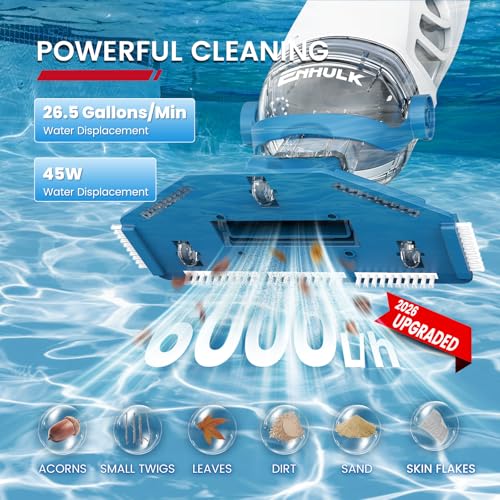
The Enhulk cordless pool vacuum is widely liked for actually cleaning the pool bottom and problem spots instead of just moving debris around.
Setup and quick cleanups feel easy, especially because the cordless design avoids dragging out hoses or dealing with cords.
Suction is a standout strength for routine pool cleaning, with buyers describing it as strong enough for leaves, sand, silt, and small debris.
The Enhulk cordless pool vacuum is widely liked for actually cleaning the pool bottom and problem spots instead of just moving debris around.
Setup and quick cleanups feel easy, especially because the cordless design avoids dragging out hoses or dealing with cords.
Suction is a standout strength for routine pool cleaning, with buyers describing it as strong enough for leaves, sand, silt, and small debris.



The Enhulk cordless pool vacuum is widely liked for actually cleaning the pool bottom and problem spots instead of just moving debris around.
Setup and quick cleanups feel easy, especially because the cordless design avoids dragging out hoses or dealing with cords.
Suction is a standout strength for routine pool cleaning, with buyers describing it as strong enough for leaves, sand, silt, and small debris.
The Enhulk pool vacuum is widely received as an effective, quick-cleaning upgrade for keeping the pool bottom clear.
The cordless design makes it easy to handle and maneuver without dealing with hoses or hookups.
Strong suction is a standout, especially for picking up everyday leaves, dirt, sand, algae, and other debris.
The Enhulk pool vacuum is widely received as an effective, quick-cleaning upgrade for keeping the pool bottom clear.
The cordless design makes it easy to handle and maneuver without dealing with hoses or hookups.
Strong suction is a standout, especially for picking up everyday leaves, dirt, sand, algae, and other debris.


The Enhulk pool vacuum is widely received as an effective, quick-cleaning upgrade for keeping the pool bottom clear.
The cordless design makes it easy to handle and maneuver without dealing with hoses or hookups.
Strong suction is a standout, especially for picking up everyday leaves, dirt, sand, algae, and other debris.
The Enhulk pool vacuum is received as a dependable shortcut for routine pool maintenance, working well enough to save people from dragging out hoses and extra vacuum setup.
Setup and handling are consistently described as straightforward, with the lightweight design and extendable pole making quick cleanups easier.
Battery life is the one more variable area overall, though satisfied owners often get enough runtime to clean a full above-ground pool on one charge.
The Enhulk pool vacuum is received as a dependable shortcut for routine pool maintenance, working well enough to save people from dragging out hoses and extra vacuum setup.
Setup and handling are consistently described as straightforward, with the lightweight design and extendable pole making quick cleanups easier.
Battery life is the one more variable area overall, though satisfied owners often get enough runtime to clean a full above-ground pool on one charge.


The Enhulk pool vacuum is received as a dependable shortcut for routine pool maintenance, working well enough to save people from dragging out hoses and extra vacuum setup.
Setup and handling are consistently described as straightforward, with the lightweight design and extendable pole making quick cleanups easier.
Battery life is the one more variable area overall, though satisfied owners often get enough runtime to clean a full above-ground pool on one charge.
The Enhulk cordless pool vacuum performs well for quick cleanups, with the wide head and dual mode helping it cover pool bottoms efficiently.
Suction power is a standout strength, pulling up fine debris, sediment, sand, leaves, and other common pool messes effectively.
Durability is the main watch-out, especially around the plastic head and filter attachment points that can come loose or fail after limited use.
The Enhulk cordless pool vacuum performs well for quick cleanups, with the wide head and dual mode helping it cover pool bottoms efficiently.
Suction power is a standout strength, pulling up fine debris, sediment, sand, leaves, and other common pool messes effectively.
Durability is the main watch-out, especially around the plastic head and filter attachment points that can come loose or fail after limited use.


The Enhulk cordless pool vacuum performs well for quick cleanups, with the wide head and dual mode helping it cover pool bottoms efficiently.
Suction power is a standout strength, pulling up fine debris, sediment, sand, leaves, and other common pool messes effectively.
Durability is the main watch-out, especially around the plastic head and filter attachment points that can come loose or fail after limited use.


The OGERY pool vacuum is strongly liked for quick routine cleaning, with enough suction to pick up common pool-floor debris like leaves, sand, dirt, and small particles.
The cordless, lightweight design makes spot cleaning feel much easier because there are no hoses or cords to drag around the pool.
Battery life is viewed as sufficient for normal pool cleanups, and buyers appreciate being able to finish a session without stopping to recharge.
The OGERY pool vacuum is strongly liked for quick routine cleaning, with enough suction to pick up common pool-floor debris like leaves, sand, dirt, and small particles.
The cordless, lightweight design makes spot cleaning feel much easier because there are no hoses or cords to drag around the pool.
Battery life is viewed as sufficient for normal pool cleanups, and buyers appreciate being able to finish a session without stopping to recharge.
The OGERY pool vacuum is strongly liked for quick routine cleaning, with enough suction to pick up common pool-floor debris like leaves, sand, dirt, and small particles.
The cordless, lightweight design makes spot cleaning feel much easier because there are no hoses or cords to drag around the pool.
Battery life is viewed as sufficient for normal pool cleanups, and buyers appreciate being able to finish a session without stopping to recharge.
It is considered easy to use and easy to clean, especially for owners who prefer a handheld option over a robot vacuum.
The AQUAFYSH cordless pool vacuum is widely liked for strong overall cleaning performance that feels powerful compared with larger or older vacuum setups.
Battery life is a clear positive, often lasting through a full cleaning or around an hour, though deep pools may need a longer pole than the included one.
It is considered easy to use and easy to clean, especially for owners who prefer a handheld option over a robot vacuum.
The AQUAFYSH cordless pool vacuum is widely liked for strong overall cleaning performance that feels powerful compared with larger or older vacuum setups.
Battery life is a clear positive, often lasting through a full cleaning or around an hour, though deep pools may need a longer pole than the included one.


It is considered easy to use and easy to clean, especially for owners who prefer a handheld option over a robot vacuum.
The AQUAFYSH cordless pool vacuum is widely liked for strong overall cleaning performance that feels powerful compared with larger or older vacuum setups.
Battery life is a clear positive, often lasting through a full cleaning or around an hour, though deep pools may need a longer pole than the included one.
The AQUAFYSH vacuum is received as a genuinely effective spa and small-pool cleaner that quickly picks up grit, sand, and small debris without making cleanup feel like a project.
Setup, handling, and cleaning are consistently described as simple, with the lightweight body, adjustable pole sections, and small-head attachments helping it reach tight or shallow areas.
Suction is the one area with more mixed expectations: many buyers call it strong, but some find it less forceful than advertised and need multiple passes for fine dirt.
The AQUAFYSH vacuum is received as a genuinely effective spa and small-pool cleaner that quickly picks up grit, sand, and small debris without making cleanup feel like a project.
Setup, handling, and cleaning are consistently described as simple, with the lightweight body, adjustable pole sections, and small-head attachments helping it reach tight or shallow areas.
Suction is the one area with more mixed expectations: many buyers call it strong, but some find it less forceful than advertised and need multiple passes for fine dirt.


The AQUAFYSH vacuum is received as a genuinely effective spa and small-pool cleaner that quickly picks up grit, sand, and small debris without making cleanup feel like a project.
Setup, handling, and cleaning are consistently described as simple, with the lightweight body, adjustable pole sections, and small-head attachments helping it reach tight or shallow areas.
Suction is the one area with more mixed expectations: many buyers call it strong, but some find it less forceful than advertised and need multiple passes for fine dirt.
We also considered 10 others:


Our Top Choice
The Enhulk pool vacuum is widely received as an effective, quick-cleaning upgrade for keeping the pool bottom clear.
The cordless design makes it easy to handle and maneuver without dealing with hoses or hookups.
Strong suction is a standout, especially for picking up everyday leaves, dirt, sand, algae, and other debris.
The Enhulk pool vacuum is widely received as an effective, quick-cleaning upgrade for keeping the pool bottom clear.
The cordless design makes it easy to handle and maneuver without dealing with hoses or hookups.
Strong suction is a standout, especially for picking up everyday leaves, dirt, sand, algae, and other debris.
The Enhulk pool vacuum is widely received as an effective, quick-cleaning upgrade for keeping the pool bottom clear.
The cordless design makes it easy to handle and maneuver without dealing with hoses or hookups.
Strong suction is a standout, especially for picking up everyday leaves, dirt, sand, algae, and other debris.
Compare Features


The order above is not editorial opinion, and it is not paid placement. It comes from what shoppers across our network actually do - which handheld pool vacuums they compare, and which they ultimately buy. We re-rank as new data comes in, so the long-term favorites have to keep earning their spot against new entrants. The full method, including how we make money.
Handheld Pool Vacuums Buyer's Guide
Handheld pool vacuums are about trading automation for targeted control: they shine when you need to grab grit from spa seats, steps, tanning ledges, corners, or an above-ground pool bottom without setting up hoses. The sharpest buying concerns are whether the filter can trap your actual debris—fine sand versus leaves—and whether the battery, pole, and plastic attachments will hold up for your pool size and cleaning frequency.
Cleaning
You want a pool cleaner that consistently removes the debris your pool actually gets—leaves, sand, dirt, algae-prone buildup, or fine dust—so the water looks clearer and requires less manual brushing or skimming. Look for strong cleaning performance across the floor, walls, waterline, and tight corners if those areas matter for your pool shape, and watch out for models that only pick up large debris while leaving fine sediment behind or stirring it back into the water.
Choose a handheld vacuum for the places a full-size cleaner misses: spa seats, steps, tanning ledges, corners, ladders, and above-ground pool bottoms. Prioritize the right head geometry over raw size: a wide head speeds flat-bottom passes, but a smaller interchangeable head or crevice tool matters more for spas, shallow shelves, and tight corners; brushes help loosen stuck sediment, but algae film still needs brushing and water chemistry correction. Owner feedback supports this use case: buyers consistently like these vacuums as fast hands-on cleaners for spots robots and hose systems miss, with simple setup and strong bottom pickup for dirt, sediment, algae residue, leaves, and small debris.
Debris
Debris pickup matters because it determines whether your pool cleaner can handle the actual mess in your pool, from fine sand and dirt to leaves, twigs, and heavier debris. Look for strong, consistent suction and a debris system that matches your pool’s needs, since some cleaners do well with large leaves but struggle with fine particles, while others can lose effectiveness when the basket or filter starts to fill.
Match the filter and intake to your actual debris, because handheld pool vacuums can fail by either clogging on leaves or blowing fine silt back into the water. For sandy pools, dusty bottoms, pollen, dead algae, or spa grit, look for fine-mesh or multi-stage filters and a filter chamber that seals tightly; for trees, bugs, twigs, and larger leaves, check that the mouth is wide enough and the debris chamber has enough volume so you are not emptying it every few minutes. Owner reports are encouraging here: buyers often describe strong suction for cordless units and effective pickup of fine sand, dirt, sediment, algae, bugs, leaves, twigs, and other common pool debris.
Ease
A pool cleaner should save you effort, not create another chore, so look for one that’s straightforward to set up, start, empty, and rinse after each cycle. Pay attention to how easily you can access the debris basket or bag, whether controls are intuitive, and whether routine maintenance requires tools or awkward disassembly. If a cleaner is cumbersome to lift, untangle, or clean out, its time-saving benefits can disappear quickly.
For this category, ease of use depends on whether the vacuum truly eliminates hose-vac hassle without creating new chores. Check that it starts underwater without priming, empties without dumping debris back into the pool, has filters that rinse clean quickly, and includes a pole long enough for your pool depth; for spas and shallow ledges, a short handheld mode can be just as important as a telescoping pole. Owner sentiment lines up with this: users repeatedly describe setup, operation, maneuvering, filter changes, emptying, and cleanup as simple, with cordless lightweight designs making quick maintenance much less time-consuming than dragging out hoses and hookups.
Battery
If you choose a cordless or solar-powered pool cleaner, battery life determines whether it can finish a full cleaning cycle without stopping short. Look for a runtime that matches your pool’s size, shape, and debris load, and consider recharge time as well as whether the cleaner maintains suction and navigation as power drops. For solar-powered options, watch how dependent performance is on steady sunlight, especially if your pool is shaded or you need predictable cleaning on cloudy days.
Buy battery capacity for your cleaning pattern, not just the advertised runtime: a spa or splash pool needs short reliable bursts, while an above-ground or in-ground pool bottom needs enough runtime to finish before suction fades. Look for clear runtime and charge-time specs, a charge indicator, enough standby retention for weekly spot cleaning, and sealed waterproof battery construction; also confirm the charging port must be fully dry before charging and avoid models with vague waterproofing claims. Owners generally report that battery life is sufficient for typical sessions, often finishing a whole small pool or routine cleanup on one charge, with quick recharging and multiple short cleanings from a charge mentioned as common positives.
Value
A pool cleaner should justify its cost by saving you time and keeping your pool consistently clean without constant fixes or supervision. Look for the right balance of cleaning coverage, reliability, ease of maintenance, and included features for your pool type, and be wary of paying extra for capabilities you won’t use or a low upfront price that leads to frequent repairs, replacement parts, or poor performance.
A handheld pool vacuum is the best value when it fills the gap between a leaf skimmer and a robot, not when you expect it to replace full-pool automation for heavy debris loads. Before buying, verify what is included—pole, heads, fine and coarse filters, replacement filter availability, charger, and seals—because missing accessories or hard-to-find filters can erase the convenience advantage. Owner feedback supports the value case when expectations are right: buyers see these vacuums as worthwhile for spas, hot tubs, basins, small pools, and routine maintenance because they are compact, cordless, time-saving, easy to clean, and strong enough for everyday pool care without needing a larger system.
Build
A well-built pool cleaner is more likely to handle repeated cycles, debris, chemicals, and sun exposure without constant breakdowns or parts wearing out early. Look for sturdy wheels or tracks, solid hoses or cables, secure seals, and easily available replacement parts; watch out for flimsy plastics, weak connectors, or designs that make routine maintenance harder than it should be.
Inspect the physical design carefully, because the common failure points in handheld pool vacuums are not usually motors first—they are plastic heads, latch tabs, filter cages, seals, and pole connections. Favor a sturdy locking filter basket, gasketed debris chamber, secure head attachment, corrosion-resistant screws or contacts, a rigid telescoping pole, and replaceable wear parts; avoid flimsy snap-fit parts if you will vacuum rough plaster, vinyl seams, steps, or leaf-heavy pools. Owner sentiment is mostly positive on lightweight maneuverability, dependable routine use, and better-than-expected filter quality, but durability is the key watch-out, especially loose or failing plastic head and filter attachment points after limited use.
2,600+ shoppers have used Buyer's Guide in the last week to help find the best Handheld Pool Vacuums.

Helping millions of users make smarter purchases online.


