Best Hammocks Updated June 2026
Best Hammocks
2026 Buyer's GuideUpdated June 2026
Sort by:

Why These Features Matter:

A hammock is one of those purchases that sounds purely aspirational—lazy afternoons, golden light, a novel that somehow gets finished. In real life, it’s more like: five minutes of bliss, ten minutes of adjusting the hang, one kid using it as a slingshot, and a sudden awareness that tree sap exists.

The “best hammock” isn’t a single holy-grail model. It’s the one that behaves in your actual space: a small yard with one good tree, a rental with a suspicious balcony rail, a living room that can’t spare floor space for a permanent stand, or a campsite where the wind always finds your ears. The details that matter are the unglamorous ones—fabric feel against bare legs, whether the straps tangle into a sailor’s knot, how annoying it is to store, and whether getting in requires the grace of a gymnast.

The Fabric: Where Comfort Gets Real (and Itchy)

Hammock material isn’t just an aesthetic decision; it’s the difference between “nap” and “why is this leaving a waffle pattern on the back of my thighs?” Broadly, there are two camps: soft woven fabrics (cotton, poly-cotton, quilted styles) and slick technical fabrics (nylon/parachute styles).

  • Woven cotton or quilted feels lounge-y and homey—more porch daybed than backcountry gear. It’s also the kind of fabric that invites bare skin without complaint.
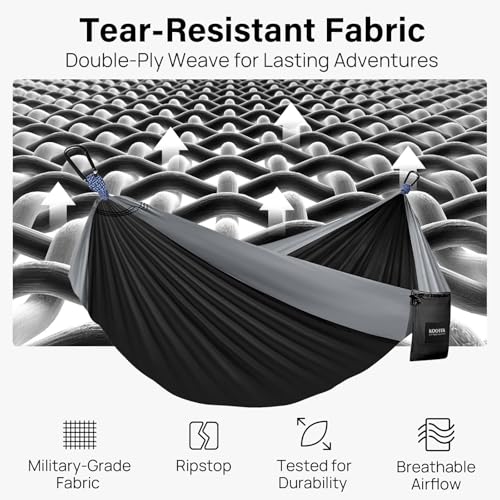
  • Parachute nylon is light, packable, and dries fast. It can also feel clammy in humidity and a little slidey if wearing shorts. Great for the woods; less romantic next to a swimming pool.
  • Open-weave rope looks classic in photos and can be breezy in heat. It’s also the easiest way to end up with cord marks and a new appreciation for blankets as a barrier layer.

Small, telling detail: the best-feeling hammocks tend to be forgiving around the edges—no scratchy seams, no stiff binding that digs into shoulders when lying diagonally. If a hammock needs a special pad or an elaborate blanket arrangement to be comfortable, it’s not “minimal,” it’s needy.

Size & Shape: Single vs. Double Is Mostly About Sanity

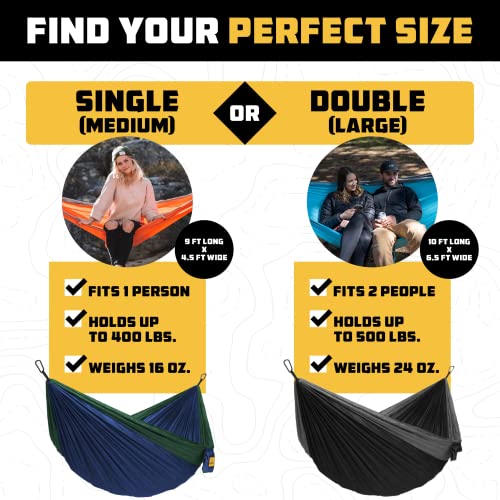
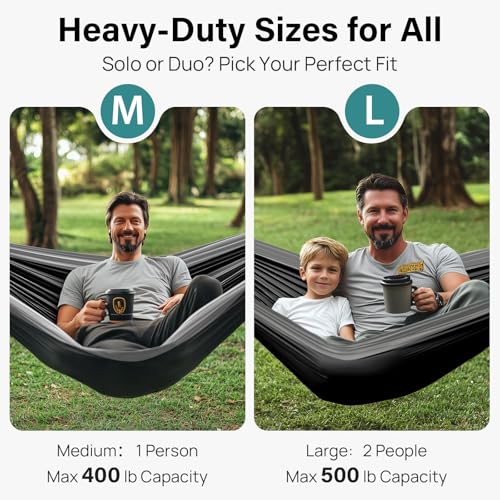
“Double” hammocks sound like a relationship milestone. In practice, they’re often a solo comfort upgrade: more room to lie diagonally (the secret to not feeling like a banana), and less shoulder squeeze. Two adults can fit, but the physics are intimate in a way not everyone finds relaxing.

  • Longer and wider generally means easier lounging and fewer pressure points.
  • Narrow singles can feel tippy, especially for anyone who doesn’t enjoy the sensation of being gently folded.
  • Spreader-bar styles (the ones that stay open and “flat”) look elegant and are nice for reading because the fabric doesn’t cocoon your arms. They can also be more prone to flipping if someone sits down abruptly like they’re arriving at a restaurant booth.

Reality check: if this is for casual backyard use with friends drifting in and out, a slightly larger hammock is often the more diplomatic choice. It’s less precious and more forgiving of weird sitting positions and snack-related fidgeting.

Suspension: Straps, Knots, and the Quiet Rage of Tangled Rope

A hammock is only as good as the thing holding it up. The most livable setups are the ones that don’t require an engineering degree or a sudden interest in knot-tying.

  • Wide, adjustable straps are the easy-button option: quick to set, easy to level, kinder to trees, and less likely to make the backyard look like a survivalist workshop.
  • Rope-heavy systems can be fine if they come pre-assembled and don’t slip, but many end up as a snarl that lives in a tote bag, silently judging you.
  • Simple hardware (clean loops, intuitive clips) tends to be better than “clever” multi-piece systems that disappear into grass at dusk.

The thing no one brags about: adjustment matters. If raising or lowering the hammock is a 12-step process, it won’t get used on weeknights. It’ll be a weekend-only personality trait.

Stand vs. Trees: The Apartment Balcony Plot Twist

Trees are charming in theory—until the only good pair is on someone else’s property line, or one is suspiciously young and bendy. A stand solves that, at the cost of footprint and storage.

  • Tree-hung hammocks feel magical and take up almost no storage space. They also require the right spacing and an outdoor area that cooperates.
  • Stands make hammock life possible on patios, decks, and rental yards where trees are decorative, not structural. They’re also large, even when they’re “portable,” and can look like a piece of exercise equipment if left out all winter.

Living-space truth: a stand is worth it only if there’s a realistic place to keep it. If it ends up leaning against a wall like an awkward metal sculpture, it will become part of the home’s emotional clutter.

Comfort Details That Matter More Than They Should

Most people think about “softness” and stop there. The day-to-day difference shows up in smaller, more annoying details.

  • Edge feel: some hammocks have edges that curl aggressively, which can press into shoulders. Others drape more gently and feel calmer.
  • Breathability: in hot weather, dense fabric can trap heat. Meshy or looser weaves help, but can feel less cozy.
  • Noise: certain technical fabrics make a faint swishy sound that’s fine outdoors and surprisingly irritating in a quiet indoor room.
  • Movement: the “right” sway is personal. Some hammocks glide smoothly; others feel twitchy, like they’re responding to every sip of water.

If reading is the goal: a slightly steadier feel (often from a wider body or a flatter lay) matters more than people expect. Constant micro-sway is great for naps; less great for keeping a page in focus.

Weather & Maintenance: The Not-So-Pretty Parts

Outdoor hammocks live a hard life: sun, pollen, surprise rain, sunscreen residue, and the occasional bird with opinions. The best ones aren’t “indestructible.” They’re just realistic about upkeep.

  • Quick-drying materials are a relief if the hammock is going to get rained on because no one remembered to bring it in.
  • Washability is underrated. A hammock that can be cleaned without drama will stay in rotation; a precious one will become “for company.”
  • UV exposure quietly ruins fabrics over time—fading, weakening, turning once-soft fibers crispy at the edges.

Honest caveat: leaving any hammock outside full-time is basically agreeing to shorten its life. If it’s going to be a permanent yard fixture, it should be chosen with a realistic attitude: replaceable, cleanable, and not heartbreaking when it finally looks tired.

Bugs, Sun, and the Case for Add-Ons (That You’ll Pretend You Don’t Need)

Some hammock setups feel idyllic until dusk, when mosquitoes arrive like they own the place. If the hammock is used for camping or even just long evenings outside, a few thoughtful extras can turn it from “nice” into actually usable.

  • Bug netting is a sanity saver in many climates. The best versions are easy to enter and don’t collapse onto your face.
  • Rain protection matters for camping, less so for backyard lounging—unless the hammock is going to live out there.
  • Under-insulation is the detail beginners miss: even mild nights can feel chilly underneath because air moves freely below you.

Minor annoyance to anticipate: add-ons add fuss. If setup starts resembling a small theater rigging operation, it may not get used casually.

Storage & Portability: The Difference Between “Spontaneous” and “A Project”

A hammock that’s easy to store gets used. A hammock that requires re-rolling, re-tying, and re-stuffing into a bag that shrank in the wash becomes a chore disguised as leisure.

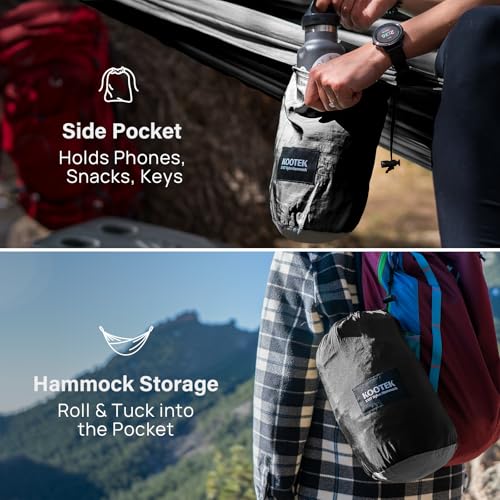
  • Integrated stuff sacks are genuinely helpful—especially if they’re attached so they can’t vanish into a drawer.
  • Tangle-resistant straps (or at least straps that fold neatly) reduce the amount of pre-lounge irritation.
  • Bulk matters in small homes. A thick quilted hammock may feel incredible, but it has the storage attitude of an extra comforter.

Apartment reality: if it can’t live on a hook, a shelf, or a bin without looking messy, it will end up in the “miscellaneous” pile. That pile is where good intentions go to die.

Things to Know Before Buying (So It Doesn’t Become Yard Decor)

  • Measure your hang: the perfect spot in your mind may not exist in your yard. Distance between anchor points is the difference between a gentle cradle and a knee-high sling.
  • Think about who uses it: kids treat hammocks like playground equipment. If that’s the household reality, prioritize forgiving fabric and uncomplicated setup.
  • Plan for the “in-between” moments: getting in and out should feel stable, not like stepping onto a moving escalator.
  • Decide if it’s indoor-approved: indoor hanging is possible, but it’s a commitment—and it changes a room. Beautiful in some spaces, strangely camp-like in others.

Honest Caveats (Because Hammock Life Has Friction)

  • Hammocks collect debris: leaves, grass, sand, snack crumbs. They are essentially fabric funnels.
  • They can be socially awkward: a hammock is either occupied or it isn’t. It’s not a great “group seating” solution unless there are multiple.
  • They’re not always back-friendly: some people love the cradle; others feel stiff afterward. A flatter lay and more space helps, but doesn’t magically make it a mattress.
  • They invite naps: which is either the point or a scheduling problem.

How to Choose the Right Type for Your Life

  • For everyday backyard lounging: prioritize comfort fabric, easy straps, and enough width to lie diagonally. Consider a stand if the yard is tree-poor or the “good trees” are never where the shade is.
  • For camping and travel: prioritize light weight, quick-drying material, and a suspension system that sets up fast without theatrics. Bug protection is less optional than it sounds.
  • For a porch or patio that wants to look intentional: a woven or quilted look reads more “designed” than technical nylon. Just be honest about whether it will be brought in during bad weather.
  • For small spaces: choose something that stores neatly and doesn’t require a dedicated stand. A hammock that can live in a closet without becoming a knot sculpture wins.

The Bottom Line

The “best hammock” is the one that gets used on a random Tuesday, not just on a perfectly sunny Saturday. Prioritize fabric you actually want against your skin, a setup that doesn’t punish you with knots, and a storage situation that won’t quietly turn the hammock into a guilt object. If a hammock feels easy, it becomes part of life. If it feels fussy, it becomes scenery.