












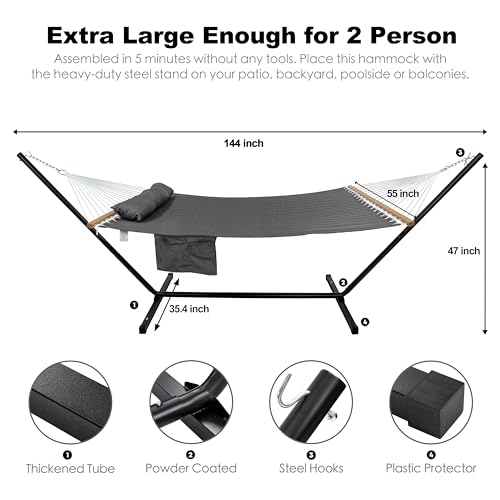


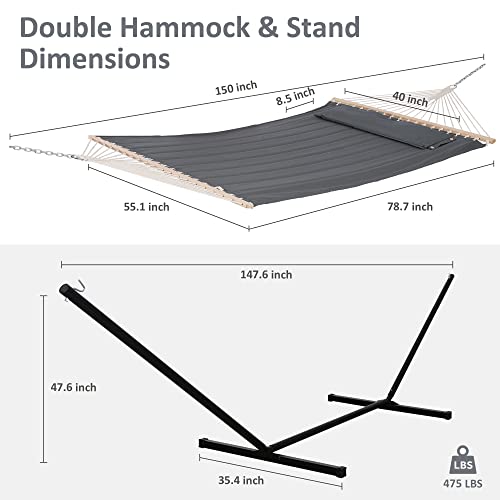
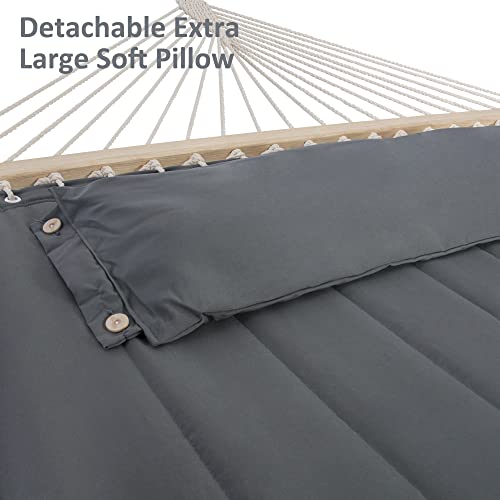
We also considered 10 others:





Our Top Choice
The order above is not editorial opinion, and it is not paid placement. It comes from what shoppers across our network actually do - which hammocks they compare, and which they ultimately buy. We re-rank as new data comes in, so the long-term favorites have to keep earning their spot against new entrants. The full method, including how we make money.
Hammocks Buyer's Guide
A hammock has to balance sink-in comfort with safe, stable support: too much wrap can feel cozy solo but cramped or tippy when shared. In this niche, the sharpest buying concerns are whether the listed two-person capacity is actually usable, whether the stand or suspension stays steady, and whether the fabric and hardware can handle outdoor storage and regular lounging.
Lounging Fit
Hammock comfort depends on width, fabric give, pad structure, and how much the bed wraps around the body. A model that feels spacious for one person can still feel cramped for two if the usable fabric narrows under load or pulls both people toward the center.
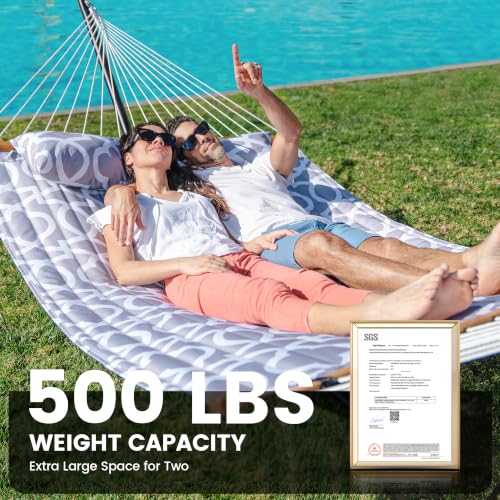
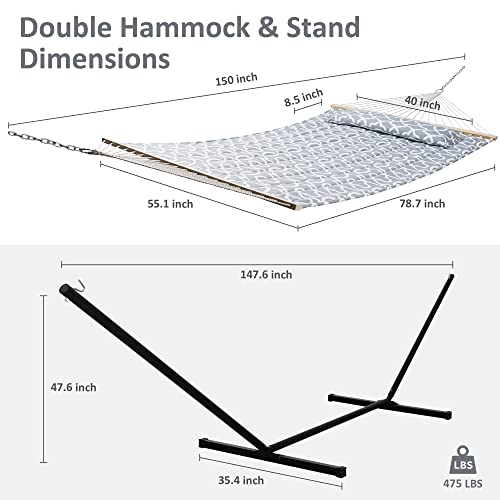
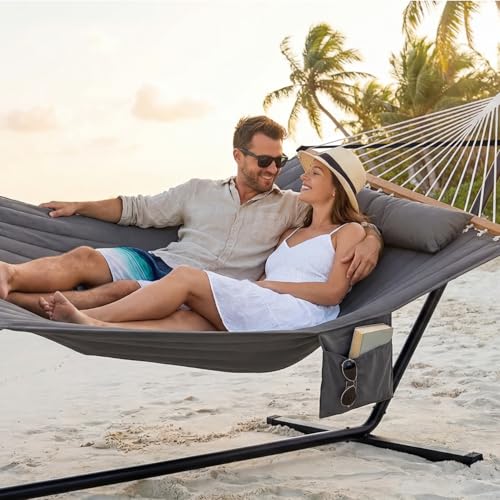
Look for the actual bed dimensions, not just the headline capacity, and favor a wide sleeping surface with enough fabric length for your height and lounging style. If you plan to share, check that the hammock remains usable side by side rather than forcing both people into a tight center sag; if you dislike a cocoon feel, consider flatter quilted or spreader-style designs instead of deep gathered-end fabric. Owner feedback strongly supports prioritizing this: buyers repeatedly praised roomy, soft hammocks that worked for stretching out, napping, or fitting two adults, while mixed reports warned that some designs cocoon too much or do not feel truly comfortable for two.
Steady Support
A hammock should feel calm when you sit down, shift weight, or share it with another person. Stability comes from the stand footprint, suspension geometry, connection points, and how well the fabric centers weight without sudden tipping or twisting.
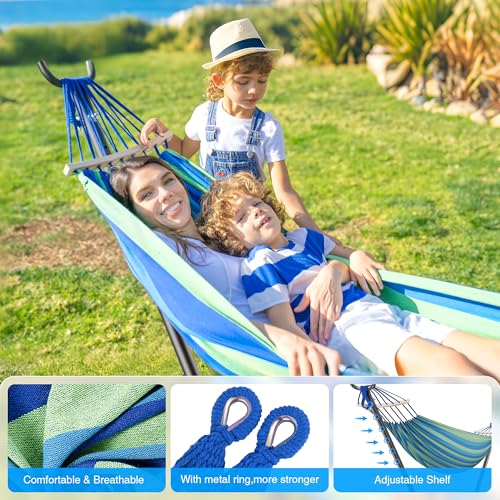
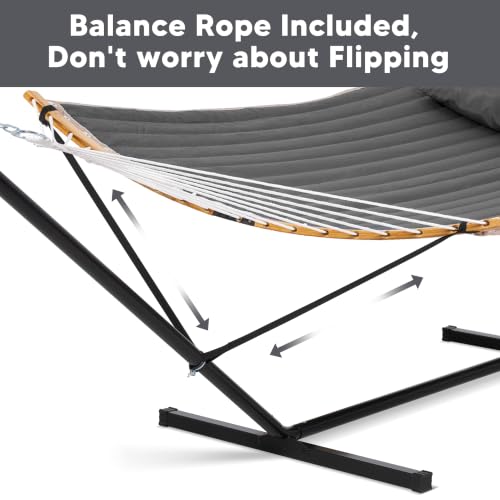
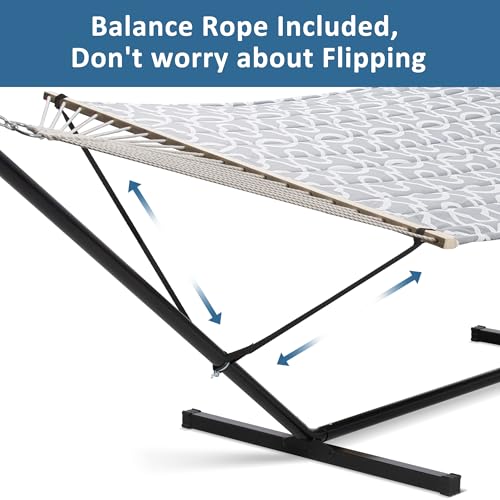
For freestanding backyard use, choose a stand with a wide, low, braced footprint and clearly rated hooks or chains; for tree or post setups, use proper straps and maintain a safe sag angle rather than over-tightening the hammock. Avoid setups that require awkward stabilizing steps every time, and be cautious with narrow stands, lightweight tubes, or unclear weight ratings, especially for two adults. Owner sentiment backs this up: many buyers felt secure using sturdy stands and balance straps for naps, reading, and backyard lounging, but some reported mixed experiences where the stabilizing setup felt cumbersome or less confidence-inspiring day to day.
Outdoor Build
Hammocks live under body weight, sun, moisture, and repeated folding, so weak seams or thin hardware show up quickly. Good outdoor build is about reinforced stress points, durable fabric, corrosion-resistant support parts, and materials that dry and store well.
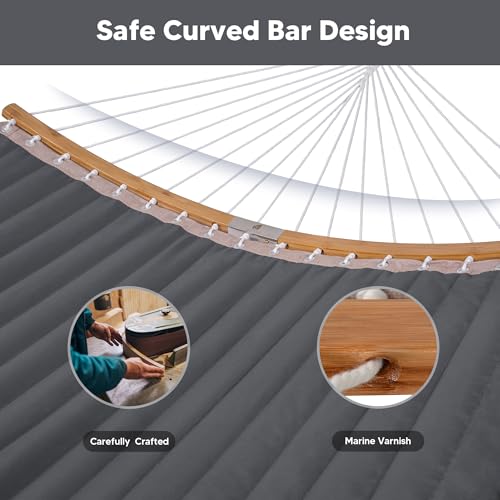
Inspect fabric weight, seam reinforcement, end loops, stitching around suspension points, and the finish on any steel frame. If the hammock will stay outside, look for weather-tolerant textiles and rust-resistant hardware, but still plan to dry and store it during storms or long wet periods; even sturdy hammocks can degrade if left exposed. Owners often praised soft heavy fabric, reinforced stitching, solid steel stands, and well-made materials, while the more cautious feedback noted that durability and weather vulnerability can become concerns when a setup is left outside.
Setup & Storage
A hammock that is hard to assemble or store is less likely to be used often. Tool-free frames, labeled parts, carry bags, and fast breakdown matter because many shoppers move hammocks between patio, yard, beach, camping, and storage.
Choose a hammock that matches how you will actually use it: a heavy stand can be great for a fixed patio spot, while snap-together sections and separate carry bags are better for camping, beach trips, or seasonal storage. Check whether one person can assemble the frame, whether parts lock positively instead of just sliding loosely together, and whether the packed size fits your vehicle or storage area. Buyer sentiment strongly favors simple, no-tool setups with clear instructions, quick snap-together frames, and convenient breakdown, including praise for models that pack into carrying bags for the frame and fabric.
Complete Value
Value in a hammock is not just the lowest cost; it is whether the full setup includes the support, comfort pieces, and storage features you need. A seemingly simple hammock may require extra straps, a stand, pillows, or weather storage to function the way you expect.
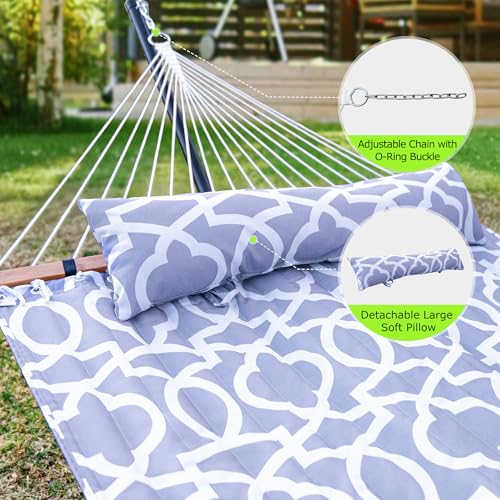
Before choosing, confirm what is actually included: stand, hammock bed, hanging hardware, straps or chains, pillow or pad, carry bags, and any replacement-friendly parts. A complete kit is especially useful for yards without trees or posts, but do not trade away frame stability, fabric quality, or realistic capacity just to get more accessories. Owner feedback connects good value with strong-feeling build, attractive backyard appearance, included stands that solve tree-free placement, and portable designs that are practical beyond one fixed patio spot.
1,000,000+ shoppers use Buyer's Guide every week to find the best products and services online.

Helping millions of users make smarter purchases online.


