









We also considered 10 others:

.png)


Our Top Choice
Compare Features


The order above is not editorial opinion, and it is not paid placement. It comes from what shoppers across our network actually do - which grill and griddle combos they compare, and which they ultimately buy. We re-rank as new data comes in, so the long-term favorites have to keep earning their spot against new entrants. The full method, including how we make money.
Grill and Griddle Combos Buyer's Guide
Grill and griddle combos are all about balancing two very different cooking jobs on one frame: high-heat searing over grates and broad, even flat-top cooking. The sharpest concerns are whether both sides have real usable heat and space, and whether the griddle plate, grease system, and cart are built well enough for messy, repeated outdoor cooking.
Build
A grill’s build quality determines how well it holds up to heat, weather, movement, and repeated use outdoors. Look for sturdy construction, stable legs or cart design, durable grates and firebox materials, tight-fitting parts, and a finish that resists rust and peeling. Watch out for thin metal, wobbly frames, flimsy handles, or components that feel loose, since those can signal weaker long-term durability.
Prioritize a combo with a genuinely heavy flat-top plate, rigid cart, secure side shelves, and a grease system that is easy to remove without dripping across the frame; avoid units where the griddle looks like a thin accessory, the lid or firebox flexes, or the cart wobbles when both cooking zones are loaded. For this category, durability is also about how well the grill side and griddle side tolerate different heat patterns without warping, paint blistering, or loosening hardware. Owner feedback supports looking for a sturdy, polished setup: buyers often describe better-liked combos as solid-feeling, attractive backyard units, with particular praise for durable-feeling griddle surfaces and heavy-duty construction.
Cooking
How well a grill cooks determines whether you can get strong sear marks, even browning, and reliable doneness without constant babysitting. Look for steady heat, enough power for high-temperature searing, good control at lower temperatures, and grates or heat distribution that minimize hot spots and flare-ups. A grill that struggles here may cook slowly, burn the outside before the inside is done, or make it hard to handle common tasks like burgers, vegetables, chicken, and steaks.
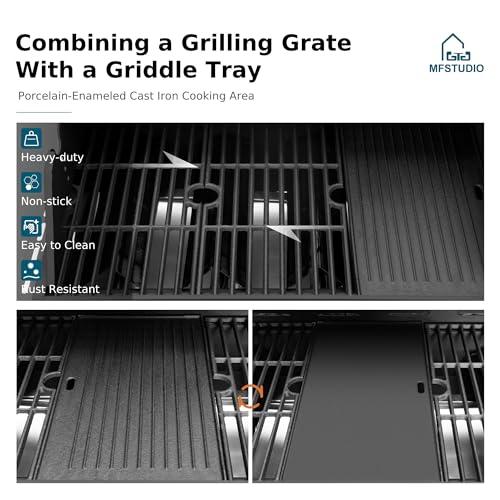
Choose the surface split based on what you actually cook: a true half-grill/half-griddle layout is ideal for burgers, steaks, vegetables, breakfast foods, smash burgers, and delicate items at the same time, while a smaller griddle insert can feel limiting for full meals. Check that the griddle has enough usable edge-to-edge area for spatula work and that the grill side has grates capable of searing, not just warming; if you want sauces or sides, a side burner can make the combo much more useful as a complete station. Owners most often praise these combos when they let families cook multiple foods at once, deliver strong sear marks on the grill side, and keep breakfasts, cookouts, meats, vegetables, and small items moving without needing separate appliances.
Assembly
A grill that is difficult to assemble can delay your first cookout and increase the chance of loose parts, poor alignment, or setup mistakes that affect safety and performance. Look for clear instructions, well-labeled hardware, manageable part sizes, and reviews that mention how long assembly takes or whether a second person is needed. Be cautious of grills with vague manuals, many similar-looking fasteners, or complaints about parts arriving bent or misaligned.
Before buying, confirm the assembled footprint, propane tank placement, grease cup access, and whether the top firebox/griddle section must be lifted onto the cart; many combo units are bulky enough that one-person assembly is possible on paper but awkward in practice. Look for clearly labeled hardware, pre-threaded holes, and instructions that distinguish grill-side, griddle-side, and burner-control parts, because misalignment can affect lid fit, grease drainage, and burner safety. Owner reports generally support that assembly can be manageable and straightforward, often around an hour or so, but they repeatedly note that a second person helps with the heavier lifting steps.
Heat
Heat affects how well your grill can sear, cook evenly, and hold steady temperatures for low-and-slow cooking. Look for strong temperature control, consistent heat distribution across the grate, and enough heating performance for the way you cook; watch out for grills with obvious hot spots, weak recovery after opening the lid, or controls that make small adjustments difficult.
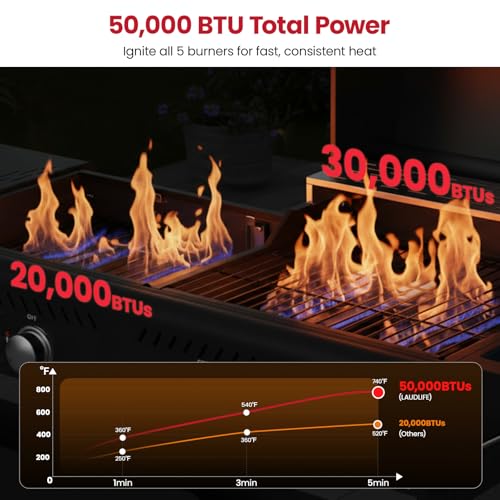
For a grill-and-griddle combo, judge heat by zone control, recovery, and wind performance rather than headline output alone: the griddle needs steady, even heat for pancakes or smash burgers, while the grill side needs enough concentrated heat for searing with controllable cooler zones. Separate lids, independent burners, and a design that shields flames from wind matter, especially because open-top griddle sections can lose heat faster and extend cook times. Owner sentiment strongly favors models that warm quickly, cook evenly, and avoid obvious hot or cold spots, but there are also reports that some open-top or weaker-burner designs struggle with slow warming, weak flames, or inconsistent heat.
Value
A grill can look like a bargain upfront but cost you in uneven cooking, flimsy materials, poor heat control, or parts that wear out quickly. You want value for money: sturdy construction, dependable performance, useful features you’ll actually use, and a design that suits how often and how you cook. Be wary of paying extra for oversized capacity or add-ons that do not improve your everyday grilling.
The best value is not simply the cheapest combo; it is the unit that replaces a separate grill and flat-top without compromising the cooking area, burner control, grease handling, and long-term surface durability you need. Be cautious of bundles that look generous but include thin tools or a token griddle area, and give more weight to heavy cooking surfaces, usable prep space, and parts that make regular family meals or hosting easier. Owners tend to view these combos as worthwhile when they feel sturdy for the money, provide both flat-top and traditional grilling in one backyard unit, and offer enough cooking and prep space for families or gatherings.
1,000,000+ shoppers use Buyer's Guide every week to find the best products and services online.

Helping millions of users make smarter purchases online.


