


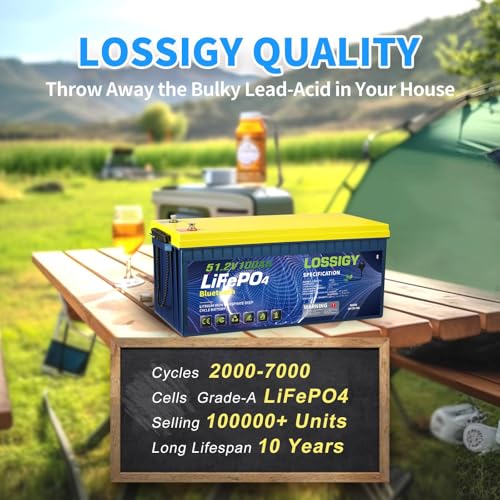

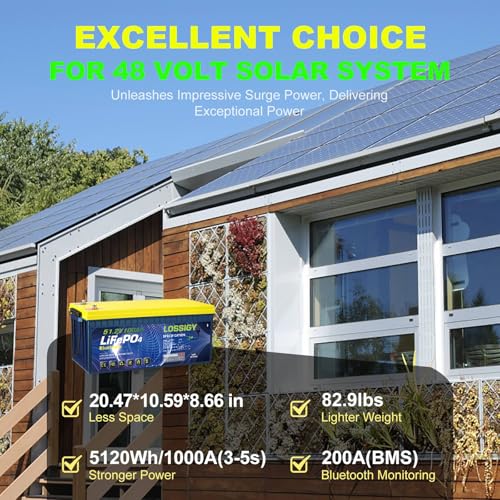
- Type: LiFePO4
- Voltage: 48V
- Capacity: 100Ah
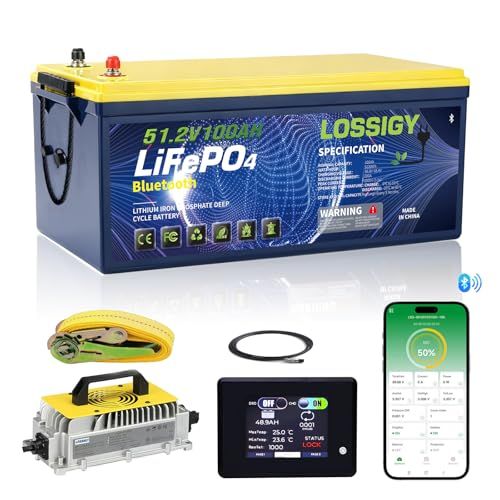
- Monitoring: App, LCD screen
- Ideal For: Golf carts





Lossigy 48V Lithium Golf Cart Battery
Performance, driving feel, and real-world benefits

The Lossigy 48V Lithium Golf Cart Battery is designed for owners who want a modern, lightweight alternative to traditional lead-acid packs. In everyday use, the biggest difference you’re likely to notice is how consistently the cart delivers power. Lithium batteries generally hold voltage more steadily under load than lead-acid, which can translate into more confident acceleration, less sluggishness on inclines, and a more predictable feel as the state of charge drops. If you’re coming from a tired lead-acid set, the upgrade can feel dramatic: the cart often runs “strong” for longer instead of gradually fading as the battery drains.
Another practical advantage is efficiency. With lithium, you typically spend less time dealing with the maintenance routine that lead-acid owners know well, such as checking water levels, cleaning terminals affected by acid vapor, and managing corrosion. That time saved is not just convenience; it can reduce the likelihood of battery damage caused by neglect or inconsistent care. For golfers and neighborhood drivers alike, the appeal is straightforward: more usable energy, less fuss, and a lighter battery system that can help overall handling and reduce stress on components over time.
Charging behavior is also a key part of the experience. Many lithium packs support faster, more flexible charging compared with lead-acid, and they generally tolerate partial recharges better. If you tend to top up between short trips or charge opportunistically, lithium chemistry is often more forgiving than lead-acid, which prefers deeper, more structured charge cycles. That said, the total “feel” of charging depends heavily on using a compatible charger and following the battery’s specifications, because lithium batteries rely on built-in protection electronics to stay safe and healthy.
For range, what matters most is the battery’s usable capacity, not just the nominal rating on the label. Lithium batteries often provide a higher usable percentage of their rated capacity than lead-acid because they can be discharged deeper without the same kind of performance collapse. The result is that a lithium pack with a comparable amp-hour rating can sometimes deliver more practical run time than a lead-acid pack rated similarly. If your cart is frequently loaded with passengers, climbs hills, or pulls accessories like lights and sound systems, the stability of lithium power delivery can be as valuable as the raw range number.
What to consider before buying, and what matters most
Before purchasing the Lossigy 48V Lithium Golf Cart Battery, the most important consideration is compatibility with your cart’s voltage system and controller. “48V” golf carts can vary in how they’re configured, and the battery must match the cart’s system requirements. You’ll also want to confirm that the battery’s continuous discharge rating is sufficient for your cart’s motor and controller demands. If the battery can’t provide the amperage your cart draws under acceleration or hill climbing, you may experience protective shutoffs, reduced performance, or unnecessary stress on the battery management system. For many buyers, this amperage capability is the single most important specification after confirming it is truly a 48V replacement.
The next priority is charger compatibility. Lithium batteries typically require a lithium-specific charger profile, and using the wrong charger can lead to incomplete charging, shortened life, or protection faults. Even if a lead-acid charger seems to “work,” it may not terminate correctly for lithium chemistry. Ensuring you have the right charger, or confirming the Lossigy battery you’re considering is intended to pair with your existing charger, is critical to getting the lifespan and reliability you’re paying for.
Battery management system features are another high-impact factor. A lithium golf cart battery should include a robust BMS that protects against overcharge, over-discharge, overcurrent, and temperature extremes. In a golf cart application, overcurrent and temperature protection can be especially relevant, since carts may see bursts of high draw and can sit in hot garages or run in cold mornings. A well-designed BMS doesn’t just prevent catastrophic issues; it can reduce nuisance trips and keep the battery operating within its healthiest range.
Physical fitment and installation details deserve careful attention. Lithium packs can be shaped differently from a bank of lead-acid batteries, and you may need brackets, spacers, or a revised hold-down method to keep everything secure. Cable lengths, terminal orientation, and the routing of main leads should be checked before you buy. It’s also wise to consider whether your cart uses an onboard computer, state-of-charge gauge, or charging interlock that expects lead-acid behavior. Some carts benefit from a lithium-compatible meter or a voltage-to-SOC solution so you aren’t guessing your remaining range.
Temperature performance and storage habits are also important. If you operate in freezing conditions, confirm whether the battery supports low-temperature charging; many lithium batteries restrict charging below certain temperatures to prevent cell damage. If you store the cart for long periods, lithium generally stores well, but best practice is to store at a moderate state of charge and avoid leaving the pack fully depleted. These details can meaningfully affect longevity, especially for seasonal users.
Finally, consider warranty, service support, and the brand’s documentation quality. Lithium systems are more “electronics-forward” than lead-acid, so clear guidance on charging, wiring, troubleshooting, and storage is valuable. Even a good battery can be frustrating if you can’t quickly verify what a fault light means or what the recommended charge settings are. While performance specs might sell you on day one, support and clarity are what keep the ownership experience smooth over the years.
Common Questions
Will the Lossigy 48V Lithium Golf Cart Battery work with my existing 48V golf cart? Most 48V carts can be converted to lithium, but you should confirm your cart’s controller requirements, the battery’s discharge rating, and physical fitment. It’s also important to check whether your cart’s meter or onboard systems rely on lead-acid voltage curves, since lithium voltage stays flatter and may make factory gauges inaccurate.
Do I need a special charger? In most cases, yes. A lithium battery typically needs a charger designed for lithium charging profiles or one explicitly approved for that battery. Using a lead-acid charger can result in incomplete charging or BMS interruptions, which can reduce usable capacity and cause confusion about battery health.
How much range will I get on a charge? Range depends on the battery’s capacity, cart weight, tire condition, terrain, speed, and accessory load. Lithium’s steady voltage often makes the cart feel strong for longer, but the best way to estimate range is to compare the battery’s usable watt-hours to your typical driving conditions and how demanding your course or neighborhood routes are.
Is lithium really maintenance-free? It’s closer to maintenance-free than lead-acid because there’s no watering and far less corrosion, but you still need good habits. Proper charging, secure cable connections, and sensible storage practices matter. Periodically checking that terminals are tight and that the battery compartment is clean and well-secured is still worthwhile.
What happens if the battery gets too cold or too hot? A quality BMS usually limits charging or discharging outside safe temperature ranges. In cold climates, the most common limitation is charging when the cells are below the safe threshold. In hot conditions, the battery may reduce output or trigger protection if temperatures rise too high, so ventilation and sensible use patterns can help.
Overall, the Lossigy 48V Lithium Golf Cart Battery is a compelling upgrade for drivers who want consistent power, reduced upkeep, and a more modern charging and ownership experience. The best results come from focusing on the essentials before you buy: discharge capability, charger compatibility, BMS protections, and fitment in your cart. Get those right, and the switch to lithium can feel less like a simple replacement and more like a meaningful improvement to how your cart performs day to day.