








We also considered 10 others:


Our Top Choice
Compare Features


The order above is not editorial opinion, and it is not paid placement. It comes from what shoppers across our network actually do - which gazebos they compare, and which they ultimately buy. We re-rank as new data comes in, so the long-term favorites have to keep earning their spot against new entrants. The full method, including how we make money.
Gazebos Buyer's Guide
Gazebos are a tradeoff between livable outdoor shelter and a structure that must survive wind, rain, sun exposure, and repeated seasonal use. The sharpest buying concerns are anchoring and roof/canopy behavior: a gazebo that looks sturdy in photos can still disappoint if the usable footprint is smaller than advertised, the fabric pools water, or assembly makes proper alignment difficult.
Build
You want a gazebo that feels secure and stays that way through regular use, because weak frames, thin materials, or poor connections can lead to wobbling, sagging, rust, or damage in wind and rain. Look for sturdy metal or treated wood construction, reinforced joints, reliable anchoring options, and weather-resistant finishes, and be wary of lightweight frames or flimsy canopies that may not hold up outdoors.
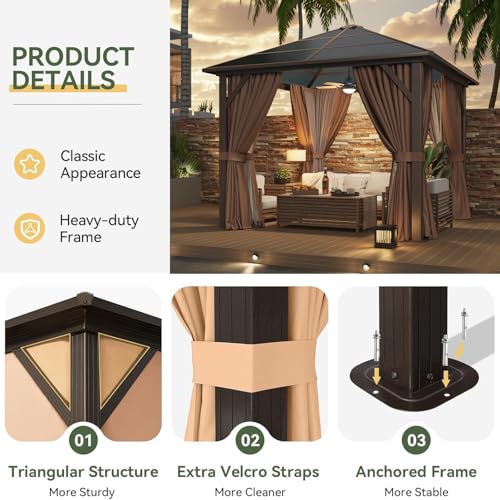
For build quality, prioritize a frame that can be securely anchored to your exact surface, has powder-coated or corrosion-resistant metal, reinforced corners, and a roof or canopy system that does not depend on flimsy clips or under-tensioned fabric. For hardtop gazebos, check roof-panel thickness, support spacing, and whether the finished structure has enough rigidity to resist racking; for soft canopies, look for heavier fabric, strong seams, and included stakes, weights, or anchor points. Owner feedback supports this focus: buyers often praise solid-feeling finished structures, heavy materials, sturdy hardtop designs, substantial shade canopies, and included curtains or netting, while stability is most reassuring when weights, stakes, or added anchors are used in normal conditions.
Assembly
A gazebo can be large and heavy, so assembly affects how quickly and safely you can start using it. Look for clear instructions, well-labeled hardware, and parts that arrive complete and undamaged; vague diagrams or reports of missing parts can turn an easy setup into a frustrating multi-day job. Consider whether you’ll need extra tools, a level surface, or another person to help before you buy.
For assembly, assume a hardtop gazebo is a multi-person construction project, not patio furniture: verify whether roof panels must be held overhead, whether holes are pre-drilled accurately, and whether the instructions show part orientation clearly. Before buying, look for labeled hardware, detailed written steps rather than picture-only diagrams, and enough clearance to assemble roof sections safely; a drill driver, sorted parts, and at least one or two helpers can make the difference between a clean build and misaligned panels. Owner sentiment is consistent with this: quick pop-up-style canopies are often described as easy to set up and take down, but many permanent gazebos are considered doable yet time-consuming, easier with multiple people, and frustrating when instructions rely heavily on pictures without clear orientation details.
Value
You want a gazebo that feels worth what you pay for its size, materials, stability, and included features, not just one that looks inexpensive upfront. Look for a strong frame, durable canopy or roof, useful extras like mosquito netting or curtains if you’ll use them, and clear warranty or replacement-part support. Watch out for low-cost options that cut corners on anchoring, weather resistance, or fabric quality, since those can cost more in repairs or early replacement.
For value, judge the gazebo by total usable shelter, included accessories, and durability expectations—not just the apparent deal. A lower-cost gazebo can be worthwhile if it includes usable netting, curtains, anchors or weights, a substantial canopy or hardtop, and a frame suitable for your climate, but budget models should not be treated like premium permanent structures in heavy rain, wind, or year-round exposure unless the specifications support that use. Owner feedback backs this distinction: many buyers feel these gazebos deliver strong value as attractive, sun-blocking patio covers and compare favorably with more expensive alternatives, especially when expectations are aligned with occasional outdoor use or budget-friendly construction rather than premium durability.
Design
A gazebo’s appearance matters because it can become a focal point in your yard, patio, or garden rather than just a functional shelter. Look for a style, roof shape, frame finish, and color that fit your home and landscaping, and watch out for designs that look attractive online but may feel too bulky, ornate, or mismatched in your actual outdoor space.
For design, choose the shape and roof style around how the gazebo will function in your space: check post placement, roof overhang, screen and curtain tracks, door locations, and whether the structure keeps the seating area open rather than boxed in. On decks and patios, confirm the roof height will clear doors, lights, grills, and eaves, and avoid designs where decorative elements reduce usable headroom or make the interior feel cramped. Owner sentiment supports the importance of appearance and livability: buyers repeatedly praise finished gazebos that make patios, decks, and yards look more polished while creating a shaded area that still feels open and usable.
Protection
Protection determines how comfortable and usable your gazebo is in real outdoor conditions, from blocking harsh sun to keeping light rain and insects from cutting gatherings short. Look for a canopy that provides broad shade and reliable water resistance, along with well-fitting bug screening if mosquitoes or flies are a concern. Watch out for thin fabrics, poor drainage, or gaps around screens, since these can reduce sun protection, leak during wet weather, or let pests in.
For protection, match the gazebo to the hazards you actually need covered: sun shade, insects, light wind, rain runoff, or temporary campsite comfort. For hot patios, look for a roof or canopy that creates deep shade; for bugs, choose full-length screened panels with tight closures; for rain, avoid flat or poorly tensioned fabric roofs where water can pool, and check seams, roof pitch, drainage paths, and support strength. Owner reports reinforce these priorities: buyers value meaningful shade from hardtops and substantial canopies, roomy screened interiors for bug-protected lounging, and stable use when anchored, but long-term rain durability is a key watch-out because pooling water, seam failure, or stressed supports can undermine the structure.
Size
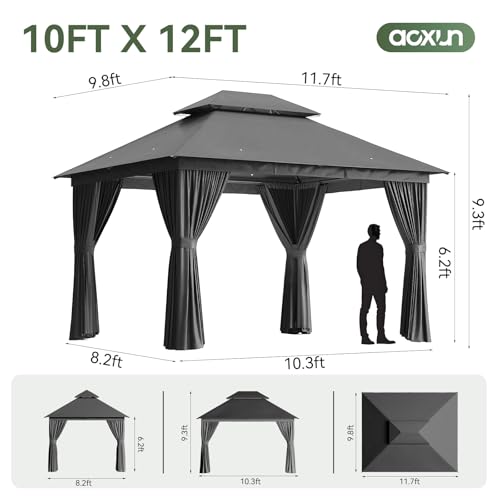
Size determines whether a gazebo will actually fit your space and how comfortable it will be once people, furniture, grills, or tables are inside. Measure the full footprint of your intended area, including clearance around the legs, roof overhang, doors, and walkways, and compare that with the usable interior space rather than relying only on the listed dimensions. Watch out for gazebos that are large enough on paper but feel cramped after seating and circulation space are accounted for.
For size, measure the usable interior footprint, not just the advertised roof or canopy dimensions. Check the distance between posts, the clearance after curtains or netting are installed, and whether your table, chairs, grill, pets, or campsite gear can fit while people still move around comfortably; a “10x10” class gazebo may feel smaller inside once posts, sloped legs, screens, and overhangs are accounted for. Owner sentiment reflects this split: many buyers find the size and shade coverage just right and appreciate roomy screened layouts for chairs, pets, or even a small tent, but some are disappointed when the advertised footprint feels noticeably smaller in real use.
1,000,000+ shoppers use Buyer's Guide every week to find the best products and services online.

Helping millions of users make smarter purchases online.


