


- Power Source: Propane, gasoline, natural gas
- Output Power Wattage: 14500 peak, 11500 running
- Run Time: Up to 12 hours
- Outlets: 4x AC; 12V, TT-30R RV, 30A twist lock
- Parallel Capable: No
- Weight: 252 lbs
- Dimensions: 28.8" wide x 28.3" deep x 25.8" tall
- Ideal For: Camping & RVs, home appliances, jobsites





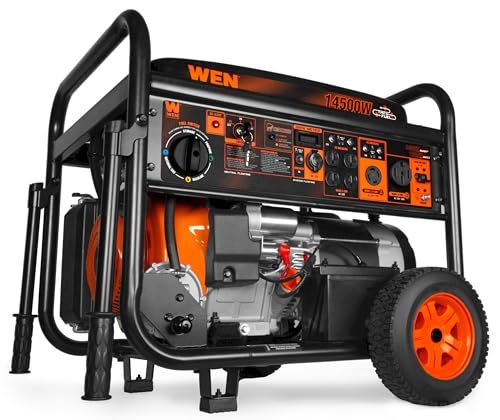
WEN TF1450X 14,500-Watt Tri-Fuel Generator
Overall Performance and Real-World Use

The WEN TF1450X 14,500-Watt Tri-Fuel Generator is built for people who want serious backup power without locking themselves into a single fuel type. Its headline feature is right in the name: tri-fuel capability. Being able to run on gasoline, propane, or natural gas changes the way you plan for outages and heavy-demand situations. Gasoline remains the easiest to find in many scenarios and often delivers the strongest peak output. Propane stores cleanly for long periods and avoids the mess and odor of stale fuel. Natural gas can be the most convenient option when you have a home gas line and want extended runtime without constantly refilling tanks. In practice, tri-fuel flexibility is not just a gimmick; it can be the difference between having power on day one of a storm and still having it on day four when local fuel supplies are limited.
Power delivery is where the TF1450X aims to justify its size. A generator in this class is meant to handle more than a few lights and phone chargers. It is designed to keep key household circuits running, and depending on your setup and what you choose to power, it can cover big-ticket loads such as a refrigerator, freezer, sump pump, furnace blower, well pump, and some air-conditioning demand. The most important thing to understand is that your total usable wattage depends on the fuel you select, and your real limit is usually the starting surge of motors and compressors. Items like refrigerators, pumps, and central air can pull a large burst of power for a second or two when starting, then settle to a lower running wattage. If your plan is to power multiple motor-driven appliances at once, the TF1450X’s high surge rating is helpful, but you still want to map out what turns on together and what can be staggered.
In terms of usability, generators at this output level are not “set it on the porch and forget it” machines. You will notice the physical footprint, the noise typical of an open-frame generator, and the need to think carefully about placement for safety and exhaust management. That said, the tradeoff is straightforward: open-frame high-output generators typically deliver more power per dollar than quieter inverter models, making them attractive for whole-home backup on a budget, jobsite use, or powering a large RV setup where noise is less of a concern than capacity.
What to Consider Before Buying (and What Matters Most)
Before buying the WEN TF1450X, the first factor to consider is your actual power requirement, not the marketing number. The most important step is to list the appliances and circuits you want to run, identify their running watts, and, crucially, their starting watts. If you are planning to connect the generator to a home, you should also decide whether you will use a transfer switch or an interlock kit. This is not an optional detail; it dictates how safely and legally you can power home circuits, and it also influences which outlets and voltage you need to prioritize. If you do not already have a transfer solution, the cost of professional installation can be a significant part of the total budget, and it should be considered alongside the generator price.
The second most important factor is fuel strategy. Tri-fuel is powerful because it gives you options, but it also invites the question of which option is your primary plan. If you intend to rely mostly on natural gas, you should confirm that your gas supply and plumbing can support the demand of a high-output generator, and you may need a properly sized hose and quick-connect arrangement. If propane is your main backup fuel, consider the tank size you will keep on hand and how you will refill it during extended outages. If gasoline is your primary, you should think about storage stabilizers, rotation schedules, and safe containers. Many people buy a tri-fuel generator and then, under pressure during a storm, realize they only prepared for one fuel type. The best value of a tri-fuel system comes when you plan for at least two.
Third, consider noise and neighborhood practicality. A generator of this size is rarely quiet, and noise becomes a real quality-of-life issue during multi-day outages, especially overnight. If you need something to run near bedrooms or in a densely populated area, you might prefer a quieter inverter generator even if it cannot run as many loads at once. With the TF1450X, the better approach is often to accept the noise and mitigate it with smart placement, distance, and an operating schedule that prioritizes heavy loads at certain times while keeping essentials going consistently.
Portability and storage are another deciding factor. High-wattage units are heavy and bulky, so you should picture where it will live when not in use and how you will move it when needed. Wheels and handles help, but you may still need a ramp, a second person, or a dedicated spot in a garage or shed. If you will be moving it frequently for work or events, pay attention to how it fits in a vehicle and whether you can load it safely.
Finally, think about maintenance and reliability habits. A generator like this rewards basic care: regular oil checks, clean air filtration, stable fuel practices, and periodic test runs. If you know you are unlikely to do maintenance, you should factor in the cost of occasional service or choose a model whose upkeep better matches your routine. The most important reliability factor is not just the brand or the engine displacement; it is whether you will actually keep it ready to run when the power goes out.
Common Questions
Can the WEN TF1450X run a whole house? It can power many homes’ essential circuits and, in some cases, more than that, but “whole house” depends on what you mean. If you want to run everything exactly as normal, including central air, electric ranges, dryers, and multiple high-demand appliances at once, you may exceed practical limits. If your goal is to run essentials such as refrigeration, lights, outlets, internet equipment, furnace blower, sump pump, and selected additional loads, it is often a strong fit when paired with a transfer switch or interlock and a sensible load plan.
Is tri-fuel really useful, or will I just use one fuel? Tri-fuel becomes most useful during long outages and supply disruptions. Gasoline may be scarce or difficult to store in large quantities, propane may be easier to stockpile, and natural gas may offer the longest continuous runtime if your utility service remains online. Even if you mostly use one fuel, having two backup options can be the difference between having power and being stuck.
Do I need a transfer switch to connect it to my house? If you want to power home circuits through your breaker panel, you should use a transfer switch or a properly installed interlock kit. This is important for safety, to prevent backfeeding, and to keep operation compliant with local codes. If you only plan to run appliances by plugging them directly into the generator with extension cords, a transfer switch is not required, but cord management and load planning become more complicated.
Will it run quieter on propane or natural gas? Fuel type can affect tone and operating behavior slightly, but you should not expect tri-fuel alone to transform an open-frame generator into a quiet machine. If noise is a top priority, a dedicated inverter generator is usually a better solution, though often with less available wattage and a higher cost per watt.
What is the biggest mistake people make with a generator like this? The biggest mistake is not planning loads and connections ahead of time. People often buy based on maximum watts and then discover they lack the right transfer equipment, the right cords, or a realistic fuel plan. A close second is inadequate maintenance, especially leaving gasoline untreated for long periods.
As a high-output tri-fuel generator, the WEN TF1450X is a compelling option for buyers who want flexible fueling and substantial backup capability without stepping up to permanently installed standby pricing. Its best fit is the user who will plan their fuel strategy, invest in a safe connection method, and manage loads intelligently. If those pieces are in place, it can be a powerful, practical cornerstone of an outage-prepared home or a demanding worksite setup.