









We also considered 10 others:


Our Top Choice
Compare Features


The order above is not editorial opinion, and it is not paid placement. It comes from what shoppers across our network actually do - which portable inverter generators they compare, and which they ultimately buy. We re-rank as new data comes in, so the long-term favorites have to keep earning their spot against new entrants. The full method, including how we make money.
Portable Inverter Generators Buyer's Guide
Portable inverter generators sit between quiet, electronics-safe power and the hard limits of runtime, surge capacity, fuel storage, and carbon-monoxide safety. The sharpest checks are whether the unit can actually start your highest-surge load, such as an RV air conditioner, refrigerator, freezer, pump, or microwave, and whether its fuel, outlets, transfer-switch compatibility, and noise profile fit where you will use it.
Reliability
You want a portable generator that feels dependable under real load, not just one that looks good on a spec sheet. Look for sturdy build quality, clean assembly, protected outlets and controls, effective airflow, and a reputation for running consistently during extended use. Be cautious of flimsy frames, poor ventilation, hard-starting engines, or reports of unstable power, since those can turn backup power into another problem.
For this category, prioritize proven cold-start and hot-restart behavior, low-oil shutdown, overload protection, CO shutoff on fuel-burning models, accessible air/oil/filter service points, and parts support for wear items like spark plugs, pull cords, batteries, and carburetor components. Avoid units that are only barely sized for your load, because running an inverter generator near maximum output for long outage periods increases heat, noise, fuel use, and nuisance shutdown risk. Owner feedback supports this emphasis: buyers repeatedly value well-built units they trust for outages, camping, docks, markets, road trips, and regular backup use, and many specifically mention simple setup and dependable starting as reasons they feel confident when power is needed quickly.
Power
You need enough power output to handle the appliances, tools, or devices you plan to run, including the higher starting watts many motors require. Look for a generator with appropriate running and surge capacity, stable power quality for sensitive electronics, and built-in protections that reduce the risk of overloads or unsafe delivery. Be careful not to size it only by peak wattage—your real-world backup needs depend on what you will run at the same time.
Match power by continuous running watts first, surge watts second, and outlet type third: sensitive electronics need clean inverter output, RV air conditioners and refrigerators need enough startup surge, and some home or business backup setups may require 240V or a transfer-switch-ready configuration rather than only standard 120V receptacles. Check whether the rated output is for gasoline, propane, or battery AC output, because propane and battery inverters can have lower sustained or surge capacity; also verify 30A RV, 120/240V, USB-C, DC, or parallel ports if those are central to your use. Owner reports align with these checks, with many buyers saying inverter power handles refrigerators, routers, lights, laptops, phones, computers, CPAP machines, small kitchen loads, RV air conditioning, freezers, internet gear, and multiple devices without issues when properly sized.
Ease
You’ll appreciate a portable generator that’s easy to set up, starts reliably, and has clear controls when power is out or you’re working away from an outlet. Look for simple starting options, intuitive gauges and outlets, accessible fuel and oil fill points, and features like remote start or connectivity if you want to operate it from a distance. Watch out for heavy, awkward designs or confusing control panels that can make day-to-day use more frustrating than the power is worth.
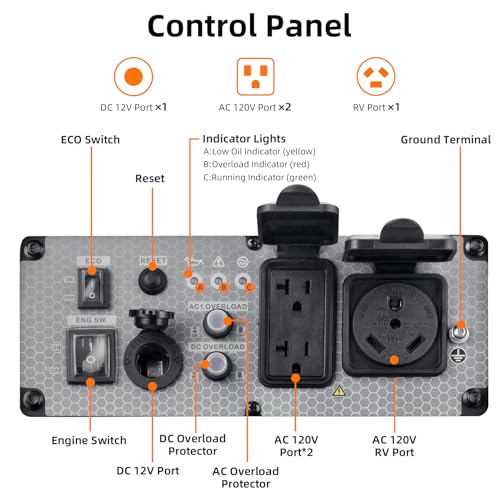
Look for the starting and setup style that fits the emergency you are planning for: electric start or remote start is useful for larger fuel units, recoil backup matters if the starter battery is dead, dual-fuel controls should be clearly labeled, and battery power stations should have intuitive displays showing watts in/out and remaining runtime. For home backup, also check wheel kits, handle height, oil-fill access, choke/fuel shutoff layout, and whether the manual clearly explains break-in, grounding, parallel operation, and safe connection to a transfer switch; avoid any setup that tempts you to run cords through unsafe paths or backfeed a panel. Owner sentiment reinforces ease as a major differentiator, with buyers often praising straightforward assembly, clear instructions, simple wheel attachment, push-button or remote starting, electric start, and quick starts on gas or propane.
Value
Portable generators can vary widely in cost once you factor in power output, fuel use, runtime, noise, build quality, and included features, so the best value is not always the cheapest option. Look for a generator that reliably covers your essential power needs without making you pay for capacity or extras you will rarely use, and watch out for low upfront prices that may come with shorter runtimes, flimsy components, or limited support.
Judge value by usable backup capability, not headline wattage: the best buy is the unit that covers your real critical loads, has the outlets and fuel type you need, is quiet enough for your location, and can be maintained over years without hard-to-find parts. Do not overpay for capacity you cannot connect to your appliances, but also avoid an undersized unit that cannot start compressors, run an RV air conditioner, support 240V needs, or maintain essential loads through an outage. Owner feedback supports this practical view of value, with shoppers praising units that deliver dependable backup power, easy starting, quiet operation, useful inverter output, portability, and performance that compares favorably with more expensive alternatives.
Noise
Noise matters because a portable generator may run for hours near your home, campsite, or work area, and a loud unit can quickly become disruptive to you and others nearby. Look for clear decibel ratings at a stated load and distance, and remember that higher output or heavier loads often mean more noise. Also consider whether the generator has loud warning beeps or alarms, since alert sounds can be especially annoying in quiet settings or overnight.
For camping, RV parks, neighborhoods, craft fairs, and overnight outage use, check real-world decibel expectations at partial load, whether Eco mode is available, and whether the generator becomes much louder when a compressor or microwave kicks on. Larger engines running lightly can sometimes sound calmer than small units straining near maximum, so size for the load rather than chasing the smallest frame; also remember that fuel-burning generators still must be placed outdoors and away from openings, even if they are quiet. Owner sentiment strongly supports noise as a key buying factor: buyers often describe inverter models as quiet enough near trailers, campsites, events, and homes without drowning out conversation or disturbing neighbors, especially compared with traditional generators.
Fuel
Your fuel choice affects how long you can run the generator, how easy it is to refuel in an outage, and how much flexibility you have for camping, job sites, or home backup. Look for fuel-efficient operation and consider whether dual-fuel or tri-fuel versatility is worth it, but watch for lower power output on some fuels and the storage, safety, and availability trade-offs of gasoline, propane, and natural gas.
Choose the fuel system around storage and runtime: gasoline gives strong output but degrades in storage unless treated, propane stores longer and is cleaner to handle but may reduce output and can struggle in cold weather or with undersized tanks/regulators, and battery power stations avoid fumes but require recharge planning from wall, car, solar, or another generator. For fuel-burning units, check tank size, runtime at 25% and 50% load, fuel shutoff, carburetor drain, oil capacity, and whether propane hoses/regulators are included and rated for the unit; for battery units, check usable watt-hours, AC inverter rating, solar input limit, and recharge time. Owner reports back up these tradeoffs: dual-fuel flexibility is widely appreciated for backup planning, long tank life and efficient running are praised, battery runtime is valued for overnight camping and outages, and solar/USB/outlet options add flexibility, though propane performance can be mixed if the draw setup is not right.
1,000,000+ shoppers use Buyer's Guide every week to find the best products and services online.

Helping millions of users make smarter purchases online.


