

Installation is straightforward when mounted into studs, and buyers describe the setup as easy and practical for their space.
The PEGZONE bike racks work well for organizing garage space, with buyers using them to get multiple bikes off the floor and appreciating the swivel feature.
The 4-pack is seen as a strong value, especially compared with more expensive bike-rack options.
Installation is straightforward when mounted into studs, and buyers describe the setup as easy and practical for their space.
The PEGZONE bike racks work well for organizing garage space, with buyers using them to get multiple bikes off the floor and appreciating the swivel feature.
The 4-pack is seen as a strong value, especially compared with more expensive bike-rack options.


Installation is straightforward when mounted into studs, and buyers describe the setup as easy and practical for their space.
The PEGZONE bike racks work well for organizing garage space, with buyers using them to get multiple bikes off the floor and appreciating the swivel feature.
The 4-pack is seen as a strong value, especially compared with more expensive bike-rack options.
The MONTEK bike wall mount is consistently praised as quick and straightforward to install, with buyers describing setup as simple once the included parts are on hand.
The build feels sturdy and well made, holding bikes securely without wobbling or showing stress during repeated use.
The swivel design is a major space saver, letting bikes sit close to the wall and freeing up garage floor space.
The MONTEK bike wall mount is consistently praised as quick and straightforward to install, with buyers describing setup as simple once the included parts are on hand.
The build feels sturdy and well made, holding bikes securely without wobbling or showing stress during repeated use.
The swivel design is a major space saver, letting bikes sit close to the wall and freeing up garage floor space.


The MONTEK bike wall mount is consistently praised as quick and straightforward to install, with buyers describing setup as simple once the included parts are on hand.
The build feels sturdy and well made, holding bikes securely without wobbling or showing stress during repeated use.
The swivel design is a major space saver, letting bikes sit close to the wall and freeing up garage floor space.
The UmeHome bike hanger does its job reliably enough that some buyers come back for more units to mount multiple bikes.
It meaningfully frees up garage space by getting bikes off the floor and onto the wall.
The UmeHome bike hanger does its job reliably enough that some buyers come back for more units to mount multiple bikes.
It meaningfully frees up garage space by getting bikes off the floor and onto the wall.


The UmeHome bike hanger does its job reliably enough that some buyers come back for more units to mount multiple bikes.
It meaningfully frees up garage space by getting bikes off the floor and onto the wall.


The construction comes across as sturdy and solid once mounted properly, giving buyers confidence in hanging multiple bikes overhead.
The Urban Deco ceiling bike rack is seen as a reliable, useful garage organizer that gets bikes off the floor and makes the space feel much more orderly.
The construction comes across as sturdy and solid once mounted properly, giving buyers confidence in hanging multiple bikes overhead.
The Urban Deco ceiling bike rack is seen as a reliable, useful garage organizer that gets bikes off the floor and makes the space feel much more orderly.
The construction comes across as sturdy and solid once mounted properly, giving buyers confidence in hanging multiple bikes overhead.
The Urban Deco ceiling bike rack is seen as a reliable, useful garage organizer that gets bikes off the floor and makes the space feel much more orderly.
The MONTEK wall mount is consistently praised as easy to install, with clear directions, included hardware, and straightforward stud mounting.
The vertical storage setup helps get bikes off the floor and makes garages feel more organized and usable.
The two-pack is viewed as a strong value for organizing multiple bikes without sacrificing sturdiness or ease of use.
The MONTEK wall mount is consistently praised as easy to install, with clear directions, included hardware, and straightforward stud mounting.
The vertical storage setup helps get bikes off the floor and makes garages feel more organized and usable.
The two-pack is viewed as a strong value for organizing multiple bikes without sacrificing sturdiness or ease of use.


The MONTEK wall mount is consistently praised as easy to install, with clear directions, included hardware, and straightforward stud mounting.
The vertical storage setup helps get bikes off the floor and makes garages feel more organized and usable.
The two-pack is viewed as a strong value for organizing multiple bikes without sacrificing sturdiness or ease of use.
The Ultrawall bike rack is widely appreciated as a sturdy, well-made storage solution that feels strong enough for regular garage use.
Capacity is a real strength, though many buyers find four or five larger bikes more realistic than six full-size bikes.
The rack does a strong job freeing up garage floor space and keeping multiple bikes organized on the wall.
The Ultrawall bike rack is widely appreciated as a sturdy, well-made storage solution that feels strong enough for regular garage use.
Capacity is a real strength, though many buyers find four or five larger bikes more realistic than six full-size bikes.
The rack does a strong job freeing up garage floor space and keeping multiple bikes organized on the wall.


The Ultrawall bike rack is widely appreciated as a sturdy, well-made storage solution that feels strong enough for regular garage use.
Capacity is a real strength, though many buyers find four or five larger bikes more realistic than six full-size bikes.
The rack does a strong job freeing up garage floor space and keeping multiple bikes organized on the wall.
The MONTEK bike wall mount is consistently praised as quick and straightforward to install, with buyers describing setup as simple once the included parts are on hand.
The build feels sturdy and well made, holding bikes securely without wobbling or showing stress during repeated use.
The swivel design is a major space saver, letting bikes sit close to the wall and freeing up garage floor space.
The MONTEK bike wall mount is consistently praised as quick and straightforward to install, with buyers describing setup as simple once the included parts are on hand.
The build feels sturdy and well made, holding bikes securely without wobbling or showing stress during repeated use.
The swivel design is a major space saver, letting bikes sit close to the wall and freeing up garage floor space.


The MONTEK bike wall mount is consistently praised as quick and straightforward to install, with buyers describing setup as simple once the included parts are on hand.
The build feels sturdy and well made, holding bikes securely without wobbling or showing stress during repeated use.
The swivel design is a major space saver, letting bikes sit close to the wall and freeing up garage floor space.
The Gootus wall mount is widely liked for being straightforward to install, especially when mounted properly into a stud.
The hanger feels sturdy in normal use and holds bikes securely once it is mounted correctly.
It does a good job creating usable indoor storage space and keeping a bike accessible without cluttering the garage floor.
The Gootus wall mount is widely liked for being straightforward to install, especially when mounted properly into a stud.
The hanger feels sturdy in normal use and holds bikes securely once it is mounted correctly.
It does a good job creating usable indoor storage space and keeping a bike accessible without cluttering the garage floor.


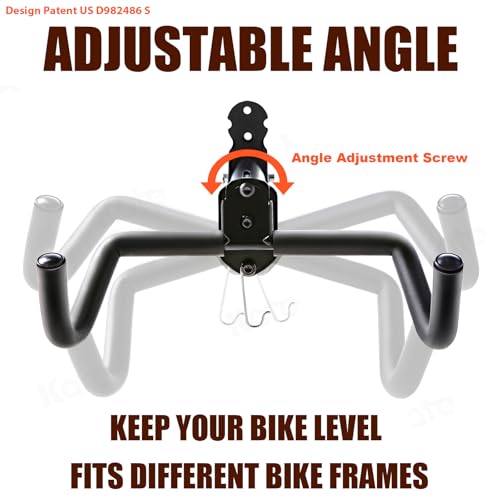

The Gootus wall mount is widely liked for being straightforward to install, especially when mounted properly into a stud.
The hanger feels sturdy in normal use and holds bikes securely once it is mounted correctly.
It does a good job creating usable indoor storage space and keeping a bike accessible without cluttering the garage floor.
The Sttoraboks vertical bike stand is widely received as straightforward to build, with clear instructions and parts that go together quickly.
The stand feels sturdy and well-built once the bike is strapped in, even for larger or heavier bikes.
The Sttoraboks vertical bike stand is widely received as straightforward to build, with clear instructions and parts that go together quickly.
The stand feels sturdy and well-built once the bike is strapped in, even for larger or heavier bikes.


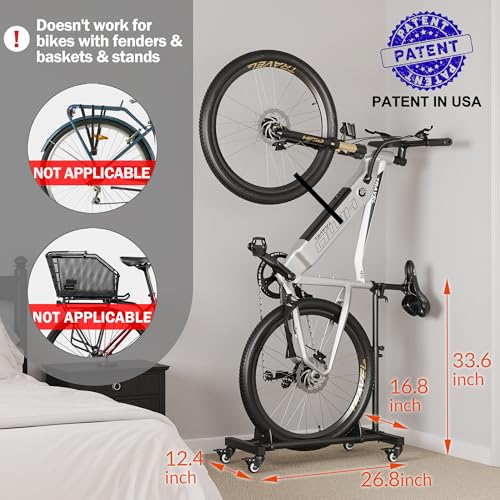


The Sttoraboks vertical bike stand is widely received as straightforward to build, with clear instructions and parts that go together quickly.
The stand feels sturdy and well-built once the bike is strapped in, even for larger or heavier bikes.
The MONTEK swivel wall mount is widely liked for straightforward installation and everyday use, especially because the bike can roll on after lifting only the front wheel.
Build quality and sturdiness come through strongly, with buyers trusting it for large mountain bikes and even heavier e-bikes when mounted properly.
The swivel design is a major space saver in tight garages or sheds because bikes can be pushed sideways toward the wall or out of the way.
The MONTEK swivel wall mount is widely liked for straightforward installation and everyday use, especially because the bike can roll on after lifting only the front wheel.
Build quality and sturdiness come through strongly, with buyers trusting it for large mountain bikes and even heavier e-bikes when mounted properly.
The swivel design is a major space saver in tight garages or sheds because bikes can be pushed sideways toward the wall or out of the way.


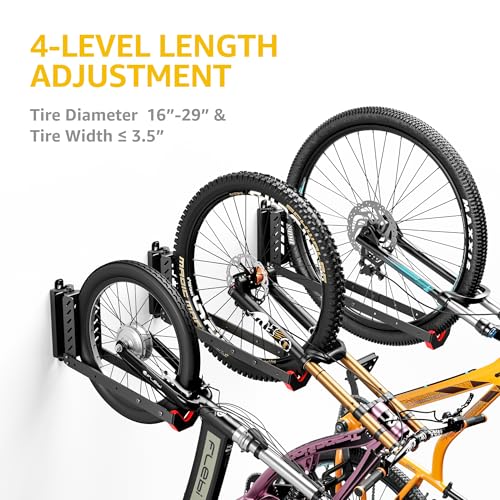

The MONTEK swivel wall mount is widely liked for straightforward installation and everyday use, especially because the bike can roll on after lifting only the front wheel.
Build quality and sturdiness come through strongly, with buyers trusting it for large mountain bikes and even heavier e-bikes when mounted properly.
The swivel design is a major space saver in tight garages or sheds because bikes can be pushed sideways toward the wall or out of the way.
We also considered 10 others:


Our Top Choice
Installation is straightforward when mounted into studs, and buyers describe the setup as easy and practical for their space.
The PEGZONE bike racks work well for organizing garage space, with buyers using them to get multiple bikes off the floor and appreciating the swivel feature.
The 4-pack is seen as a strong value, especially compared with more expensive bike-rack options.
Installation is straightforward when mounted into studs, and buyers describe the setup as easy and practical for their space.
The PEGZONE bike racks work well for organizing garage space, with buyers using them to get multiple bikes off the floor and appreciating the swivel feature.
The 4-pack is seen as a strong value, especially compared with more expensive bike-rack options.
Installation is straightforward when mounted into studs, and buyers describe the setup as easy and practical for their space.
The PEGZONE bike racks work well for organizing garage space, with buyers using them to get multiple bikes off the floor and appreciating the swivel feature.
The 4-pack is seen as a strong value, especially compared with more expensive bike-rack options.
The order above is not editorial opinion, and it is not paid placement. It comes from what shoppers across our network actually do - which garage bike storage they compare, and which they ultimately buy. We re-rank as new data comes in, so the long-term favorites have to keep earning their spot against new entrants. The full method, including how we make money.
Garage Bike Storage Buyer's Guide
Garage bike storage is a tradeoff between reclaiming floor space and safely suspending awkward, heavy, handlebar-wide objects from your wall or ceiling. The sharpest concerns are secure anchoring into real structure and realistic bike spacing, because a rack that looks compact online can still crowd a garage or loosen if mounted poorly.
Mount Security
A bike rack is only as safe as the structure holding it, especially when bikes are lifted overhead or cantilevered away from the wall. Poor anchoring can loosen over time from loading, unloading, and side-to-side movement, even if the rack itself feels strong at first.
For garage bike storage, treat the wall or ceiling structure as part of the product: look for racks that mount directly into studs, joists, masonry, or a rated track system, and avoid relying on drywall anchors for adult bikes. Check whether the bracket footprint spreads load over multiple fasteners, whether hardware matches your wall type, and whether you can upgrade lag screws or anchors if the included hardware looks undersized. Owner feedback strongly supports this priority: buyers repeatedly found racks easy to install and secure when mounted into studs, while the main caution was that some included screws inspired less confidence and were replaced for a stronger hold.
Build Strength
Garage racks endure repeated lifting, twisting, and accidental bumps, so flimsy hooks or thin brackets can bend or loosen before the advertised capacity is reached. Strong construction also protects wheels, frames, and vehicles parked nearby by keeping bikes stable after mounting.
Choose thick steel, well-welded or heavily bolted joints, coated hooks, and clear per-bike and total weight ratings that match your heaviest bikes—not just the number of bikes advertised. Pay special attention if storing e-bikes, downhill bikes, cruisers, or bikes with accessories, because their weight and tire profiles can exceed what lightweight hooks tolerate. Owners consistently praised solid, well-made racks that felt strong enough for regular garage use, and ceiling systems earned confidence only once properly mounted; capacity comments also suggest that real-world bike size and weight matter more than the headline count.
Real Capacity
Bike storage capacity is often limited by handlebars and pedals colliding, not by hook count alone. A rack that technically holds many bikes can still be frustrating if loading one bike blocks access to the others or intrudes into parking space.
Measure handlebar width, tire width, wheelbase, ceiling height, and door/vehicle clearance before choosing a rack, then assume the practical capacity may be lower for full-size mountain bikes, fat-tire bikes, kids’ bikes with wide bars, or bikes with baskets. Vertical wall storage saves floor space but needs enough wall height and lifting room; ceiling storage frees the most floor area but must not interfere with garage doors, lights, open car hatches, or walking paths. Owner sentiment backs this practical view: buyers loved getting multiple bikes off the floor and making garages usable again, but many found that four or five larger bikes can be more realistic than a six-bike claim.
Access Control
The best garage storage is not just compact when empty; it stays usable when all bikes are loaded. Adjustability helps prevent handlebar tangles, makes individual bikes easier to remove, and lets the system adapt as a household’s bikes change.
Look for swivel arms, sliding rails, or adjustable hooks if your garage is narrow, shared with cars, or used for tools and storage bins. Swiveling wall hooks let bikes pivot flatter against the wall after loading, while adjustable ceiling or rail hooks help stagger handlebars and adapt to different wheel sizes; avoid fixed hook spacing if your bikes vary a lot. Owners highlighted swivel designs as a standout because bikes could move side to side and tuck closer to the wall, and adjustable hooks were valued for hanging by one or both wheels depending on the layout.
Daily Use
A rack that is hard to load will be bypassed, leaving bikes back on the floor. Daily usability depends on lifting height, hook angle, bike spacing, and whether the user can remove one bike without wrestling the rest.
Match the rack style to who will use it: vertical hooks require lifting the front wheel, ceiling racks may require lifting bikes overhead, and high mounts can be awkward for children, shorter riders, or heavy bikes. Favor clear instructions, included templates or level-friendly brackets, rubberized contact points, and hook shapes that capture the wheel without forcing the rim or spokes into a strained position. Owners often described installation as straightforward with clear directions and practical setup, and they continued to value systems that made the garage more organized rather than turning bike retrieval into a chore.
Storage Value
Garage bike storage is a small purchase that can affect parking, tool access, and bike protection every day. Paying for capacity you cannot safely mount or conveniently use is poor value, while a sturdy system that fits the space can replace clutter with predictable organization.
Judge value by secure bike positions, usable hardware, durability, and how much floor space you actually reclaim—not simply by the lowest cost per hook. Multi-packs can be excellent if every mount can reach a stud or joist in your garage layout; otherwise, unused hooks or crowded spacing reduce the savings. Owners repeatedly viewed multi-bike packs as strong value, especially when they combined sturdiness, easy setup, and meaningful space savings without feeling flimsy.
1,000,000+ shoppers use Buyer's Guide every week to find the best products and services online.

Helping millions of users make smarter purchases online.


