












We also considered 10 others:


Our Top Choice
Compare Features


The order above is not editorial opinion, and it is not paid placement. It comes from what shoppers across our network actually do - which food dehydrators for cookies they compare, and which they ultimately buy. We re-rank as new data comes in, so the long-term favorites have to keep earning their spot against new entrants. The full method, including how we make money.
Food Dehydrators for Cookies Buyer's Guide
For cookies, a dehydrator is less about making tough foods shelf-stable and more about controlled, gentle drying: setting royal icing, firming decorated sugar cookies, drying meringue-style pieces, or restoring crispness without browning. The sharpest concerns are low, accurate heat that will not melt fat, chocolate, or icing, plus even horizontal airflow that dries decorations without cracking, skinning, or blowing lightweight details out of place.
Drying
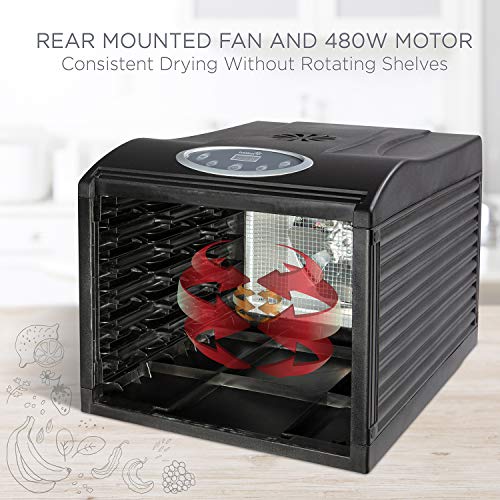
Even drying is what separates a useful dehydrator from one that leaves you with leathery edges, sticky centers, or unsafe under-dried jerky. Look for strong, consistent airflow and dependable temperature control, especially if you plan to dry thicker fruit slices, herbs, or meat. Watch for units that require frequent tray rotation or produce uneven results across racks, since that can add hassle and make drying times harder to predict.
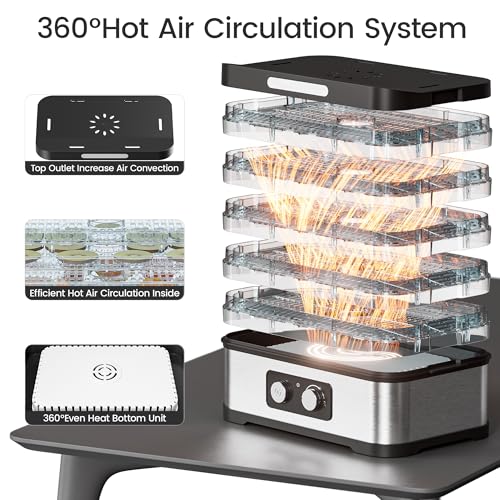
Choose a dehydrator that can hold genuinely low temperatures and maintain steady, even airflow across every tray, because cookie work often needs gentle drying rather than aggressive moisture removal. For decorated cookies, look for horizontal airflow, tight temperature increments, and enough clearance so iced tops, piped details, and sprinkles do not touch the tray above; avoid units that run hot, have obvious hot spots, or require frequent tray rotation, since those can dull icing sheen, warp shapes, crack royal icing, or soften butter-heavy cookies before they dry. Owner feedback supports prioritizing even drying: buyers commonly report reliable results across full trays of fruit, herbs, jerky, vegetables, snacks, and some cookie use, with several noting consistent, thorough drying without much babysitting.
Usability
A dehydrator that’s easy to use is more likely to become part of your routine instead of ending up stored away. Look for straightforward controls, clear temperature and timer settings, trays that slide in and out smoothly, and a layout that makes loading, checking, and cleaning simple. Watch out for cramped trays, confusing buttons, or designs that require a lot of rearranging during drying.
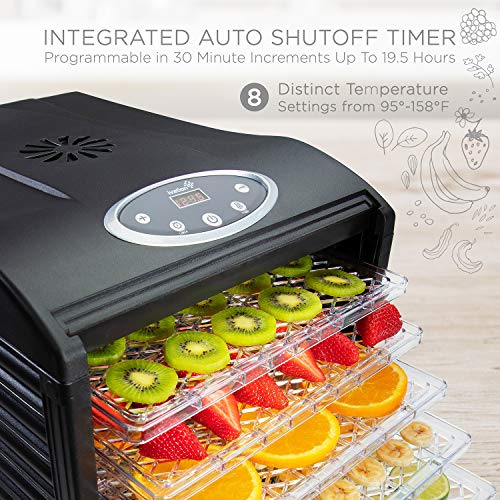
For cookie batches, usability hinges on precise time-and-temperature control, not just an on/off switch. Look for a clear digital timer, auto shutoff, low-temperature settings, and controls that are easy to adjust mid-batch, since icing may need a short set followed by a longer gentle dry; a viewing window or interior light is useful so you can check sheen, flooding, and lifted edges without opening the door and disturbing humidity. Owners generally reinforce this: they tend to appreciate straightforward setup, simple time-and-temperature controls, quiet background operation, useful lighting where included, and set-and-forget timers with auto shutoff for long drying sessions.
Build
A well-built dehydrator matters because long drying runs can expose weak hinges, flimsy trays, poor seals, and noisy or inconsistent fans. Look for sturdy materials, trays that slide smoothly without warping, a door that closes securely, and controls that feel durable; be cautious of units that flex, rattle, or seem likely to wear out with frequent use.
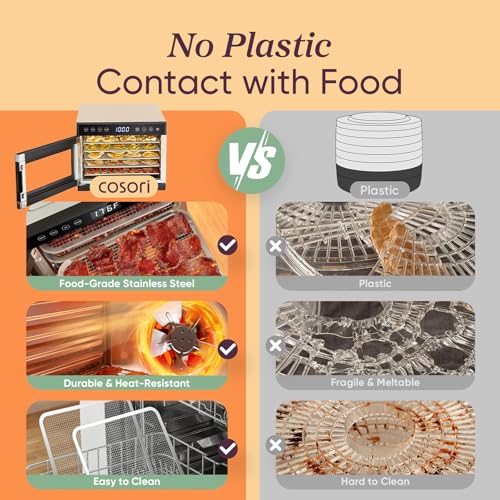
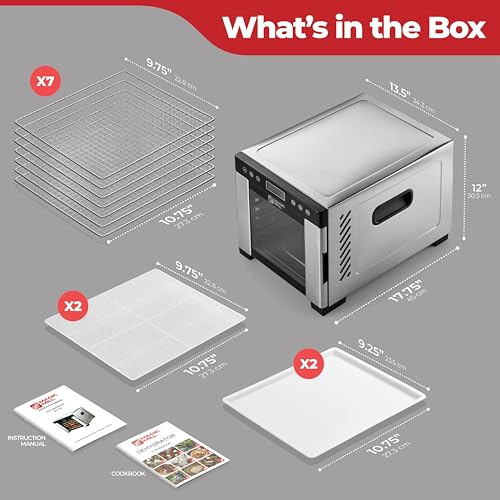
Prioritize a rigid cabinet and flat, non-warping trays, because cookies need to sit level while icing settles and dries. Stainless steel racks or sturdy food-safe trays are preferable for decorated cookies, but check the mesh spacing: very open racks may need silicone mats, parchment, or fine screens for small cookies, transfers, sprinkles, and delicate piped pieces; avoid flimsy stackable trays that flex, bow, or reduce clearance when loaded. Owner sentiment backs the value of sturdier construction, with buyers often describing stainless-steel builds, racks, trays, and screens as durable, high quality, easy to handle, and reliable through repeated drying jobs.
Cleaning
Cleaning matters because dehydrated foods can leave sticky sugars, crumbs, oils, and spice residue on trays, liners, and the interior, and a hard-to-clean machine may discourage regular use. Look for trays and liners that remove easily, fit in your sink or dishwasher if that’s important to you, and have minimal seams or tight corners where food can get trapped. Watch out for interiors that are awkward to reach or fan/heating areas that are exposed to drips, since those can make cleanup slower and more frustrating.
Cookie use creates sticky sugar residue, food coloring smears, glitter dust, crumbs, and melted chocolate or jam, so cleaning should be assessed before capacity. Look for removable trays, smooth interior walls, dishwasher-safe components if you plan to use them that way, and compatible nonstick sheets or silicone liners; avoid designs with deep seams, exposed crevices, or hard-to-remove fans where icing dust and crumbs can collect. Owners consistently describe cleanup as easier when trays are removable, stainless steel, or dishwasher-safe, and several note that simpler designs and fully dried foods leave less mess than older or more awkward stackable units.
Size
Size determines both how much counter or storage space a dehydrator will take up and how much food you can dry in one batch. Look for enough tray area for your typical use—small snacks, garden harvests, jerky, or meal prep—and watch for models that seem compact but have limited usable spacing between trays. If you plan to dry bulky foods or large batches, capacity matters as much as footprint.
Size should match the cookie format you actually make: a few snack cookies need little space, but decorated sugar cookies need wide, flat tray area and vertical clearance more than raw cubic capacity. Measure your common cookie diameter and icing height against tray dimensions and tray spacing, and consider whether full-size rounds, plaques, or cookie sets can dry without crowding; crowding can trap humidity and lead to uneven icing set. Owner feedback reflects this tradeoff: shoppers like compact units for counters, storage, RVs, and small batches, while larger-capacity models help with harvest-sized or bigger batches but can be bulky in some kitchens.
Value
You want a dehydrator whose price matches its usable capacity, drying consistency, controls, and durability—not just one with the lowest sticker price. Look for enough tray space and features you’ll actually use, such as adjustable temperature settings and easy cleaning, while watching out for cheap models that dry unevenly, feel flimsy, or require frequent batch shuffling.
The best value for cookie work is not the biggest or hottest dehydrator; it is the unit that gives controlled low heat, even airflow, flat trays, easy cleanup, and enough tray clearance for decorated batches. Paying for extreme maximum temperature or jerky-focused capacity may be wasted if your main use is icing and delicate cookies, while underbuying can lead to cracked icing, rotating trays, or multiple drying rounds. Owner sentiment generally supports buying for dependable core performance: buyers often feel no-frills machines, sturdy stainless builds, useful capacity, easy cleanup, and repeated reliable snack-making make a dehydrator worthwhile over time.
1,000,000+ shoppers use Buyer's Guide every week to find the best products and services online.

Helping millions of users make smarter purchases online.


