













We also considered 10 others:


Our Top Choice
Compare Features


The order above is not editorial opinion, and it is not paid placement. It comes from what shoppers across our network actually do - which foldable treadmills with incline they compare, and which they ultimately buy. We re-rank as new data comes in, so the long-term favorites have to keep earning their spot against new entrants. The full method, including how we make money.
Foldable Treadmills with Incline Buyer's Guide
Foldable treadmills with incline trade full-size training feel for compact storage, so the key question is whether the incline system, deck, and frame stay safe and useful when the machine is folded, moved, and used in tight spaces. Pay closest attention to incline type, belt size, stability under grade, and noise or vibration transfer—these are where compact incline models most often disappoint.
Incline
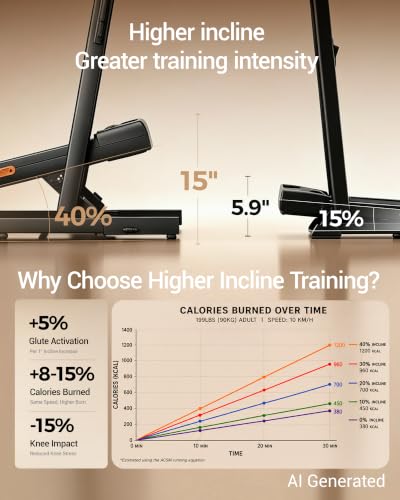
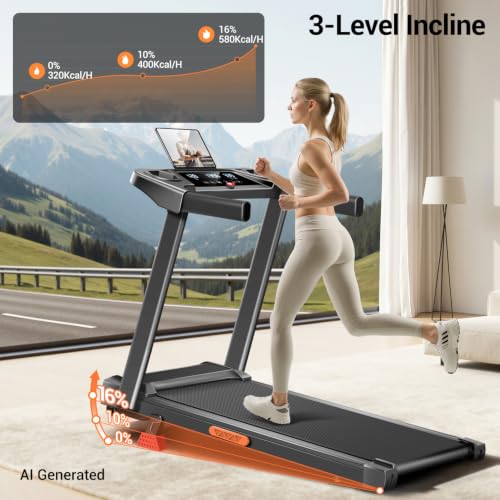
Incline matters because it lets you make walking or running more challenging without always increasing speed, helping simulate hills and add variety to workouts. Look for a treadmill with a range that fits your goals, smooth incline adjustment that doesn’t interrupt your stride, and controls that are easy to use mid-workout. Be cautious of machines with very limited incline or slow, noisy adjustments if you plan to use hill training regularly.
Look for an incline system that matches how you will train: automatic incline is best if you want to change grade mid-workout without stepping off, while manual incline is acceptable only if you are fine stopping to adjust the deck. For this category, verify the maximum incline, whether the incline works at your intended walking or jogging speeds, and whether the frame remains stable at higher grades; compact machines can feel very different once the front end is raised. Owner feedback supports this focus: buyers often value automatic incline and speed controls because they add variety without interrupting a session, and higher auto-incline settings are repeatedly described as making compact treadmills feel more intense and versatile without requiring a full-size unit.
Build
A treadmill’s build quality affects how safe, stable, and dependable it feels under regular use, especially during faster runs or incline workouts. Look for a sturdy frame, a deck that doesn’t flex or wobble, smooth belt operation, and components that feel solid rather than lightweight or rattly. Watch out for machines that shake at speed, feel unstable under your stride, or show signs of loose parts and inconsistent performance.
Prioritize frame rigidity, deck support, motor smoothness, and stated user-weight capacity over foldability alone, because incline increases load on the belt, motor, and front structure. Avoid very light frames if you plan to jog, use steep incline often, or are near the machine’s weight limit; wobble, belt hesitation, or flex can become more noticeable on a grade. Owner sentiment is generally encouraging here, with many buyers describing these compact incline treadmills as sturdy, smooth-running, dependable home machines, including reports that some remain stable during regular use and even under heavier users.
Size
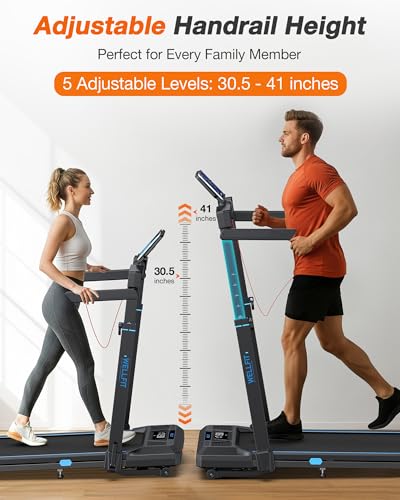
You’ll want to measure both your workout space and storage space, since a treadmill’s footprint can feel much larger once you allow room for safe entry, exit, and belt clearance. If you need it for home use in a shared room, look for compact size, reliable foldability, and built-in transport wheels, but watch out for machines that are technically portable yet still too heavy or awkward to move often.
Check both the folded footprint and the usable belt dimensions, not just the overall compact size. Incline walking shortens your effective stride position and can push you toward the rear of the deck, so taller users, fast walkers, and light joggers should look for a longer and wider belt rather than the smallest possible walking pad. Owners consistently like the compact and foldable designs for bedrooms, offices, small rooms, under-desk use, and storage under furniture, while feedback also suggests that roomier belts—such as around 48 by 18 inches—feel more comfortable for walking and light jogging.
Ease
You’ll use a treadmill more consistently if the basic controls feel obvious: starting, stopping, changing speed or incline, and switching programs should be quick and intuitive. Look for clear buttons or a responsive touchscreen, easy adjustability while you’re moving, and safety features you can activate without thinking. Watch out for cluttered menus, laggy controls, or features that require too many steps just to begin a simple workout.
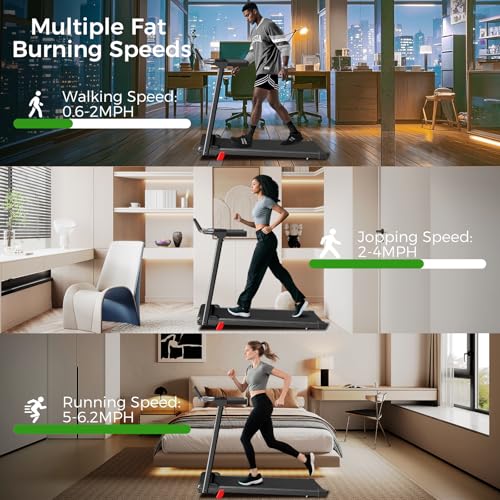
Choose controls that are reachable and simple while you are moving on an incline, especially if the machine will be used under a desk or without a full console. Remote controls, handrail buttons, clear displays, and quick speed/incline changes matter because stopping abruptly on a raised deck can feel awkward; also check whether modes like walking, jogging, hiking, and under-desk use are easy to switch between. Owner comments back this up, with many buyers praising straightforward setup, simple displays, easy speed and incline adjustment, and controls that let them tailor workouts without much interruption.
Noise
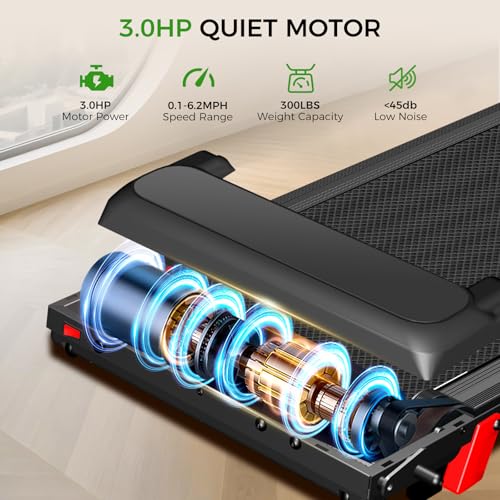
Noise level matters because a treadmill that sounds loud underfoot or has a whining motor can disturb others, make shared spaces less usable, and discourage you from working out at home. Look for quiet operation from both the motor and belt deck, and watch for reports of thumping, vibration, or rattling at the speeds you plan to use—running usually reveals noise issues more than walking.
For apartments, upstairs rooms, offices, and shared spaces, evaluate noise as vibration plus motor sound, not just belt loudness. Incline can increase footfall impact and motor strain, so look for a stable frame, smooth belt movement, leveling feet, and consider a mat if the treadmill will sit on hard floors or above neighbors. Owner sentiment is strongly positive on this dimension: buyers often report quiet, smooth operation suitable for work calls, TV, shared home use, office walking, and even upstairs use where vibration was expected to be worse.
Setup
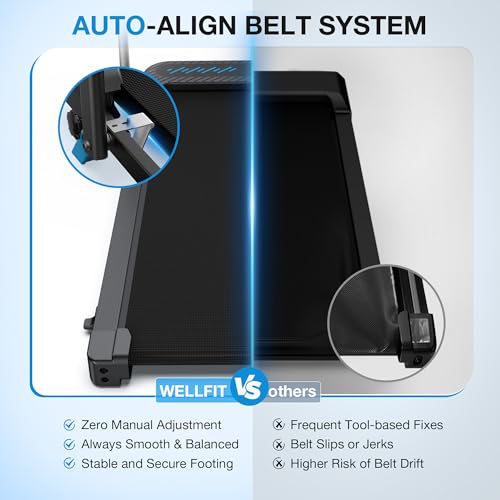
Setup matters because treadmills are large, heavy machines, and a difficult assembly can turn delivery day into a frustrating project. Look for clear instructions, labeled hardware, manageable part sizes, and whether tools or two-person lifting are required; also watch for folding, leveling, belt alignment, and calibration steps before first use.
Before buying, confirm the delivered weight, folded handling method, wheel placement, clearance needed to unfold, and whether incline components require any extra assembly or calibration. A foldable incline treadmill can still be heavy and awkward to position, so plan the route to the room, measure storage height under beds or furniture, and expect that some units may need two people for placement even if assembly is minimal. Owners commonly report quick, low-effort setup, clear instructions, little assembly, and easy first use, with the main caveat that the unit’s weight can make moving it into place more demanding than the assembly itself.
1,000,000+ shoppers use Buyer's Guide every week to find the best products and services online.

Helping millions of users make smarter purchases online.


