


- Kills: Fleas, ticks, mosquitoes
- Protection: Up to 3 months
- Works in: As little as 1 -2 days
- Application: Chewable
- For Dogs: All sizes & ages





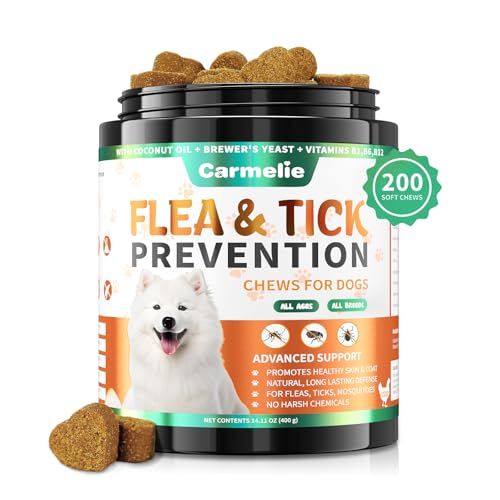
Carmelie Flea and Tick Prevention Chews
Overall Review and What to Expect

Carmelie Flea and Tick Prevention Chews are positioned as an easy, dog-friendly way to help manage flea and tick problems without the mess that sometimes comes with topical applications. The biggest appeal of a chew format is convenience: many dogs accept a soft chew more readily than having liquid applied to the skin, and owners avoid the waiting period and residue that can come with spot-on products. In day-to-day use, that convenience matters because parasite control is not a one-time task; it is something you keep up with consistently, especially during warmer months or in regions where fleas and ticks are active most of the year.
In evaluating these chews, the key thing to keep in mind is what “prevention” realistically means for your household. Dogs can encounter parasites in parks, yards, daycare settings, grooming salons, or even from visiting pets. A prevention chew is typically part of an overall strategy that may also include vacuuming, washing bedding, yard maintenance, and possibly treating other pets in the home. If your environment has heavy flea pressure, a chew alone may not be the only step you need, but it can be a helpful core routine for many owners when used consistently and with appropriate expectations.
Palatability is another practical point that often determines whether a product becomes a habit or a hassle. A chew that your dog willingly eats reduces missed doses and makes it more likely you’ll follow the schedule correctly. If your dog is finicky, has food sensitivities, or refuses certain textures, that becomes a meaningful part of the decision. For dogs with allergies or stomach sensitivity, the ingredient profile, flavoring, and any added fillers are worth a closer look, since even well-intentioned supplements or chews can occasionally cause digestive upset in some pets.
Finally, it helps to understand the role these chews play relative to veterinary prescription options. Many owners compare chews to prescription preventatives that have extensive clinical testing and clearly defined active ingredients and duration claims. If your dog has had tick-borne illness in the past, lives in a high-tick region, or you need a product with strong, clearly documented kill-and-prevent timelines, it’s reasonable to discuss options with a veterinarian before relying on any over-the-counter chew as your primary defense. For lower-risk settings or as part of a layered approach, Carmelie chews may fit the needs of owners who prefer a chewable routine and want a simpler, more comfortable experience than topical alternatives.
Factors to Consider Before Buying and What Matters Most
The most important factor to consider is whether the product’s protection level matches your local parasite risk. Fleas can be a nuisance, but ticks can carry serious diseases, and the intensity of exposure varies dramatically by region and season. If you regularly hike in wooded areas, live near tall grass, or reside in a place where ticks are prevalent, you may want the most robust, veterinarian-recommended option you can get and may use additional measures like tick checks and repellant gear. If your dog’s exposure is lighter, the balance of convenience and routine support becomes more attractive.
Dosing suitability based on your dog’s size, age, and health status is also critical. Many chew products are weight-dependent, and giving an incorrect amount can reduce effectiveness or increase the likelihood of stomach upset. Before purchasing, verify the recommended weight range and whether the product is formulated for puppies, adults, or seniors. If your dog is pregnant, nursing, on other medications, or has chronic conditions, it’s smart to consult your veterinarian, as even seemingly mild products can interact with individual health circumstances.
Ingredient transparency is another major purchase decision. Look for clearly stated active components, any botanicals, and the full ingredient list, especially if your dog has sensitivities. Owners often prefer products that are explicit about what is doing the “work,” how the chew is intended to function, and how frequently it should be given. If the labeling is vague, it becomes harder to judge value and reliability. Along the same lines, consider whether the product is intended to repel parasites, interrupt their lifecycle, support the skin and coat as a secondary defense, or function as a broader wellness chew that includes pest-related claims. Knowing the intended mechanism helps you decide whether it fits your goals.
Consistency and schedule fit may sound minor, but it often determines real-world success. If a chew is meant to be given daily, it requires a different commitment than a monthly routine. Owners with busy schedules may find that daily dosing improves adherence because it can be tied to meals, while others prefer monthly routines to reduce the chance of forgetting. The best product is the one you will administer correctly, on time, and for the full season your dog needs coverage.
Value is important, but value is not just price. Consider cost per day or cost per month, how many chews come in a package, whether multiple dogs will require multiple packs, and whether you might need complementary environmental control if fleas are already established. If your household has recurring infestations, spending slightly more on a plan that reliably breaks the cycle can be less expensive than repeatedly switching products or treating the home after problems get out of hand.
Another factor that matters is your dog’s behavior and lifestyle. Dogs that swim frequently or get bathed often may lead owners to prefer chews over topicals, since water exposure can complicate the use of some spot-on treatments. Dogs that play closely with children or other pets also prompt owners to consider whether they want to avoid topical residues altogether. Chews can feel like a cleaner solution in those situations, though you still want to ensure the product is appropriate and used as directed.
If you have to choose the most important considerations, prioritize local parasite risk, ingredient and claim clarity, and correct dosing for your dog’s size and health. Those three factors usually determine whether a product is an appropriate match and whether it is likely to deliver the results you’re hoping for.
Common Questions
Is a chew enough on its own to stop fleas and ticks?
It depends on your environment and the severity of exposure. In light to moderate settings, a consistent chew routine can be part of an effective approach. In heavy flea infestations or high-tick regions, many owners also use environmental control and may choose veterinary preventatives for stronger, well-documented coverage.
How quickly will I see results?
Some owners notice fewer bites or less scratching after a period of consistent use, but timelines vary widely based on the dog, the home environment, and whether fleas are established indoors. If fleas are present in carpets or bedding, you may need cleaning measures alongside any chew to see meaningful improvement.
Can I give these chews with my dog’s other supplements or medications?
Often it’s possible, but you should check the ingredient list and speak with your veterinarian if your dog takes regular medications or has a history of sensitivity. Combining multiple products with overlapping ingredients can increase the chance of stomach upset or unintended interactions.
What if my dog won’t eat the chew?
If palatability is an issue, you can try offering it with food, breaking it into smaller pieces, or using it as a treat reward. If your dog consistently refuses it, a different format such as a topical or a veterinarian-recommended chew with stronger acceptance might be a better fit.
Are ticks still a concern if I don’t see them on my dog?
Yes. Ticks can be small and easy to miss, and some dogs carry them without obvious signs. Regular tick checks, especially after outdoor activity, remain a good habit even when you use a preventative routine.
As a convenient, low-mess option, Carmelie Flea and Tick Prevention Chews can appeal to owners who want an easier routine and prefer chews over topical applications. The best purchase decision comes from matching the product’s claims and dosing to your dog’s needs, your regional parasite pressure, and your ability to use it consistently, with veterinary guidance when risk is high or your dog has special health considerations.