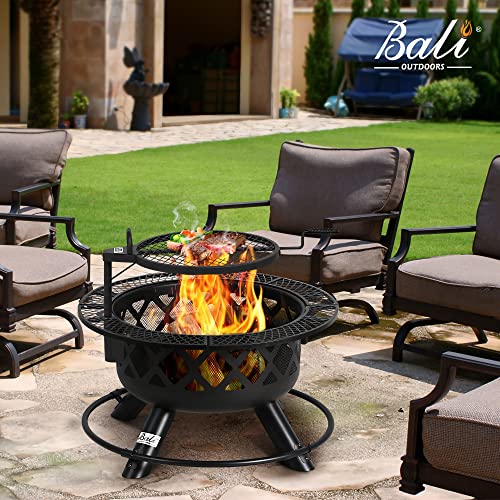
Our Top Choice
Why These Features Matter:
A fire pit is rarely just a fire pit. It’s the thing that turns a half-finished patio into “we actually use this space,” the excuse to stay outside 40 minutes longer, and the magnet that pulls everyone into the same circle (including the friend who “doesn’t like camping,” and the dog who suddenly cannot be indoors alone). The best ones aren’t the biggest or the most expensive — they’re the ones that fit the way real homes work: limited storage, neighbors with opinions, kids who treat everything like a climbing gym, and weather that refuses to RSVP.
Good fire-pit design shows up in small, domestic ways: how easy it is to light without a minor ritual, whether it smokes out the dinner table, if it can be moved without recruiting a second adult, and how annoying it is to clean the morning after.
Heat You Can Actually Feel (Not Just Look At)
Some fire pits are basically mood lighting. Lovely, but not why anyone hauled out blankets. A useful fire pit throws heat outward, not straight up into the night sky. Shape matters: deeper bowls and designs that cradle the flame tend to create a hotter “hang zone,” while wide, shallow basins can look dramatic but feel weirdly chilly unless everyone crowds in like penguins.
- Look for: a design that directs heat laterally (often a slightly deeper basin or a protective rim/wind guard).
- Pay attention to: how many people can sit comfortably and still feel warmth — not just how many chairs fit around it.
- Real-life tell: if the product photos show people in light sweaters in the dead of night, assume the photographer was freezing.
Smoke Management (Because Nobody Wants Eau de Bonfire on Tuesday)
The romance of a wood fire ends fast when eyes start watering and everyone plays musical chairs to dodge the smoke plume. If a fire pit is meant for weeknights — not just one heroic autumn gathering — it needs to behave. Designs that encourage more complete combustion (better airflow, a slightly more contained burn area) tend to produce less smoke once the fire is going. “Once the fire is going” is doing a lot of work here: even the cleanest burn can start out a little cranky.
- Look for: airflow that’s engineered (vents, double-wall designs, or burn chambers that don’t suffocate the flame).
- Things that help more than people admit: dry wood and patience. Wet logs turn any fire pit into a fog machine.
- Honest caveat: low-smoke isn’t no-smoke. There will still be moments when someone gets tagged in the face.
Ignition & Setup: The Part That Determines If You’ll Use It
The fire pit that gets used is the one that doesn’t require a small ceremony. For wood-burning pits, that means enough room and airflow to stack kindling without it collapsing into a sad heap. For gas models, it means ignition that works the first time and controls that don’t feel like they belong on a flimsy grill from 2009.
- Look for: simple access to the burn area; controls that are obvious in low light; parts that don’t rattle.
- Green flag: a setup process that sounds boring. Boring is good. Boring means it’ll happen on a random Thursday.
- Annoyance to watch for: finicky igniters and instructions written like they were translated by a haunted fax machine.
Weight, Portability, and the “Can One Person Move This?” Test
Fire pits land in two categories: “lives here permanently” and “gets dragged out because the patio also has to be a kids’ soccer practice zone.” The best choice depends less on aesthetics than on storage reality. Heavy pits feel stable and substantial, but they also become outdoor furniture you plan around. Lighter pits can be tucked away, but they may scoot or wobble if the ground isn’t perfectly level.
- Look for: handles that don’t feel decorative; a base that sits flat; a shape that can navigate a doorframe without scuffing everything.
- If storage is tight: prioritize compact footprints and parts that nest (or at least don’t require a separate bin of mystery pieces).
- Honest caveat: “portable” can still mean “awkward.” Round + bulky is a tough combo on narrow apartment balconies.
Noise, Smell, and Other Vibes That Sneak Up on You
Wood has that crackle and campfire perfume — the good kind, until it’s in your hair the next morning. Gas is quieter and cleaner, but some setups bring their own quirks: faint hissing, the occasional whoosh, and that subtle fuel smell if everything isn’t seated properly. None of this is necessarily a dealbreaker, but it’s the stuff nobody thinks about until the first night feels slightly… off.
- Wood: cozy sound; more smoke; more ash; more drama (in both good and bad ways).
- Gas: tidy and controlled; less mess; less scent; sometimes less “event.”
- Pellet-style options: can burn efficiently, but expect a learning curve and some very specific fuel preferences.
Cleaning & Next-Morning Regret
A fire pit should not create a new Sunday chore you resent. Ash removal is the big one: if the bowl design makes it hard to scoop without creating a gray dust storm, it becomes the patio’s most elegant nuisance. Gas models avoid ash but introduce different maintenance — checking connections, keeping burner ports clear, and storing fuel safely.
- Look for: ash cleanout features or designs that make ash removal straightforward (without needing a shop vac and a vow of silence).
- Things to keep nearby: a metal ash bucket with a lid, a small shovel, and gloves that don’t make hands sweat instantly.
- Honest caveat: “Easy to clean” often means “easy-ish if you stay on top of it.” Ash left for weeks turns into a gritty paste after rain.
Safety Details That Matter (Especially with Kids, Dogs, and One Tipsy Friend)
The best fire pit is the one nobody has to worry about. Real safety isn’t just a spark screen — it’s stability, sensible clearances, and surfaces that don’t become branding irons at shin height. Consider where it’ll live: under trees, near fencing, on a wood deck, beside outdoor cushions that love to drift closer over the course of an evening.
- Look for: stable bases, heat shields where appropriate, and accessories that feel sturdy (not tinny).
- Practical add-ons: a well-fitting cover; a spark screen for wood; a barrier or defined “no-go” zone if small kids are in the mix.
- Honest caveat: a spark screen helps, but embers still escape during enthusiastic poking.
Materials & Finish: Pretty Is Good — Until It Peels
A fire pit is a weather object. Sun bakes it, rain tests it, and winter asks it difficult questions. Some finishes look gorgeous on day one and then develop a patina that’s either charming or maddening, depending on expectations. If a fire pit is meant to be a design statement, it needs a finish that can handle the indignities of outdoor life — including the fact that covers rarely stay on perfectly.
- Look for: materials that age with dignity and hardware that doesn’t immediately corrode.
- If aesthetics matter: choose a style you’ll still like when it’s not pristine.
- Honest caveat: “Weather-resistant” is not a personality trait. Expect some change over time.
Fuel Logistics: The Hidden Lifestyle Decision
Fuel is the part nobody romanticizes, yet it determines everything. Wood requires storage (and it attracts the kind of mess that migrates), plus someone has to acquire it and keep it dry. Gas requires a tank or a line and some degree of responsibility about storage and refills. Pellets require the correct pellets, purchased at the correct times, in the correct quantities — and yes, it’s possible to run out at 9:30 p.m. with guests.
- Wood is for: people who like the ritual, don’t mind ash, and have somewhere to stash logs that isn’t the hallway.
- Gas is for: frequent use, quick starts, and anyone whose tolerance for smoke is low.
- Apartment/balcony reality check: local rules may restrict fuel types. Check before falling in love.
The “Actually Fits My Space” Checklist
Fire pits are deceptively large. They eat space visually and physically, and the seating radius is bigger than expected if people are going to sit comfortably. The best fire pit for a small patio is often not the cutest one — it’s the one that leaves room to walk without doing the sideways shuffle with a drink in hand.
- Measure: the pit footprint plus at least a chair’s depth all around (and a path to get past).
- Consider: where the cover lives, where tools live, where fuel lives.
- Honest caveat: fire pits love to become permanent. If the space needs to flex, prioritize models that can move or store neatly.
Things to Know Before Buying (A Few Unromantic Truths)
- Wind changes everything. A breezy yard can turn a pleasant flame into a smoky, finicky situation. Wind guards and more contained designs help, but placement matters too.
- Some “multi-use” features are aspirational. Grill grates and cooking accessories can be fun, but if the setup is annoying, they’ll live in a shed like a neglected waffle maker.
- Heat-proof surfaces are not optional. Deck-friendly setups require extra thought; don’t trust vibes over safety.
- Covers are worth it, but imperfect. Even good covers shift, trap moisture, or blow off during weather that feels personal.
How to Choose the Right Fire Pit for Your Life
Start with behavior, not fantasy. The right questions are mundane: How often will it be used? Who is nearby (neighbors, kids, pets)? Is there a real place for fuel and tools? Will it stay out year-round? The best fire pit is the one that matches those answers — the one that makes it easy to have a fire without making the rest of life harder.
- For frequent weeknight use: prioritize easy ignition, low mess, and low smoke.
- For hosting: prioritize heat radius, stable seating distance, and a design that doesn’t smoke out half the group.
- For small spaces: prioritize compact footprints, manageable weight, and storage sanity.
- For design-led patios: prioritize materials that age well and a silhouette that still looks good under a cover.