





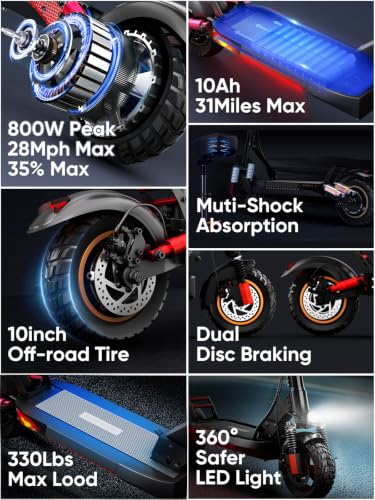


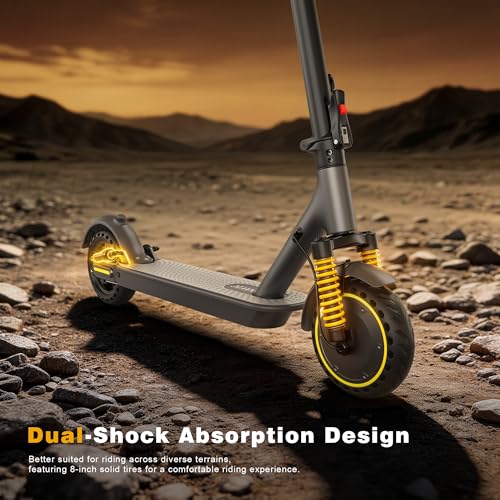


We also considered 10 others:


Our Top Choice
Compare Features


The order above is not editorial opinion, and it is not paid placement. It comes from what shoppers across our network actually do - which fast electric scooters for adults they compare, and which they ultimately buy. We re-rank as new data comes in, so the long-term favorites have to keep earning their spot against new entrants. The full method, including how we make money.
Fast Electric Scooters for Adults Buyer's Guide
Fast electric scooters for adults trade compact commuting convenience for motorcycle-like consequences when speed, weight, brakes, and battery quality are mismatched. The sharpest checks are whether the frame and brakes stay stable at speed, and whether the advertised range and power still hold up with your body weight, hills, weather, and daily route.
Build
Build quality matters because your scooter needs to handle repeated folding, road vibration, bumps, and weather exposure without feeling loose or fragile. Look for a sturdy frame, solid stem and deck, clean welds or joints, secure latches, and materials that feel rigid rather than flimsy. Watch out for rattles, excessive flex, weak folding mechanisms, or cheap-feeling controls, since those can affect both durability and your confidence while riding.
For a fast adult scooter, prioritize structural safety before headline power: look for a rigid stem with minimal play, a secure folding latch with a backup lock, strong welds, a wide deck, rated rider capacity with margin for your body weight plus cargo, and brakes that feel stable under repeated hard stops. Avoid lightweight-looking frames, vague water-resistance claims, undersized tires, or any design that develops stem wobble, deck flex, loose handlebars, or brake fade at speed. Owner feedback supports this focus: riders often praise solid, heavy-duty construction, smooth daily riding, and secure braking/acceleration feel when the scooter is well built.
Speed
Speed affects how confidently you can keep up with traffic, merge through bike lanes, and handle stop-and-go riding, while acceleration and motor power matter just as much as the listed top speed. Look for performance that fits your commute, rider weight, and local speed limits, and pay close attention to hill climbing ability if your route includes inclines. Be wary of headline top-speed claims that may depend on ideal conditions, since real-world performance can drop with low battery, heavier loads, rough pavement, or steep hills.
Do not buy by top speed alone; match speed to your commute, local rules, braking distance, and your experience level. For adult fast scooters, check whether the advertised speed is achievable under your rider weight, on your hills, and in the mode you will actually use, and look for selectable speed modes so you can tame acceleration in traffic or around pedestrians. Owner sentiment suggests that strong models feel responsive, climb hills better than expected, and commonly deliver real-world speed near their claims, with some riders finding higher-speed scooters exciting and powerful—but that power should be paired with control.
Ride
Ride quality determines how comfortable and confident you feel on an electric scooter, especially over uneven pavement, turns, and longer trips. Look for stable handling, predictable controls, tires or wheels suited to your surfaces, and suspension or deck design that reduces vibration; watch out for scooters that feel twitchy, harsh, or cramped. If the scooter has a seat, make sure it supports your posture without making steering or balance feel awkward.
At fast-scooter speeds, ride quality is a safety feature, not just comfort: choose suspension, larger tires, a stable deck, and tires suited to your surfaces, especially if you ride broken pavement, bridge seams, gravel shoulders, grass, or speed bumps. Pneumatic or tubeless tires generally absorb impacts better than hard solids, but they bring puncture and maintenance tradeoffs; solid tires reduce flats but can feel harsher and lose grip on rough or wet surfaces. Owners back this up by repeatedly praising scooters with suspension, big or pneumatic tires, wide decks, and all-terrain setups for feeling smoother, more stable, and more confidence-inspiring over uneven roads, driveways, hills, dirt paths, and bumpy pavement.
Value
Value matters because an electric scooter can look affordable upfront but cost more over time if the range, build quality, battery life, or parts availability do not match your needs. Look for a fair balance of price, performance, durability, and warranty support, and be cautious of very cheap options that cut corners on braking, tires, or water resistance.
Judge value by the complete safety-and-ownership package, not just speed per dollar: brakes, suspension, battery quality, tire serviceability, folding hardware, warranty support, charger quality, app usefulness, and replacement-part availability matter more in this category than cosmetic extras. A cheaper fast scooter can become poor value if range collapses under load, tire repairs are difficult, the latch loosens, or support is weak after a failure. Owner feedback generally supports that shoppers feel satisfied when performance, sturdy construction, smooth ride quality, easy setup, folding convenience, and commuter features exceed expectations for the cost.
Battery
Battery life and range determine whether your scooter can handle your typical trips without leaving you looking for an outlet. Look for a realistic per-charge range that comfortably exceeds your commute or errands, and remember that rider weight, hills, speed, temperature, and tire pressure can reduce the distance you actually get. If you plan longer rides, prioritize a larger battery and factor in charging time so the scooter is ready when you need it.
For fast adult riding, size the battery for real-world load, not the maximum range claim: high speed, hills, cold weather, heavier riders, stop-and-go traffic, and aggressive acceleration can cut range sharply. Look for clearly stated voltage and capacity, a reputable battery management system, charger compatibility, water-ingress protection, and enough reserve that your normal round trip uses well under a full charge; also check whether replacement batteries and chargers are obtainable. Owner sentiment is positive on many scooters for daily commuting, errands, and longer rides, but range is one of the most variable areas, with riders noting that mode, rider size, and charging reliability can make real use differ substantially from advertised long-range claims.
Usability
Usability affects how quickly you can get riding and how comfortable the scooter feels in daily use, from initial assembly to folding, carrying, charging, and adjusting the fit. Look for intuitive controls, a clear display, secure folding mechanisms, practical lights or signals, and handlebar or ride settings that match your needs. Watch out for scooters that are awkward to fold, difficult to carry, confusing to operate, or limited in adjustability, especially if you plan to use them often or share them with other riders.
Fast scooters must still be practical to live with: check folded size and weight before assuming you can carry it upstairs, lift it into a trunk, or combine it with transit. Also verify assembly steps, push-start behavior, display readability, app dependence, speed-mode controls, headlight/taillight visibility, brake adjustment access, tire-change difficulty, and whether the rear wheel or motor hub makes tube replacement unusually hard. Owners often find setup, folding, storage, and basic operation easy, especially with selectable modes, but tire maintenance—particularly rear-tube replacement—and thin instructions or charging guidance are recurring usability warnings.
1,000,000+ shoppers use Buyer's Guide every week to find the best products and services online.

Helping millions of users make smarter purchases online.


